
Ridge&HipRe-PointinginBournemouth&Poole
Loose ridge tiles are the most common fault on any older roof, and one of the cheapest to put right. Left alone they let water in, and eventually they come down.
- Re-bedded properly, not just pointed over the top
- Or converted to dry ridge, which does not rely on mortar at all
- Usually a day, and far cheaper than what it prevents
Get a quote
Tell us what you can see along the ridge from the ground.
- 1 dayMost ridge runs
- 25 yr+When ridge mortar usually starts going
- 5.0 ★From 31 Google reviews
- BothOwners on every job
Why ridge tiles work loose
On most older roofs the ridge and hip tiles are bedded on sand and cement. The mortar was never structural, it just holds them in place, and it has one unavoidable problem: the roof moves and the mortar does not. Timber expands and contracts through the year, tiles shift very slightly, and the whole roof warms and cools. Mortar has no give in it at all, so it cracks. Once it cracks water gets into the gap, frost opens it further, and the bond that was holding a heavy tile at the very top of your roof quietly stops holding it. That is why you see mortar in the gutter and gaps along the ridge line on almost every roof over about twenty five years old. It is not a sign of bad workmanship. It is the material doing what it always does eventually. When people ask us for roof repointing, it is nearly always the ridge and hips they mean. The fix is either to re-bed the tiles properly in fresh mortar, or to remove the mortar entirely and convert to a dry ridge system, which fixes each tile mechanically and does not depend on anything cracking.
- Mortar cracks because the roof moves and it cannot
- Re-pointing over cracked bedding is the shortcut, not the repair
- Dry ridge removes the problem rather than resetting the clock
 Ridge stripped back and re-bedded
 Step 1
We check the whole ridge
Every tile along the run, not just the obvious gap. If half of them are loose there is no sense doing three of them.
 Step 2
We take the old mortar off
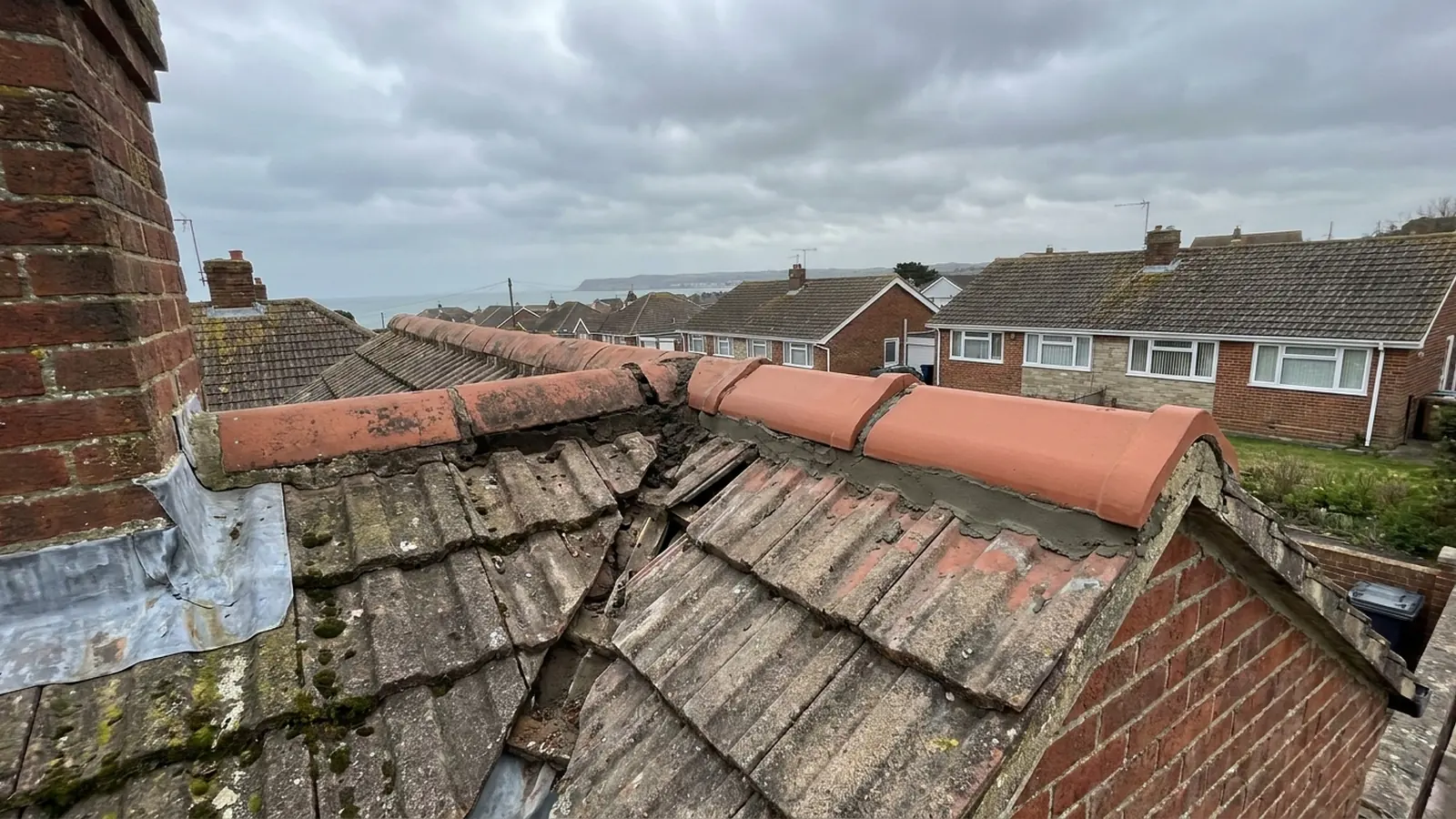
Tiles lifted and the old bedding cleaned off completely. Pointing over cracked mortar traps the problem underneath the new work.
 Step 3
We re-bed it or convert it
Fresh bedding and pointing, or a dry ridge system fixed mechanically so it never depends on mortar again.
1 day
Most ridge runs
25 yr+
When mortar usually starts going
Dry
Ridge option on every job
5
Towns we cover
Re-bed in mortar, or convert to dry ridge
Both are proper repairs. One resets the clock and one stops the clock, and they are priced differently, so it is worth understanding the choice.
| Re-bed in mortar | Convert to dry ridge | |
|---|---|---|
| How it holds | Bedded in sand and cement | Mechanically fixed to a batten under a sealed roll |
| Will it crack again | Yes, eventually. That is what mortar does | There is no mortar to crack |
| Typical life | 15 to 25 years | The life of the roof |
| Ventilation | None, the ridge is sealed solid | Ventilates the roof space along the whole ridge |
| Cost | Lower up front | Higher up front, cheaper over time |
| Looks | Traditional mortar line | Almost identical from the ground |
| Our honest take | Fine, and sometimes the right call on a roof with limited life left | What we would put on our own house, and what goes on every re-roof we do |
Swipe to see every column
What is included on a ridge job
Whichever of the two you choose.
The whole run assessed
We look at every tile along the ridge and the hips, not just the visible gap. Doing three tiles on a run that is going everywhere is money wasted.
Old bedding removed completely
Tiles lifted and cleaned back to sound material. Pointing over cracked mortar looks tidy for a year and traps the failure underneath.
Correct mix, or no mix at all
Where we re-bed, the mortar is mixed properly for the job. Too strong and it cracks faster than the tiles move.
Dry ridge quoted as an option
On every job. You get both figures and we will tell you honestly which one we would choose on your roof.
Ventilation gained where it applies
A dry ridge system ventilates along the whole ridge line, which helps a roof space that has been sealed shut by mortar for decades.
Photos of what we found
The ridge is the one part of the roof nobody can see. You get pictures of the state it was in and the finished work.
Straight answer
What ridge work costs
Priced by the metre, after we have looked
Ridge work is priced on the length of the run, the number of hips, and how you get to it. A ridge tile repair is one of the more predictable jobs in roofing, and one of the cheapest things you can do to an older roof. We will give you a figure for re-bedding and a figure for converting to dry ridge, so you can choose.
- Both options priced, so you can compare properly
- Access included, whether that is a roof ladder or a tower
- Old mortar removed and taken away, not left in your gutters
- No charge for coming out and no pressure afterwards
If the rest of the roof is close to needing replacement, we will tell you, because at that point spending on the ridge alone may not be the best use of your money.
How the job runs
A day on most ridges, sometimes two where there are several hips.
We assess the whole run
Every ridge and hip tile checked, so the quote covers what actually needs doing rather than the bit you can see from the road.
Tiles lifted
The ridge tiles come off and are set aside. Most are perfectly reusable, and we will tell you if any are cracked.
Old mortar removed
Cleaned back to sound material along the whole run, so whatever goes on next is bonding to something solid.
Re-bed or fit the dry system
Fresh bedding and pointing, or the batten, sealed roll and mechanical fixings for a dry ridge.
Clear up
Old mortar and debris cleared out of the gutters and off the ground, not left to wash down later.
What repointing a ridge involves
Illustrations of the stages of a ridge and hip repoint. These are not photographs of our own jobs.
We will show you the state of your own ridge before we quote for it.
What customers say
We are a new company and we are building this up honestly. These are the jobs people have been kind enough to comment on.
George Gudge
Can't recommend Southern Counties Roofwork highly enough. I had them out for full re-roof / fascias & guttering - and the whole experience was spot on. Great communication, gave me a clear quote and explained everything properly. The team were punctual, polite, hardworking and obviously know their trade. The finished roof looks brilliant and is built to last. No mess left behind either.
Jacey Arnold
Recently had this company out to have my roof repaired after having problems with leaks during the winter months and something I had been looking to get sorted. The guys came out to take a look at the issues before quoting, once a quote was given work was agreed and I went ahead. Extremely professional, reliable and hard working! Would highly recommend this company and would definitely use again.
Celine Fox
Owen and Sam did a fantastic job with our roof. They were professional, reliable, friendly, and clearly take pride in the work they do. The work was completed to a really high standard, and everything was left clean and tidy afterwards. I’d definitely recommend to anyone looking for a trustworthy roofing company. Great service from start to finish!
Our projects
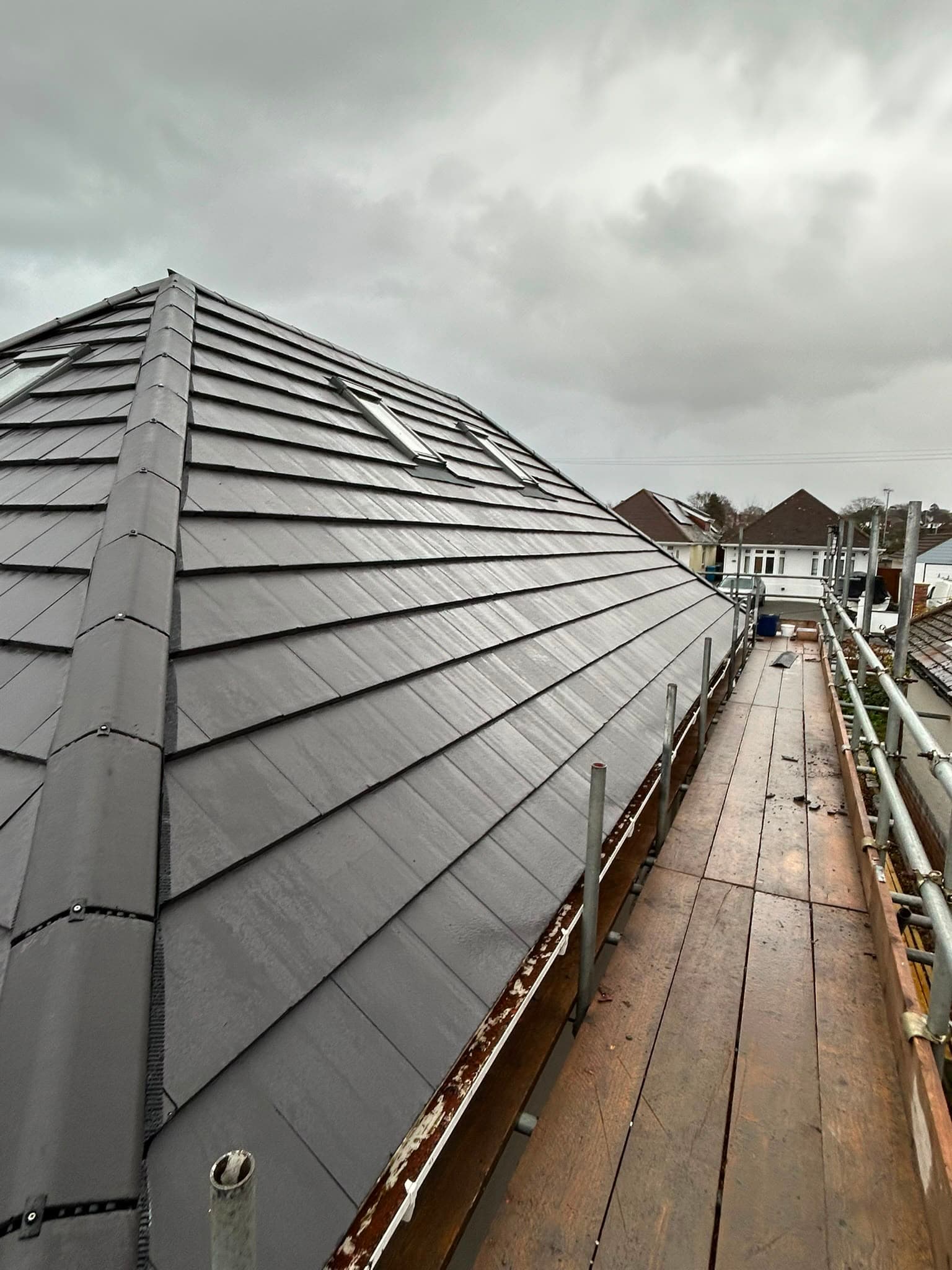
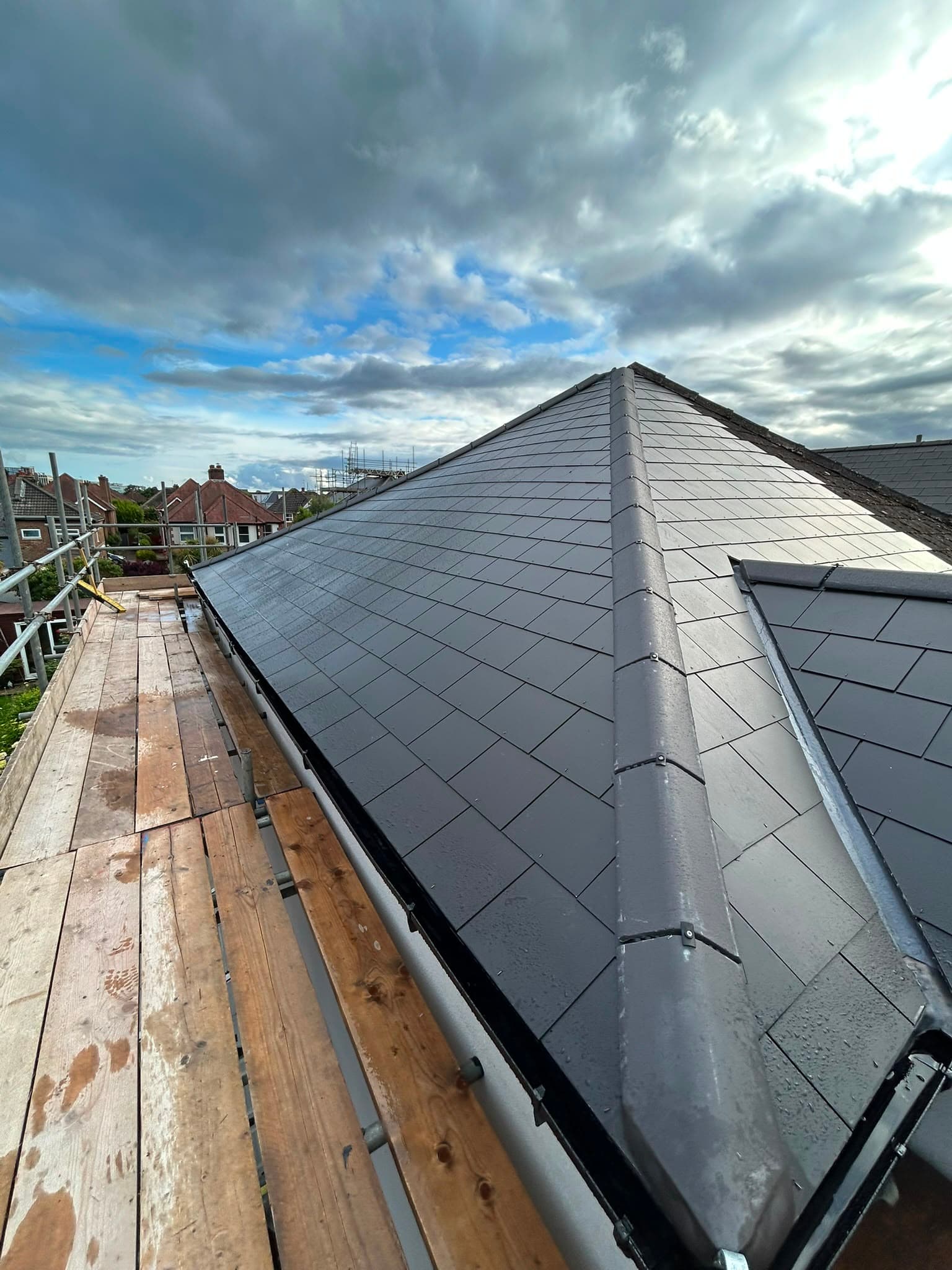
Jobs written up properly. What we found, what we did and how long it took.
The things people ask
Mostly about whether it is urgent, and whether it is worth doing at all.
Is a loose ridge tile dangerous?
It can be. Ridge tiles are heavy and they sit at the highest point of the roof, so one coming down is a serious matter. If you can see a gap or a tile out of line, it is worth dealing with sooner rather than later.
Is it actually letting water in?
Usually yes, slowly. Cracked bedding lets water past the ridge and into the roof space, and it often shows up as damp on a bedroom ceiling long before anyone connects it to the ridge.
How disruptive is it?
Barely at all. It is a day on the roof, there is no scaffold on most jobs, and nothing happens inside the house.
What you can see from the ground
The ridge is visible from the pavement, which makes this one of the few roof faults you can check yourself.
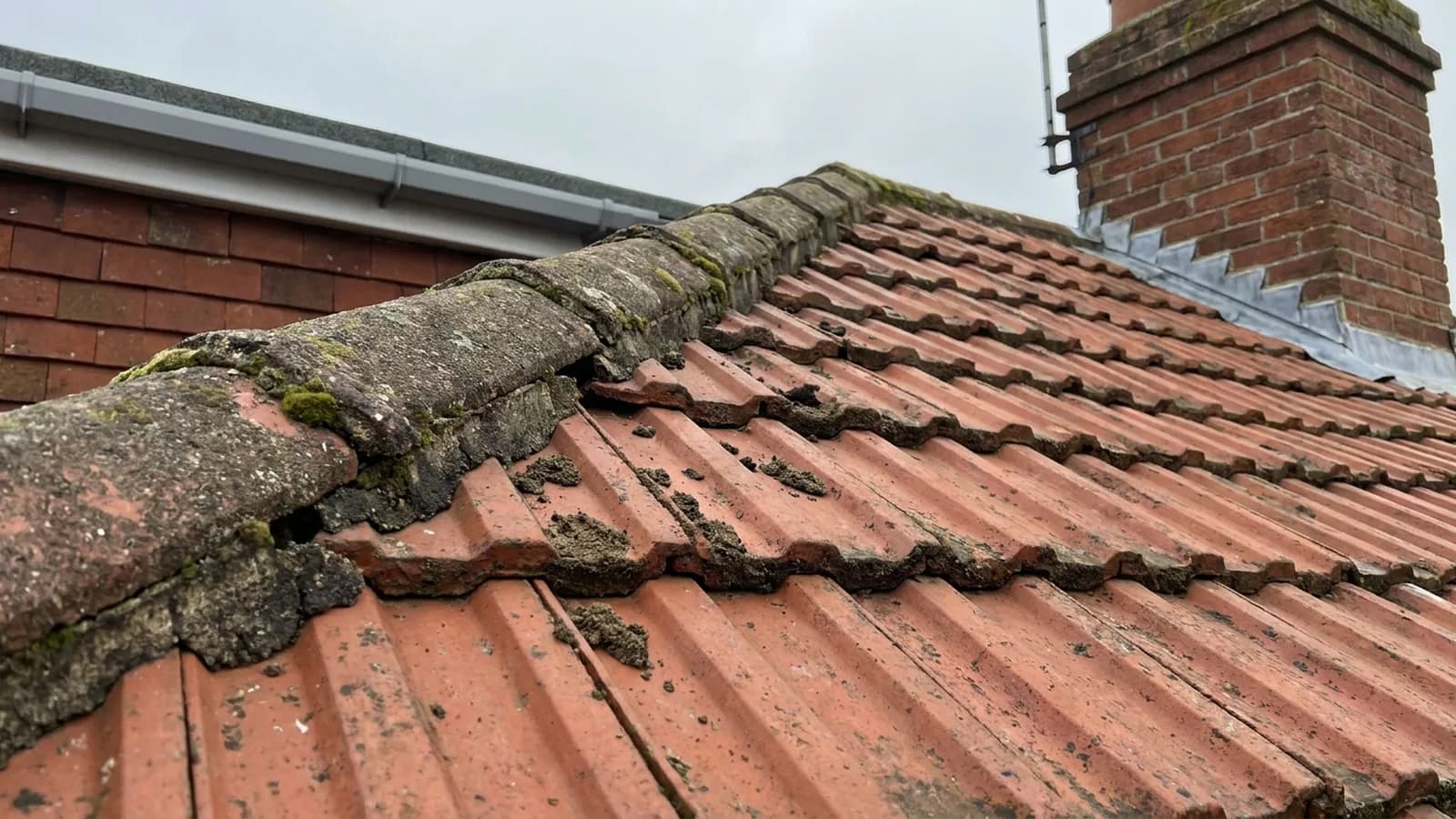
Gaps or dark lines along the mortar line
What it actually isThe bedding has cracked and shrunk back. Water is already getting past it, and the tiles are held by less than they look.
What it needs
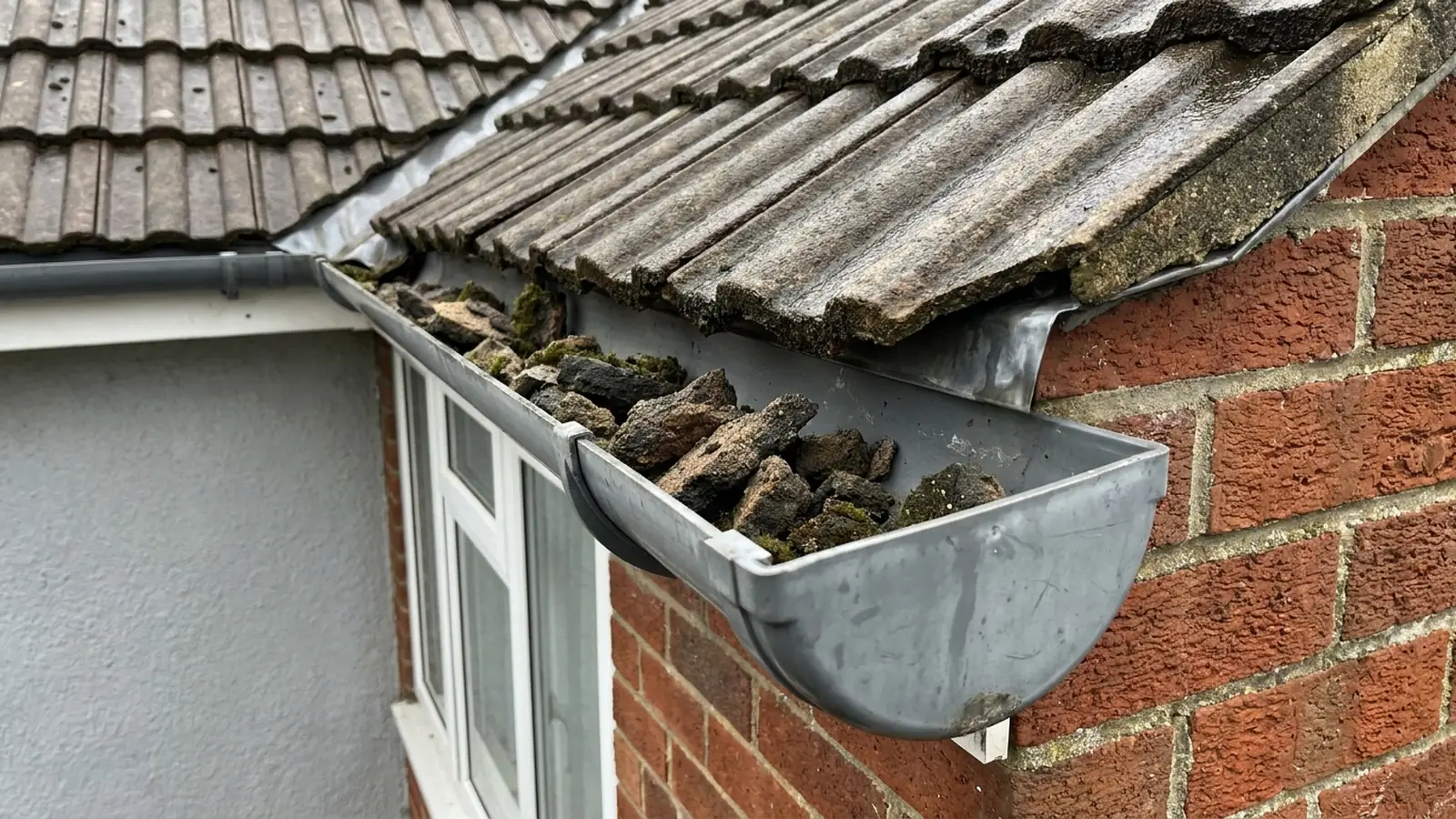
Bits of mortar in the gutter or on the drive
What it actually isThe bedding letting go. Once it starts coming out in pieces the run is failing rather than just weathering.
What it needs
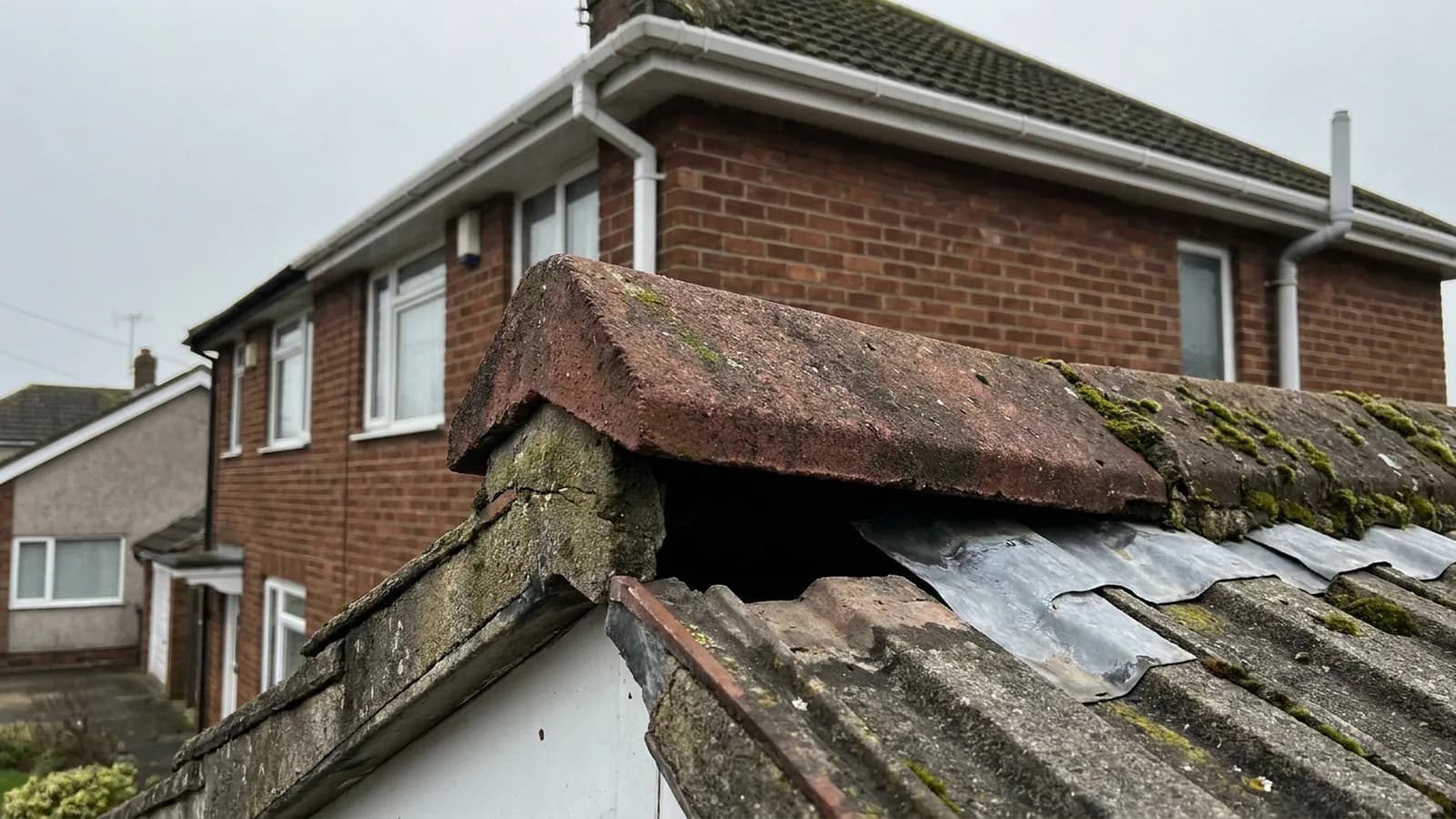
A ridge tile sitting out of line with the others
What it actually isThat one has already lost its bond. It is now held by friction and the tiles either side of it, which is not much in a strong wind.
What it needs
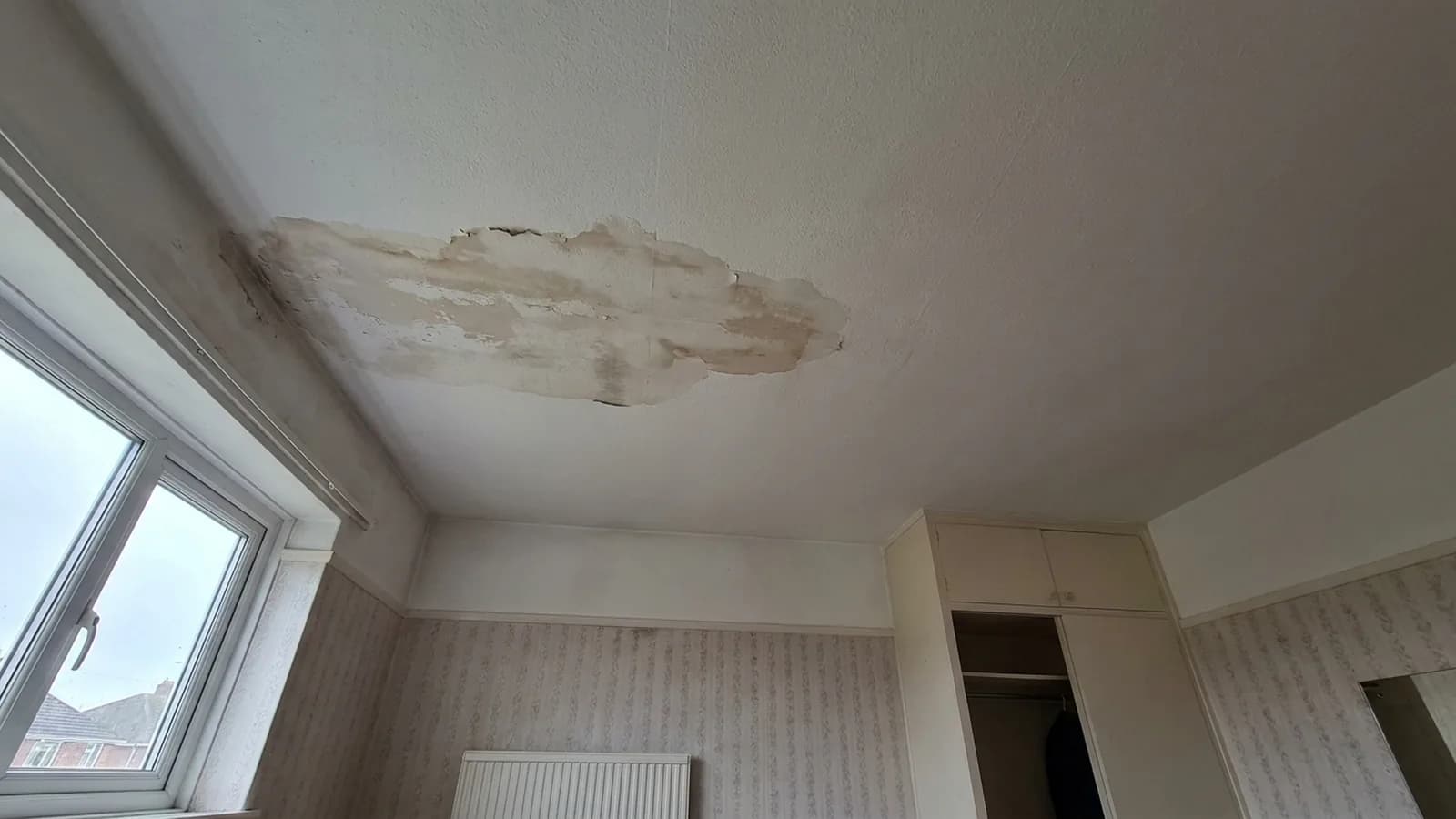
Damp on an upstairs ceiling near the middle of the house
What it actually isOften the ridge rather than anything more dramatic. Water gets in at the top and travels, and the ridge is the last place most people think to look.
What it needs
If you can see any of these, it is worth a look before winter rather than after it.
Why we fit dry ridge on every roof we replace
On any roof we strip and relay, the ridge and hips go back on a dry system rather than in mortar. It is worth explaining why, because on a repair you get the choice and it helps to know which way we would go ourselves.
A dry ridge system works completely differently from bedding. A batten is fixed along the apex, a sealed roll goes over it, and each ridge tile is screwed down individually through the roll into the batten. Nothing depends on adhesion. Nothing has to stay bonded through twenty five winters of the roof moving underneath it.
That removes the failure entirely rather than resetting the clock on it. Re-bedding in fresh mortar is a proper repair and it will give you fifteen to twenty five years, but at the end of it you are back where you started, because mortar cracks. That is not poor workmanship, it is the material.
The second benefit is ventilation, and it is underrated. A mortar bedded ridge seals the top of the roof solid. A dry ridge roll is designed to let air out along the whole length of the ridge, which lets a roof space breathe. On a lot of older houses the loft has been sealed shut for decades, and opening the ridge up makes a real difference to condensation.
The third is that it is what building regulations now expect on new work and re-roofs, so it is the standard rather than an upgrade. Anyone quoting you a mortar bedded ridge on a full re-roof today is behind, not cheaper.
On a repair, though, the honest answer depends on the rest of the roof. If your covering has twenty years left, convert it and be done with it. If the roof is likely to need replacing within a few years, spend the smaller amount, re-bed it properly, and put the difference towards the roof. We will tell you which of those we think yours is.
Questions about ridge and hip work
How much does re-pointing a ridge cost?
It is priced by the length of the run plus any hips, and ridge repointing is one of the cheaper jobs in roofing. We will give you a figure for re-bedding and a figure for converting to dry ridge so you can compare them properly.
Can you just point over the cracks?
We would rather not, and we usually will not. Pointing over cracked bedding looks tidy for a year or so and traps the failure underneath, where you cannot see it. The tiles need lifting and the old mortar taking off.
What is a dry ridge system?
A batten along the apex, a sealed ventilating roll over it, and each ridge tile screwed down individually. It holds mechanically rather than by adhesion, so there is no mortar to crack, and it ventilates the roof space along the whole ridge.
Is dry ridge worth the extra?
On a roof with plenty of life left, yes, because it is the last time you deal with the ridge. If the covering is close to needing replacing anyway, re-bedding is the more sensible spend and we will tell you so.
How long does it take?
A day on most ridges. Two where there are several hips or the access is awkward. There is nothing to do inside the house and most jobs do not need scaffold.
Can you reuse my existing ridge tiles?
Usually, yes. Most come off intact and go straight back on. If any are cracked we will tell you, and for a ridge tile replacement we will try to match the existing ones.
Do I need the hips doing as well as the ridge?
If they are bedded in the same mortar of the same age, they are failing at the same rate. We assess both and quote what actually needs doing rather than assuming.
- Service
Roof Leak Repairs
Tracing where the water actually gets in.
Learn more - Service
Storm Damage Repairs
Ridge tiles are what wind takes first.
Learn more - Service
Roof Replacement
Where the covering has gone, not just the ridge.
Learn more - Service
Roof Surveys & Inspections
A written condition report before you spend.
Learn more
Where we do ridge work
Based in Bournemouth, working across the conurbation and the towns just outside it.
Get the ridge sorted before winter
One of the cheapest jobs on an older roof, and one of the most worthwhile. We will quote both options.
Get a free quote
Tell us what you need and we'll come back with a price. No pressure, no hard sell.
Prefer to talk? Call Southern Counties Roofworks Ltd on 07895 305286