
ExtensionRoofinginBournemouth&Poole
A new roof is the easy half. Tying it into the roof and wall that are already there is where extension roofs are won or lost.
- Lead abutments chased in, never sealed over
- Tiles matched to the existing roof as closely as they can be
- 15 to 20 year guarantee on the finished roof
Get a quote
Tell us what you are building and we will come and look at the join.
- 3–7 daysTypical run on an extension
- 15–20 yrGuarantee on roofs we install
- 5.0 ★From 31 Google reviews
- BothOwners on every job
What an extension roof involves
An extension roof is two jobs. One is covering a new structure, which is straightforward. The other is joining that structure to a house that was built decades earlier and has settled into its own shape. The second one is the job. Wherever the new roof meets an existing wall you get an abutment, and wherever it meets an existing roof you get a valley or a joint. Those are the two places water gets in, on every extension, everywhere. Done properly they involve lead chased into the mortar joint and dressed over the covering. Done quickly they involve a bead of sealant and a phone call two winters later. The other question is what the new roof is. A pitched extension roof gets tiled or slated to match the house. A flat one, on a single storey rear extension, is GRP, EPDM or torch-on felt. Plenty of extensions have both, and we cover both.
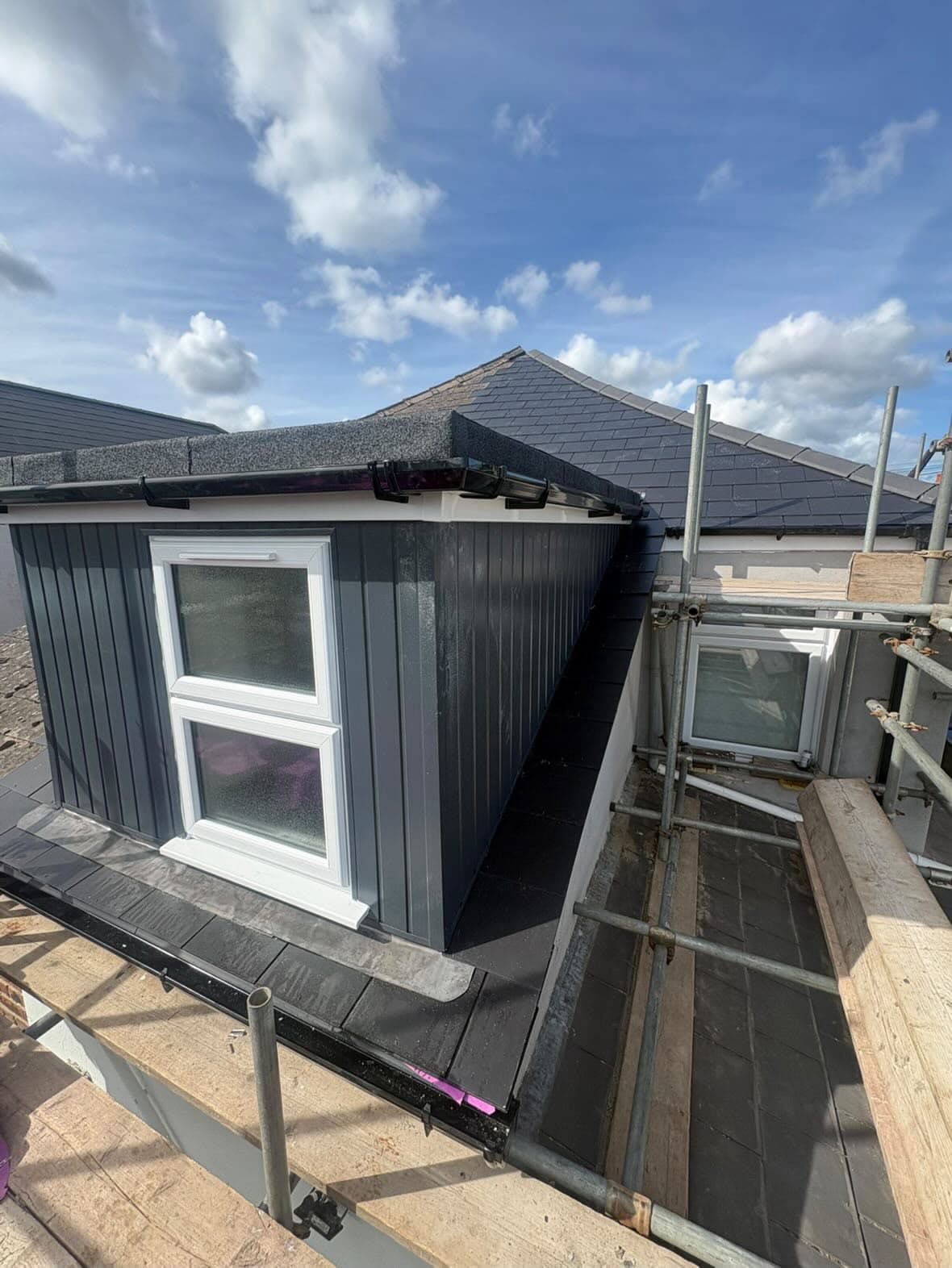
- The join into the existing roof or wall detailed in lead
- Covering matched to the existing house as closely as it can be
- Pitched, flat, or both on the same extension
 Extension roof, abutment detail
 Step 1
We look at the join first
Before anything else we work out how the new roof meets the old one, because that decides the detailing, the covering and the price.
 Step 2
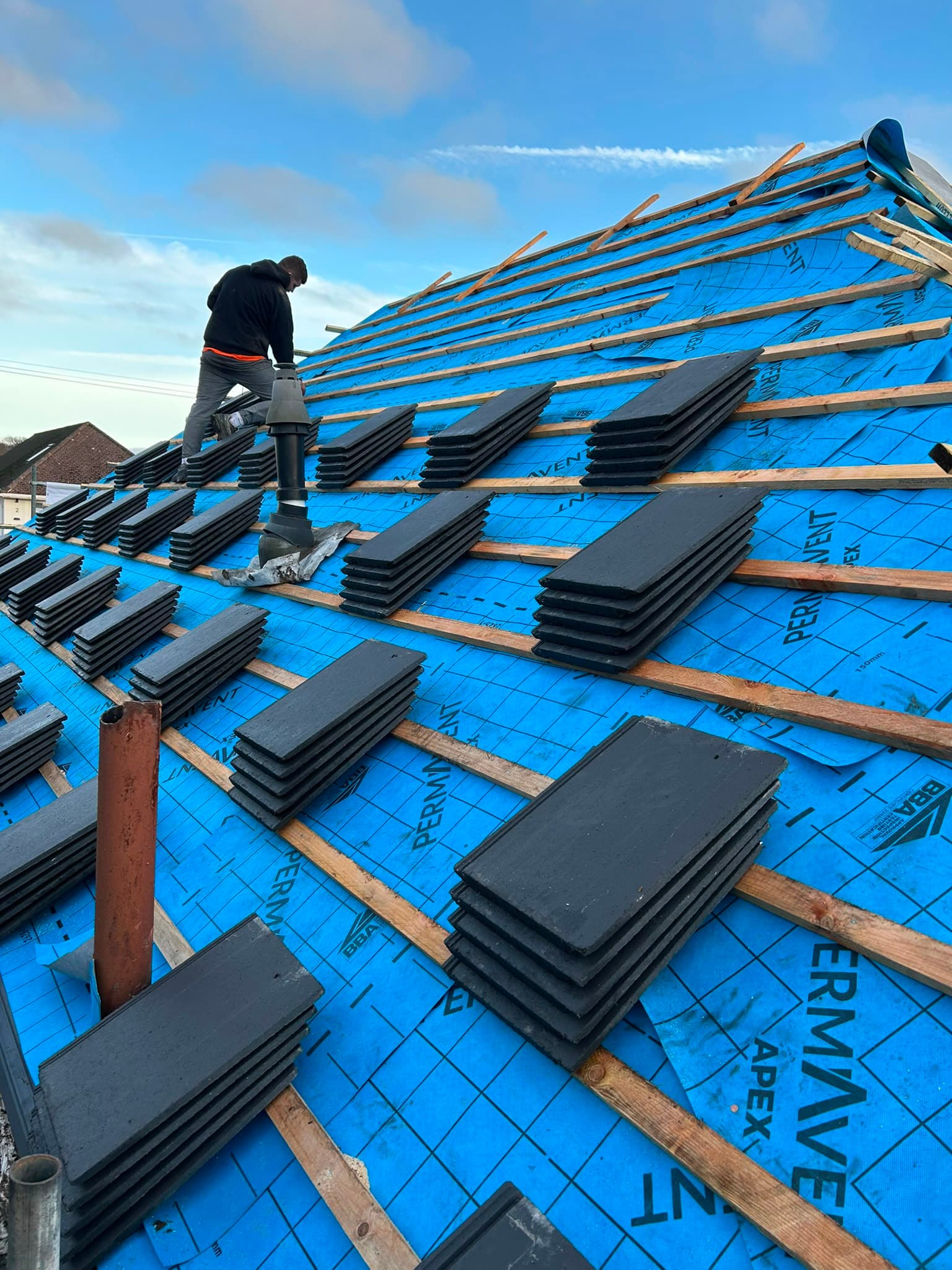
We build and tie it in
Membrane, battens and covering on the new roof, then lead chased into the joint and dressed over it so the join is watertight rather than sealed.
 Step 3
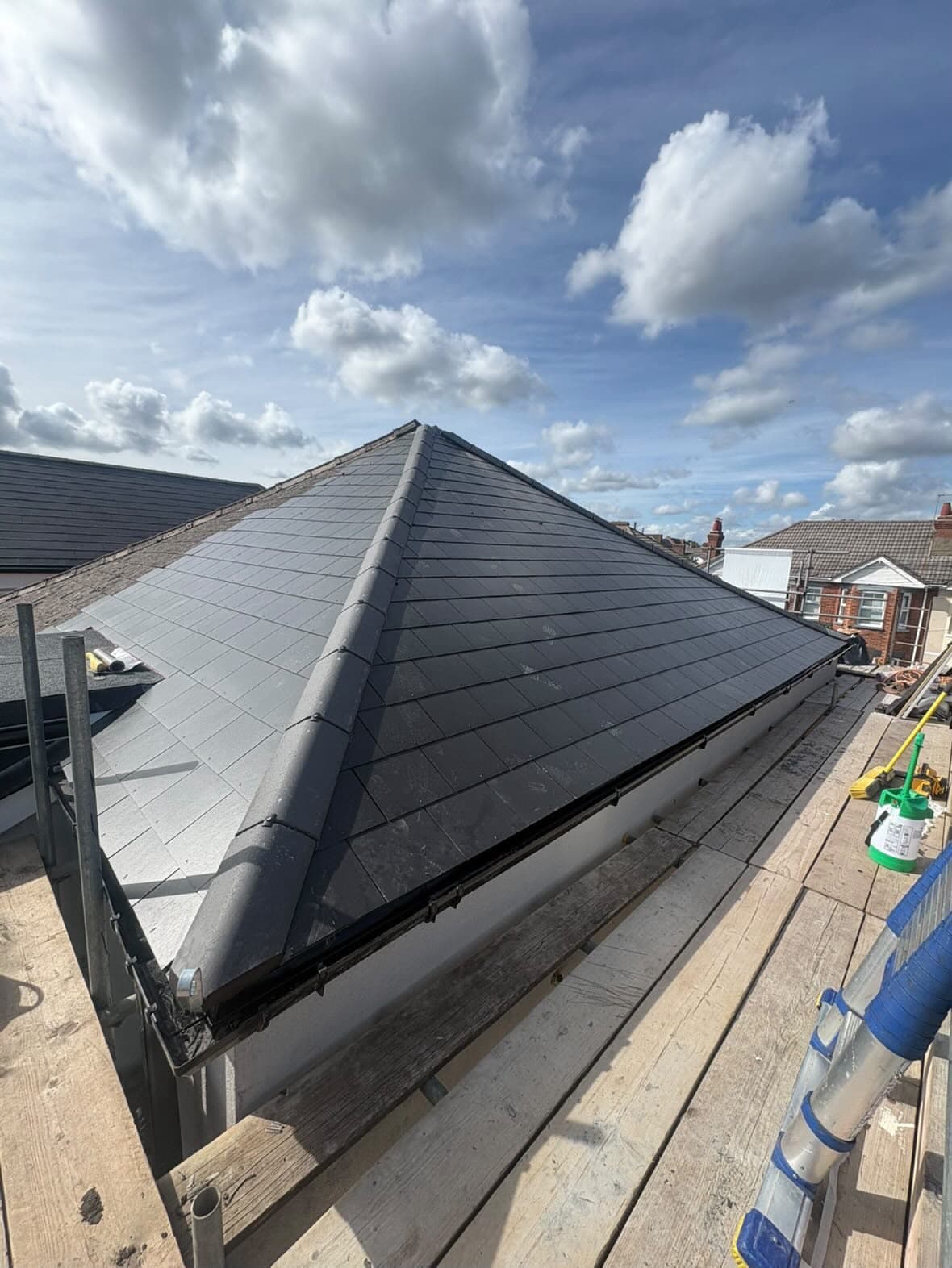
We guarantee it and clear up
A 15 to 20 year guarantee on the finished roof, waste taken away and the site left clear for whoever is in next.
3–7 days
Typical run
2
Places it can leak, both at the join
15–20 yr
Our guarantee
5
Towns we cover
Pitched or flat on your extension
Usually decided by the design, the headroom and whether it sits under an existing window. Worth knowing the trade-offs before the drawings are fixed.
| Pitched extension roof | Flat extension roof | |
|---|---|---|
| Typical life | 40 to 60 years on a new tiled covering | 20 to 30 years depending on the system |
| Matches the house | Yes, tiled or slated to suit | No, but it is largely out of sight |
| Headroom needed | More, because of the pitch | Minimal, which is why it suits low eaves |
| Under a first floor window | Often will not fit | Usually the only option |
| Where it leaks | The abutment into the existing wall | The upstand at the wall, and standing water |
| Cost | Higher, more structure and more covering | Lower on a small span |
Swipe to see every column
What goes into the join
The details that decide whether an extension roof leaks in year three.
Lead chased into the joint
Flashing cut into the mortar course and wedged, not stuck to the face of the brick. A sealed joint is a repair on somebody else's shortcut, never a detail in its own right.
Stepped flashing on a sloping abutment
Where the new roof runs up a gable, the flashing steps up with the mortar courses. It takes far longer than a straight run and it is the part people skip.
Cavity trays where they are needed
On a cavity wall, water crossing the cavity above the new roof has to be caught and thrown out. No tray and the damp appears inside, above the extension, with no visible leak.
Covering matched to the house
We match the existing tile or slate as closely as it can be matched. On an older roof an exact match is often not available, and we would rather show you the nearest than promise invisible.
Ventilation kept through the join
Tying a new roof onto an old one can close off the airflow the original roof relied on. That gets designed around rather than discovered later.
A 15 to 20 year guarantee
Issued when the job is signed off. If something goes wrong inside that period you call us and we come back out.
Straight answer
What an extension roof costs
Priced after we have seen the join
The size of an extension roof is easy to price. The join is not, and it is the part that varies most: a straight abutment into a flat brick wall is a different job from a stepped flashing up a gable with a cavity tray. We come and look at where the new roof meets the old one, then price the whole thing properly.
- Materials, labour, the covering and all the lead detailing in one figure
- Matching tiles or slates sourced and priced before you commit
- Pitched, flat, or both, quoted together
- No charge for coming out and no pressure afterwards
If the extension is still at drawing stage, send us the plans and we can give you a budget figure to work with.
How the job runs
Three days to a week on most extensions, depending on the size and the detailing.
We look at the join
How the new roof meets the existing wall or roof, what the wall is built of, and whether a cavity tray is needed. That is what sets the price.
Covering agreed
Pitched or flat, and if pitched, which tile or slate gets closest to the existing house. We source a sample before you commit where matching matters.
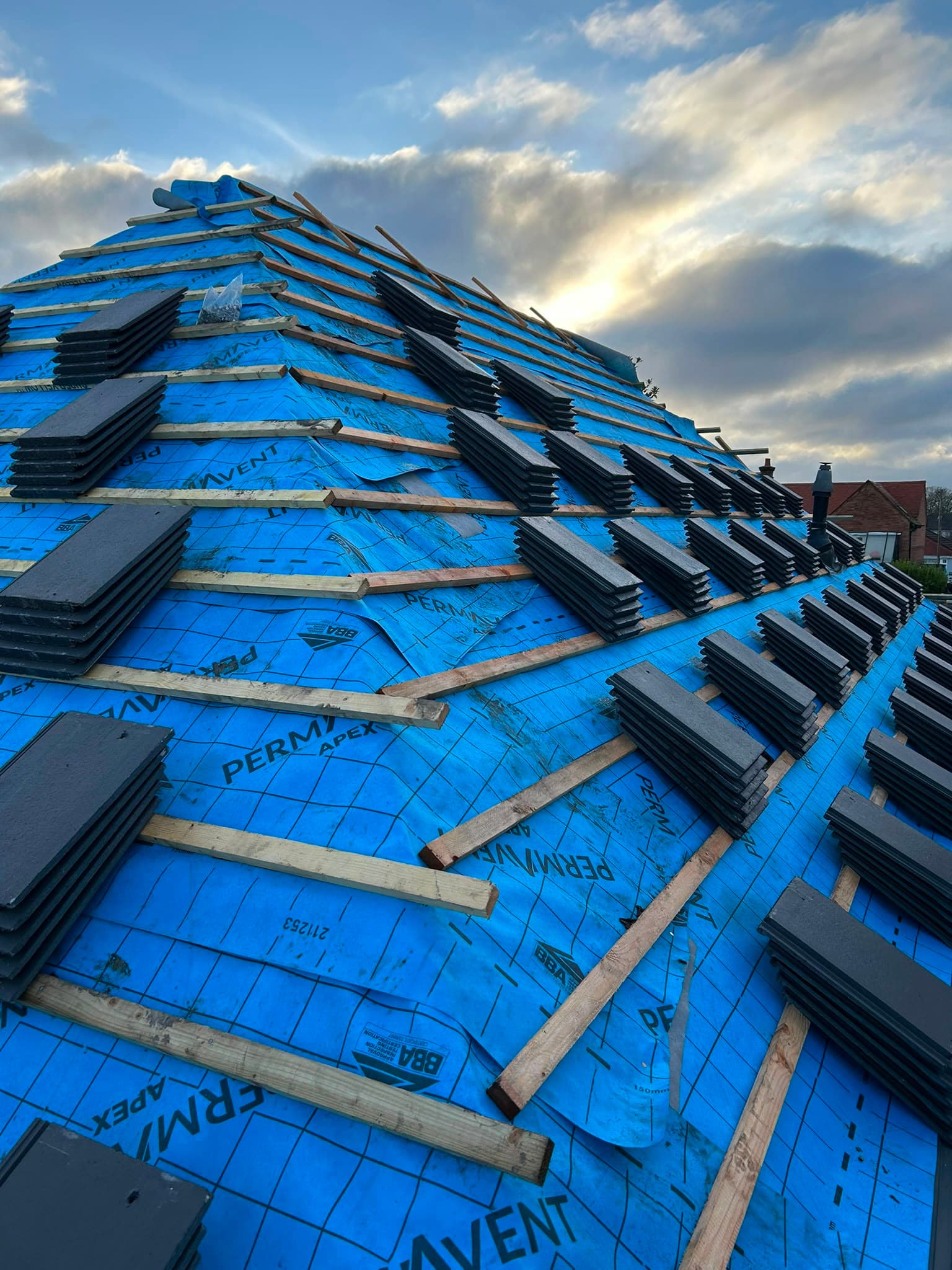
Membrane and battens
Proctor Air over the new rafters, then treated battens to the gauge the covering needs.
Covering laid
Tiles or slates up the new roof, or the flat system laid and detailed if it is a flat extension.
The join detailed
Lead chased into the mortar joint, stepped where it runs up a gable, cavity tray fitted where the wall needs one. This is the day that matters.
Clear up and guarantee
Waste away, ground swept, guarantee issued.
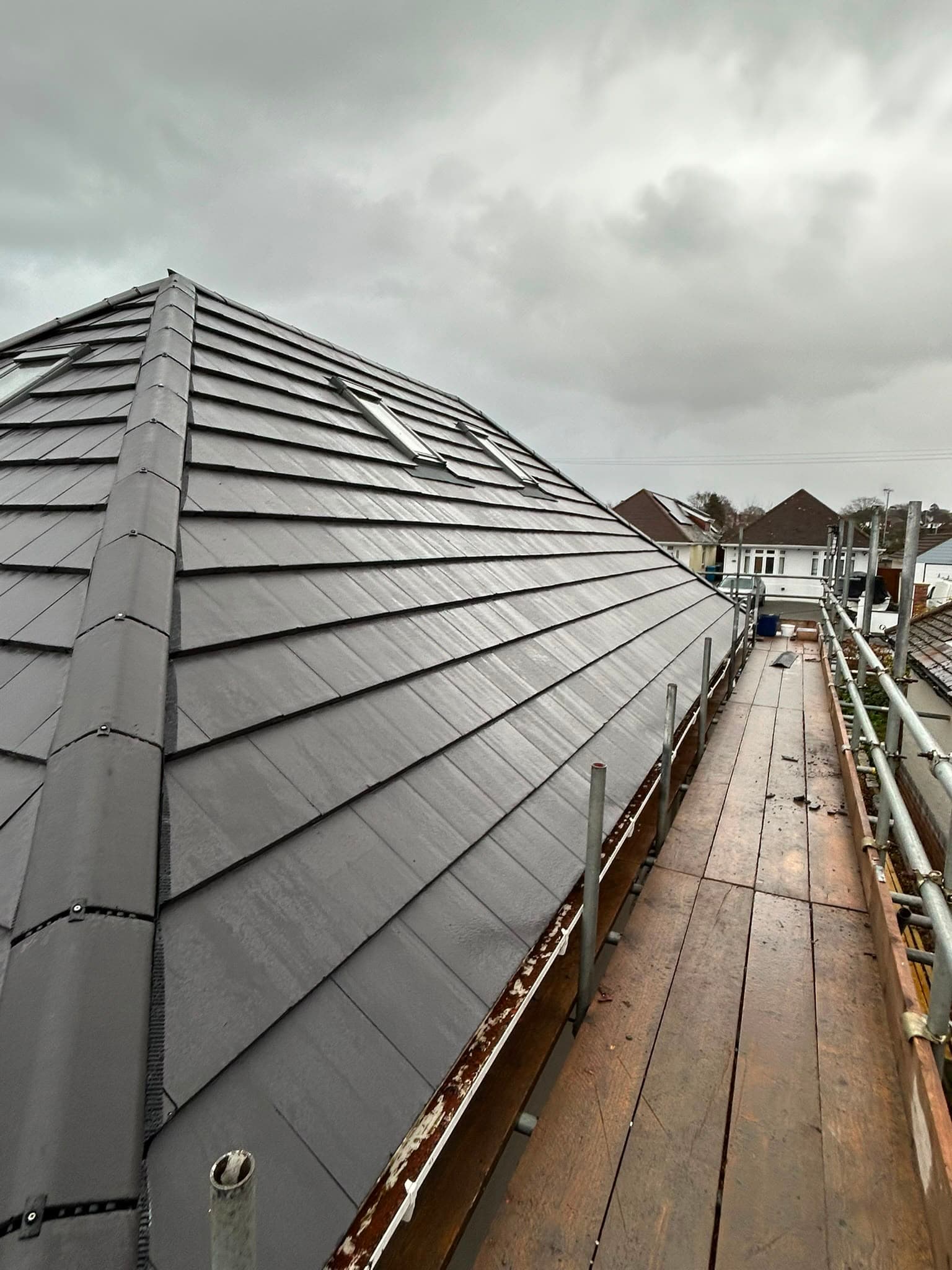
Extension roofs we have done
Our own work. No stock photography.
Captions name the covering and the town.
What customers say
We are a new company and we are building this up honestly. These are the jobs people have been kind enough to comment on.
George Gudge
Can't recommend Southern Counties Roofwork highly enough. I had them out for full re-roof / fascias & guttering - and the whole experience was spot on. Great communication, gave me a clear quote and explained everything properly. The team were punctual, polite, hardworking and obviously know their trade. The finished roof looks brilliant and is built to last. No mess left behind either.
Jacey Arnold
Recently had this company out to have my roof repaired after having problems with leaks during the winter months and something I had been looking to get sorted. The guys came out to take a look at the issues before quoting, once a quote was given work was agreed and I went ahead. Extremely professional, reliable and hard working! Would highly recommend this company and would definitely use again.
Celine Fox
Owen and Sam did a fantastic job with our roof. They were professional, reliable, friendly, and clearly take pride in the work they do. The work was completed to a really high standard, and everything was left clean and tidy afterwards. I’d definitely recommend to anyone looking for a trustworthy roofing company. Great service from start to finish!
Our projects
Jobs written up properly. What we found, what we did and how long it took.
The things people ask on the doorstep
Mostly about the house you are already living in while the work happens.
Will the house be open to the weather?
Not for long. The new roof goes on as a unit and we do not leave the join open overnight. If weather turns, it gets sheeted and made watertight before we leave.
Will the new tiles look obviously different?
A little, at first. New tiles have not weathered and an exact match on an older roof is often not available. We will show you the closest option rather than promise it will be invisible, and they close the gap over a few years.
Do you work alongside our builder?
Yes, and on most extensions we do. We would rather talk directly to whoever is running the job about when the structure will be ready than have it relayed.
If your existing extension leaks
Four things we find on extensions somebody else roofed. All four are at the join, and none of them need a new roof.
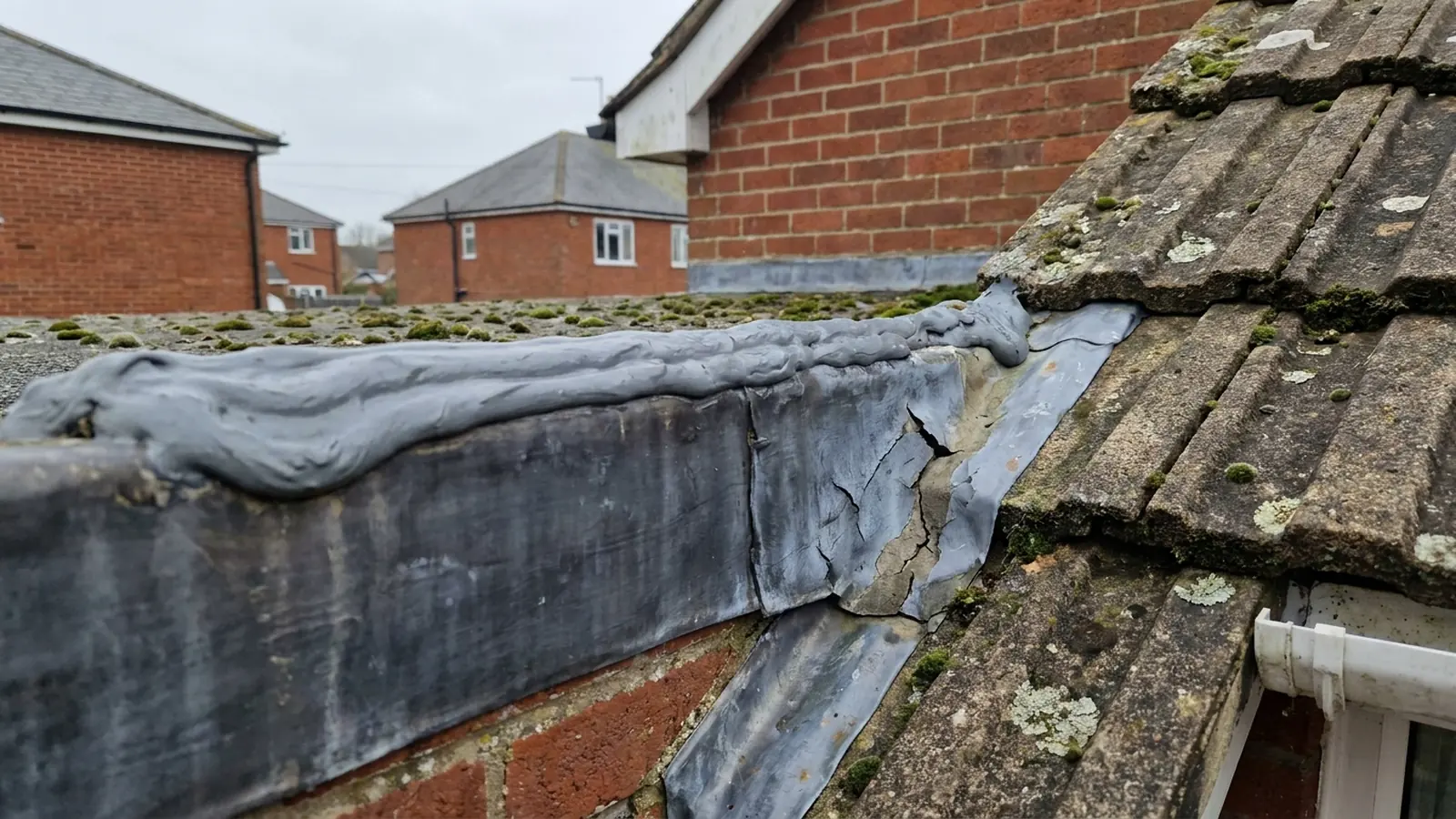
A line of sealant where the roof meets the wall
What it actually isFlashing stuck to the face of the brick instead of chased into the joint. It buys a winter or two, then the sealant lets go and the water goes straight in. It is the single most common thing we find.
What it needs
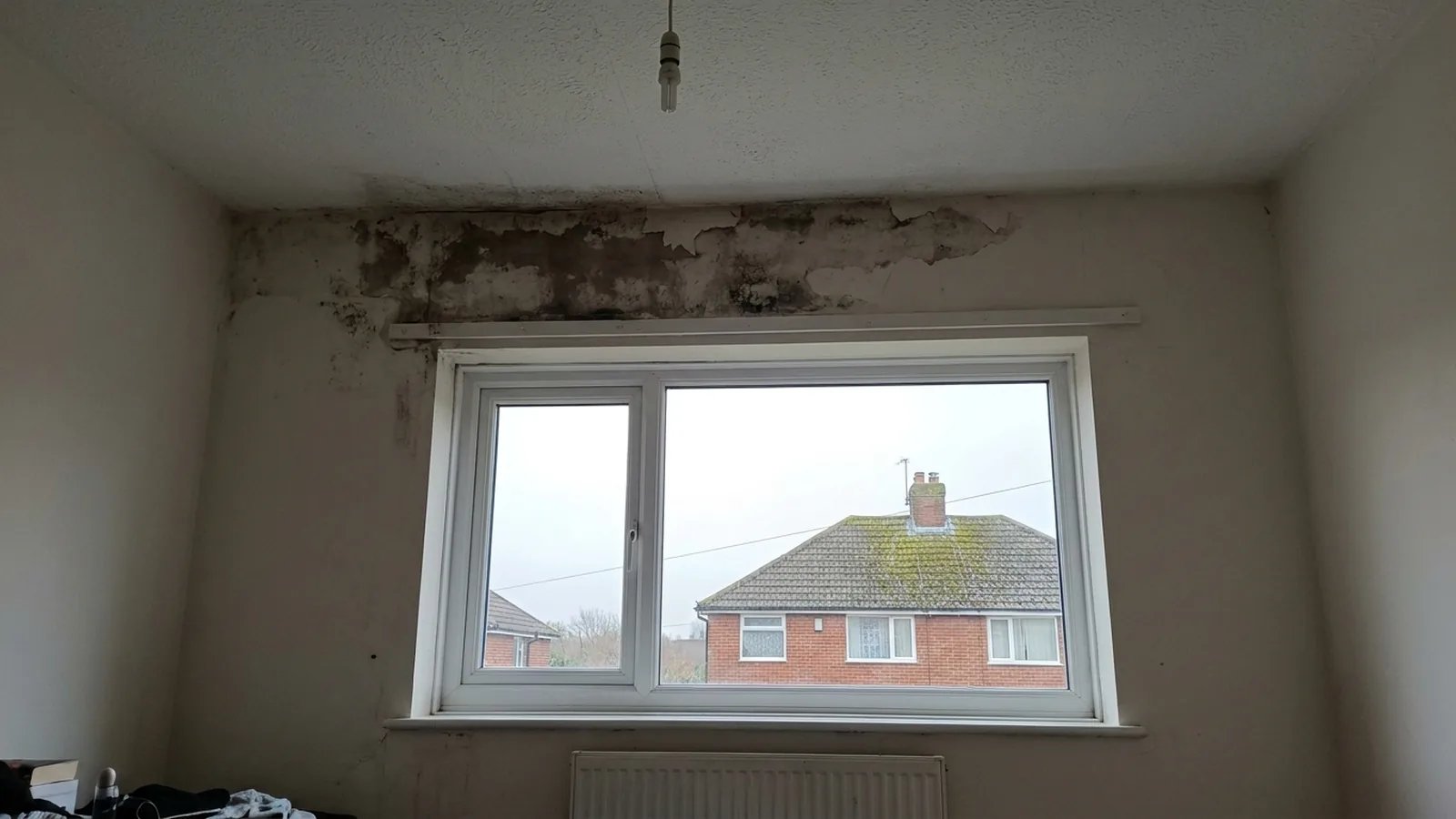
Damp inside, above the extension, with no visible drip
What it actually isUsually a missing cavity tray. Water crossing the cavity has nothing to catch it and throw it out, so it tracks down inside the wall and appears above the new roof.
What it needs
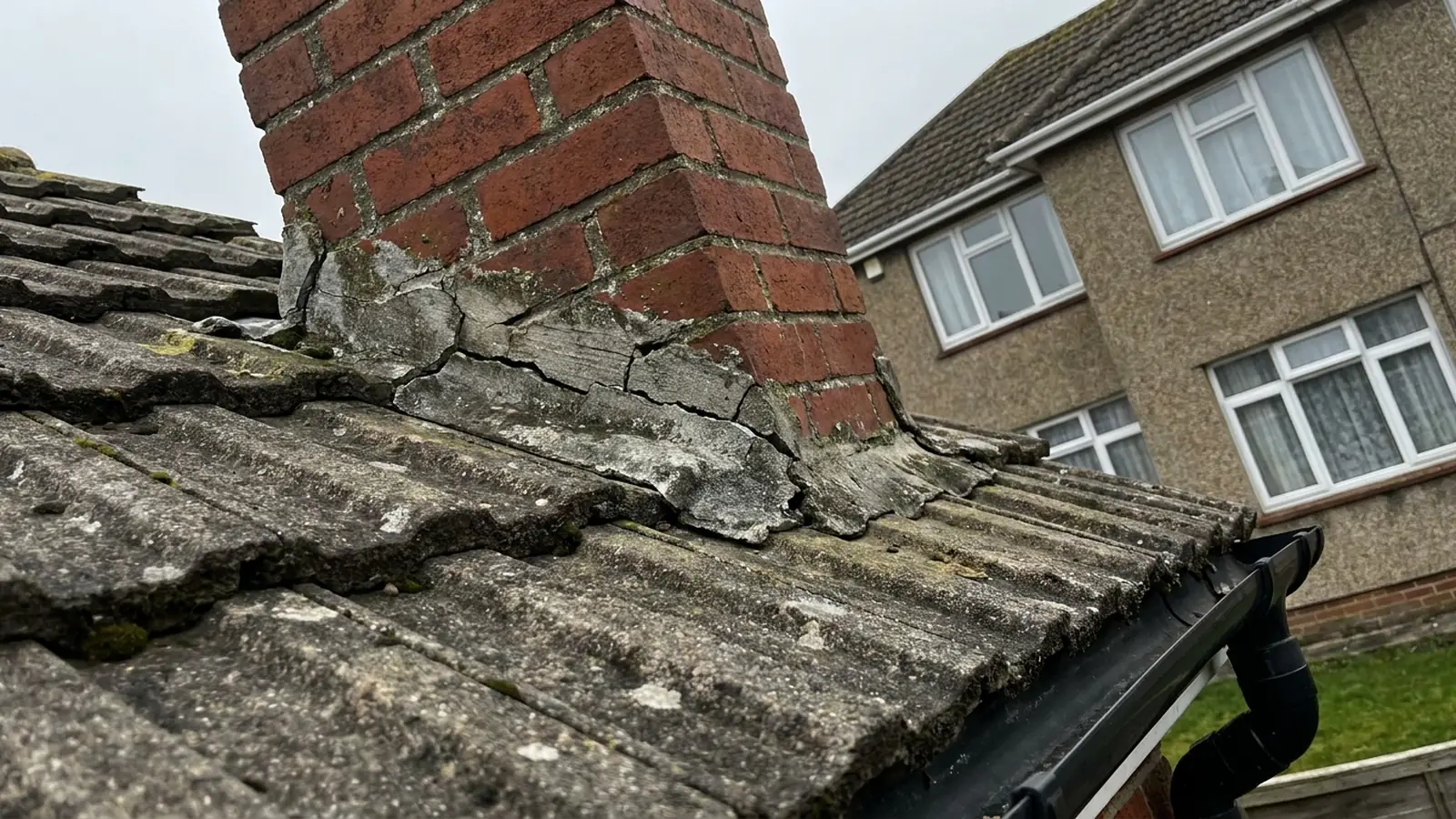
A cement fillet at the join, cracked along its length
What it actually isA mortar fillet used instead of lead. Two materials that move differently, bonded together, always crack. This is a proper flashing job rather than a repointing job.
What it needs
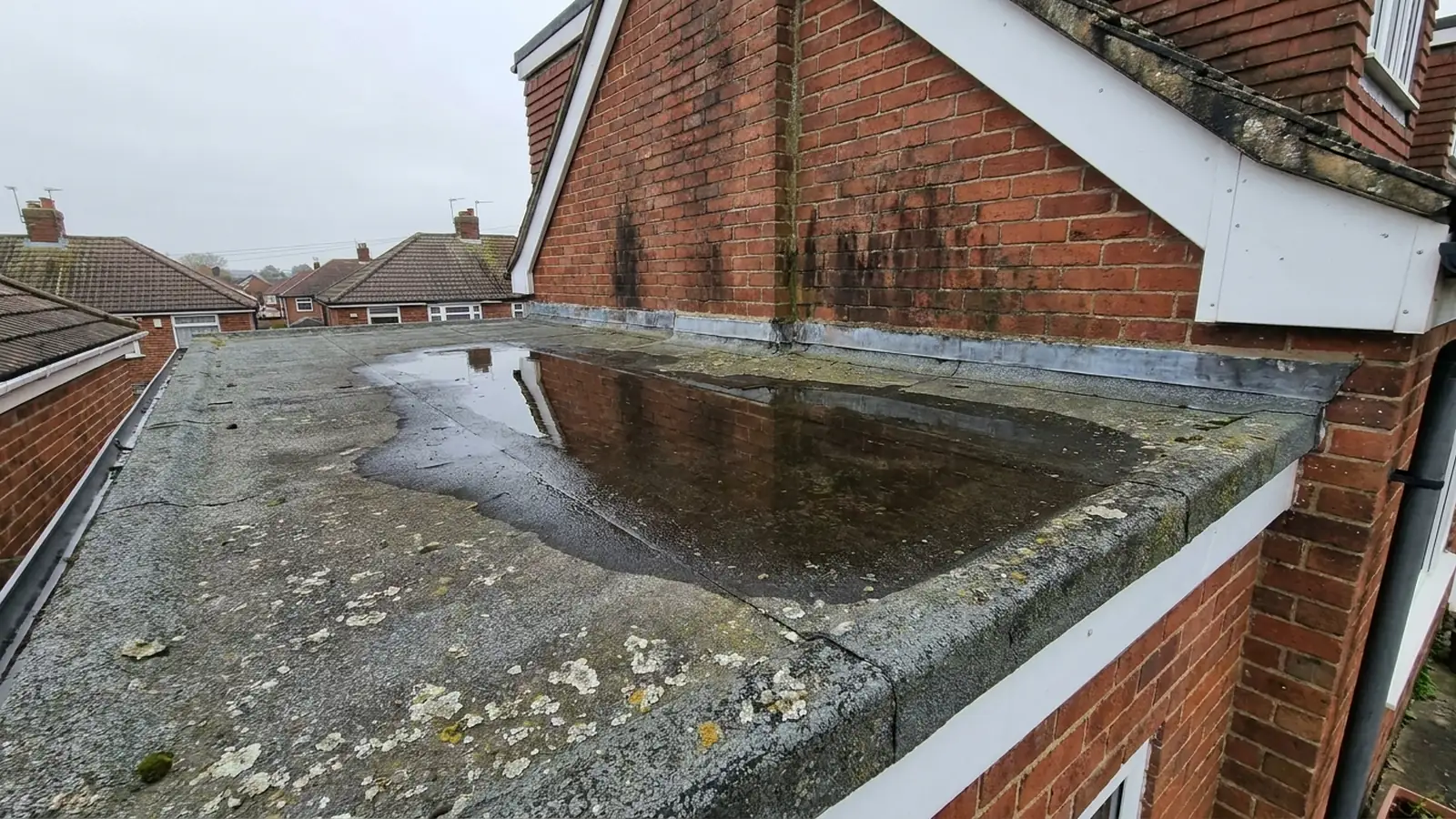
Water standing on a flat extension roof after rain
What it actually isThe falls. A flat roof needs enough slope to clear water within a day, and ponding shortens the life of any system. Correctable with firrings without replacing the whole roof.
What it needs
If any of these look like yours, it is a repair, and we will quote it as one.
Why extensions leak at the join and nowhere else
A roof sheds water. It does not seal anything. On a plain slope that is fine, because every drop that lands on it runs down and off the edge. The moment you introduce a wall, a valley or a change of level, something has to make that junction watertight, and on an extension you have introduced all three at once.
That is why extension leaks are so predictable. In fifteen years of looking at them the water is nearly always coming in at the abutment where the new roof meets the old wall, or at the valley where the new roof meets the old roof. The covering itself is usually fine.
The proper detail is not complicated, it is just slow. Lead is cut into the mortar course, wedged, pointed and dressed down over the covering, stepping up the courses where the roof runs up a gable. On a cavity wall a tray goes in above it to catch water crossing the cavity and throw it back out. That is a day of careful work on a job that might otherwise take three.
The shortcut is a bead of sealant along the top of the tiles, or a cement fillet where lead should be. Both look finished. Both fail, sealant in a couple of winters and cement as soon as the two materials move against each other, which they do because one is flexible and one is not.
It is worth knowing this before you accept a quote for an extension, because the difference between a roof that is fine for thirty years and one that leaks in year three is almost entirely in that one day of lead work. If a price looks noticeably cheaper than the others, the join is usually where the difference has come from.
Questions about extension roofs
Can you match my existing roof tiles?
We get as close as the range allows, and we will show you the option before you commit. On an older roof an exact match often is not made any more, and new tiles have not weathered, so there is usually a visible difference at first that closes over a few years.
Should my extension have a flat or pitched roof?
Usually the design decides it. If the extension sits under a first floor window there is often not the headroom for a pitch, which is why single storey rear extensions are so often flat. Where there is a choice, a pitched roof lasts longer and matches the house.
Do I need building regulations approval?
The extension will, and the roof is part of that. We build to the approved drawings and to current regulations. Planning permission is a separate question and depends on the size and the property, which your architect or builder will be handling.
What is a cavity tray and do I need one?
It is a barrier built into a cavity wall above the new roof, to catch water crossing the cavity and throw it back outside. If your extension abuts a cavity wall then yes, you need one, and leaving it out causes damp inside with no visible leak.
My existing extension leaks. Do I need it re-roofed?
Very likely not. On the extensions we get called to, the water is almost always coming in at the join rather than through the covering, and the join can be redone without touching the rest of the roof.
How long will it take?
Three days to a week on most extensions. The covering goes on quickly. The lead detailing at the join is the part that takes the time, and it is not the part to rush.
Can you do the roof if someone else is building the extension?
Yes, and that is how most of them work. Tell us when the structure will be ready and we will book it in, and we are happy to speak to your builder directly.
- Service
New Build Roofs
A roof on a property that has never had one.
Learn more - Service
Flat Roofing
GRP, EPDM and torch-on for a flat extension roof.
Learn more - Service
Chimneys & Leadwork
The flashing and valley work an extension lives on.
Learn more - Service
Tiled Roofs
Concrete and clay tile, stripped and relaid.
Learn more
Where we roof extensions
Based in Bournemouth, working across the conurbation and the towns just outside it.
Get the join done properly
Tell us what you are building and we will come and look at where the new roof meets the old one.
Get a free quote
Tell us what you need and we'll come back with a price. No pressure, no hard sell.
Prefer to talk? Call Southern Counties Roofworks Ltd on 07895 305286