
TiledRoofReplacementinBournemouth&Poole
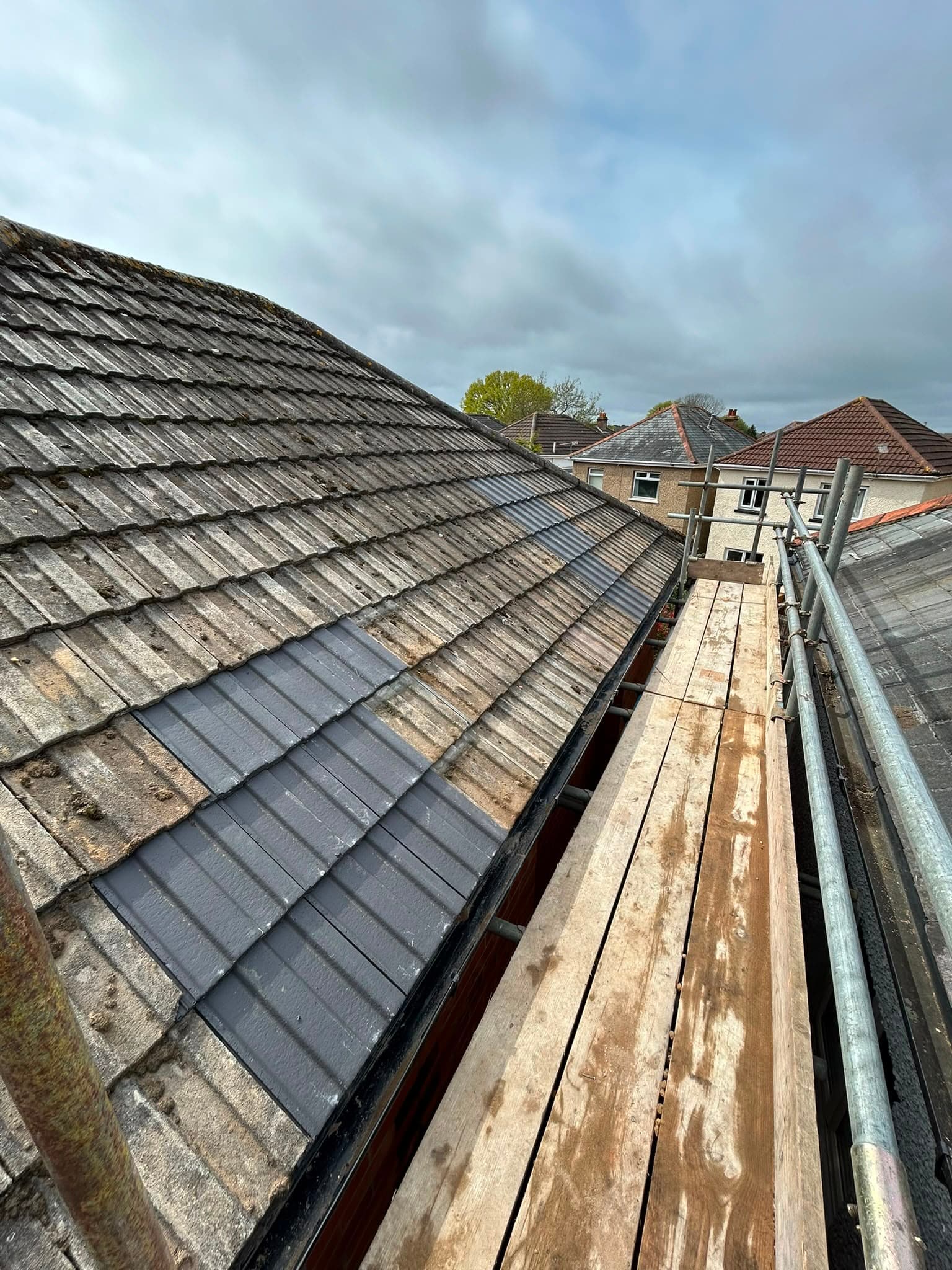
Stripped back to the rafters and rebuilt, not covered over. New felt, new battens, and the ridge fixed mechanically so it cannot work loose.
- The timbers get checked while the roof is open
- Dry ridge and dry verge, not sand and cement
- 15 to 20 year guarantee on the finished roof
Get a quote
Tell us what the roof is doing and we will come and look at it.
- 1–2 wksTypical run on a house
- 40–60 yrLife of a new tiled covering
- 5.0 ★From 31 Google reviews
- BothOwners on every job
What a tiled roof replacement actually involves
A tiled roof replacement means taking the whole covering off, back to the rafters, and building it up again. The tiles come off, the old felt and battens come out, and what goes back on is a new membrane, new battens and a new covering. That is worth spelling out because it is not what everyone does. Laying new tiles over old felt hides the problem rather than fixing it. If the membrane underneath has perished, water still gets past the tiles and into the roof space, and you have paid for a roof that will fail again. Most of the houses we do this on around Poole and Bournemouth are concrete interlocking tiles from the fifties onward. They tend to go porous and shed their surface across the whole roof at roughly the same time, which is what makes replacement the honest answer rather than patching.
- The old covering, felt and battens all come out
- Rafters are inspected while they are exposed and anything rotten is flagged
- We work in sections, so the roof is never left open overnight
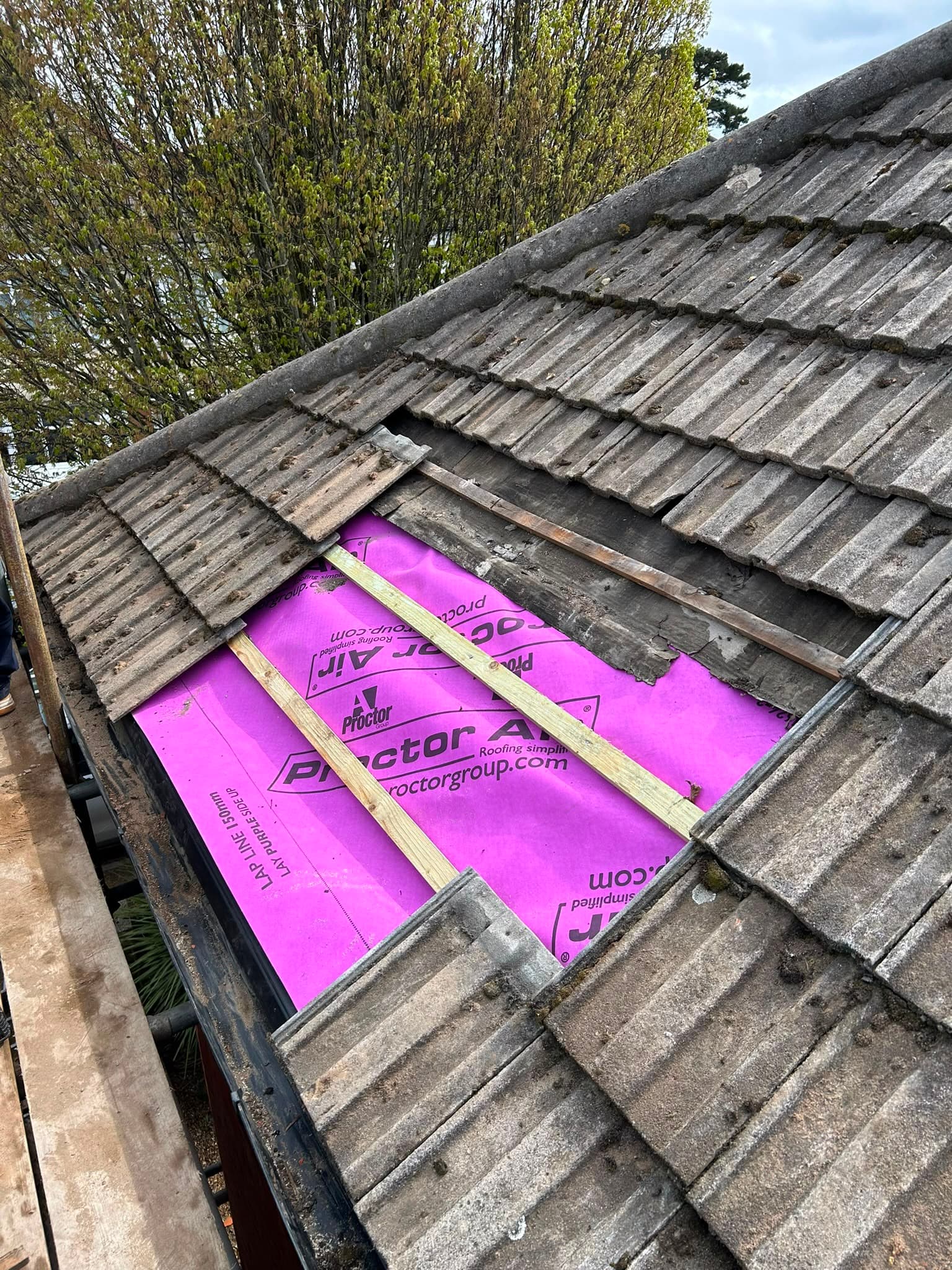
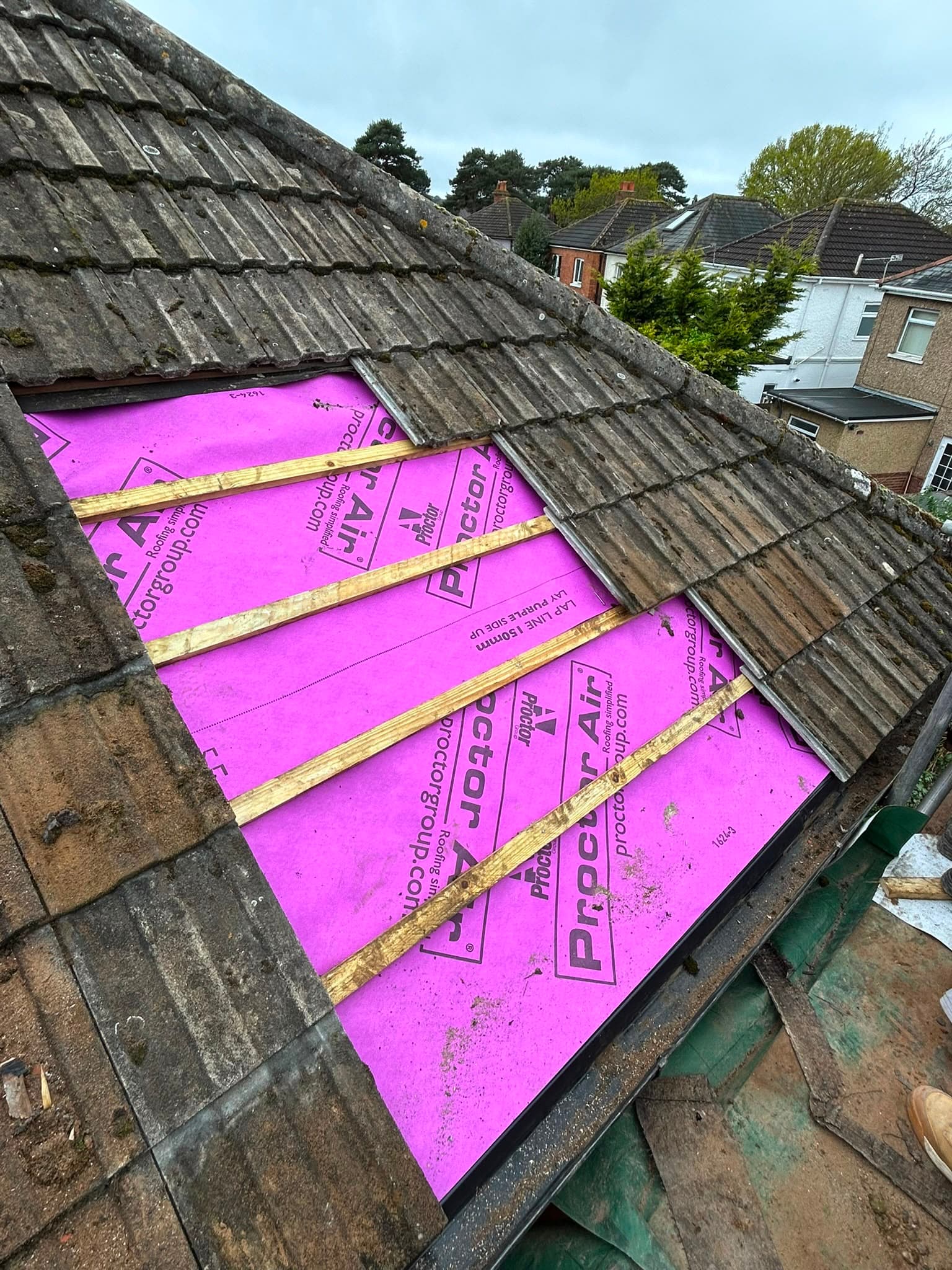 Stripped back, new felt and battens going on
 Step 1
We look at it and tell you straight
Up on the roof, not guessing from the ground. If a repair will do instead of a replacement, you will hear that first.
 Step 2
We strip it and rebuild it properly
New Proctor Air felt, new battens, new covering, and the ridge and flashing details finished the way they should be.
 Step 3
We guarantee it and clear up
A 15 to 20 year guarantee on the finished roof, the waste taken away and the site swept before we go.
1–2 wks
Typical run
40–60 yr
Life of a new tiled covering
15–20 yr
Our guarantee
5
Towns we cover
Replace the whole roof, or repair what has failed
Not every tired looking roof needs replacing. This is how we decide, and it is the same conversation we have on the doorstep.
| Full replacement | Repair | |
|---|---|---|
| Right when | The covering has failed across the whole roof | One area has failed and the rest is sound |
| Felt underneath | Perished, or daylight visible in the loft | Still intact |
| Repair history | Repeated fixes in different places over a few years | First or second problem on this roof |
| Typical run | One to two weeks | Hours to a day on most jobs |
| Cost | Priced after a survey | A fraction of a replacement |
| Our honest take | Worth it when the whole covering has gone | If this is your roof, we will say so and quote the repair |
Swipe to see every column
What goes into the finished roof
The specification is the same on every tiled replacement we do.
Proctor Air breathable membrane
Laid over the rafters before the battens go on. It sheds water that gets past the tiles and lets moisture out of the roof space instead of trapping it against the timber.
New treated battens
Gauged to the tile being used. Old battens come out with the old felt, because reusing them puts a new covering on tired timber.
Dry ridge and dry verge
Ridge and hip tiles fixed mechanically. Mortar bedding cracks as the roof moves, then the ridge works loose and starts letting water in.
Lead to the right code
Flashing at chimneys, valleys and abutments in the correct gauge. Lead that is too thin splits where it moves, usually within a couple of winters.
Fitted to manufacturer spec
British Standard materials, laid to the manufacturer's instructions so the finished roof complies with building regulations.
A 15 to 20 year guarantee
Issued when the job is signed off. If something goes wrong inside that period you call us and we come back out.
Straight answer
What a tiled roof replacement costs
Priced after we have seen it
A tiled roof is priced on what it actually is, not on a rate per square metre. Size and pitch set the bulk of it, access decides how much scaffold you need, and the state of the timbers underneath is not knowable until the covering is off. We look at all three, then give you a written price.
- Scaffold, materials, labour and waste removal all in the one figure
- Rotten timber priced separately and only if we find it
- If a repair will do instead, we quote the repair
- No charge for coming out and no pressure afterwards
Price follows the size of the roof, its pitch, how easy it is to get scaffold around the house, and what we find when the covering comes off. A bungalow and a three storey semi are not the same job. We would rather come and look at it than guess down the phone.
How the job runs
One to two weeks on most houses, from scaffold going up to the site being cleared.
Survey
We get up on the roof and look at the covering, the ridge, the flashing and the loft side of the felt. Then we tell you whether it needs replacing.
Scaffold and delivery
Scaffold is erected first and the tiles, felt and battens are delivered to site so the work runs straight through once it starts.
Strip
Old tiles, felt and battens come off in sections. The rafters get checked while they are exposed and you hear about anything rotten there and then.
Felt and batten
Proctor Air membrane over the rafters, then new treated battens gauged to the tile going on.
Tile
The new covering is laid to manufacturer spec, working up the roof course by course.
Ridge, hips and flashing
Dry ridge on the ridge and hips, and the lead details around chimneys, valleys and abutments. This is the part that decides whether the roof leaks.
Clear up and guarantee
Scaffold down, waste away, ground swept, guarantee issued.
What a finished tiled roof looks like
Illustrations of a finished tiled roof, so you can see what you are buying. These are not photographs of our own jobs. Every finished roof we have photographed so far is a slate-effect covering, which lives on the slate page.
Ask us on a visit and we will take you to a tiled roof we have done.
What customers say
We are a new company and we are building this up honestly. These are the jobs people have been kind enough to comment on.
George Gudge
Can't recommend Southern Counties Roofwork highly enough. I had them out for full re-roof / fascias & guttering - and the whole experience was spot on. Great communication, gave me a clear quote and explained everything properly. The team were punctual, polite, hardworking and obviously know their trade. The finished roof looks brilliant and is built to last. No mess left behind either.
Jacey Arnold
Recently had this company out to have my roof repaired after having problems with leaks during the winter months and something I had been looking to get sorted. The guys came out to take a look at the issues before quoting, once a quote was given work was agreed and I went ahead. Extremely professional, reliable and hard working! Would highly recommend this company and would definitely use again.
Celine Fox
Owen and Sam did a fantastic job with our roof. They were professional, reliable, friendly, and clearly take pride in the work they do. The work was completed to a really high standard, and everything was left clean and tidy afterwards. I’d definitely recommend to anyone looking for a trustworthy roofing company. Great service from start to finish!
Our projects
Roofs we have stripped and relaid, written up properly. What we found, what we did and what it cost.
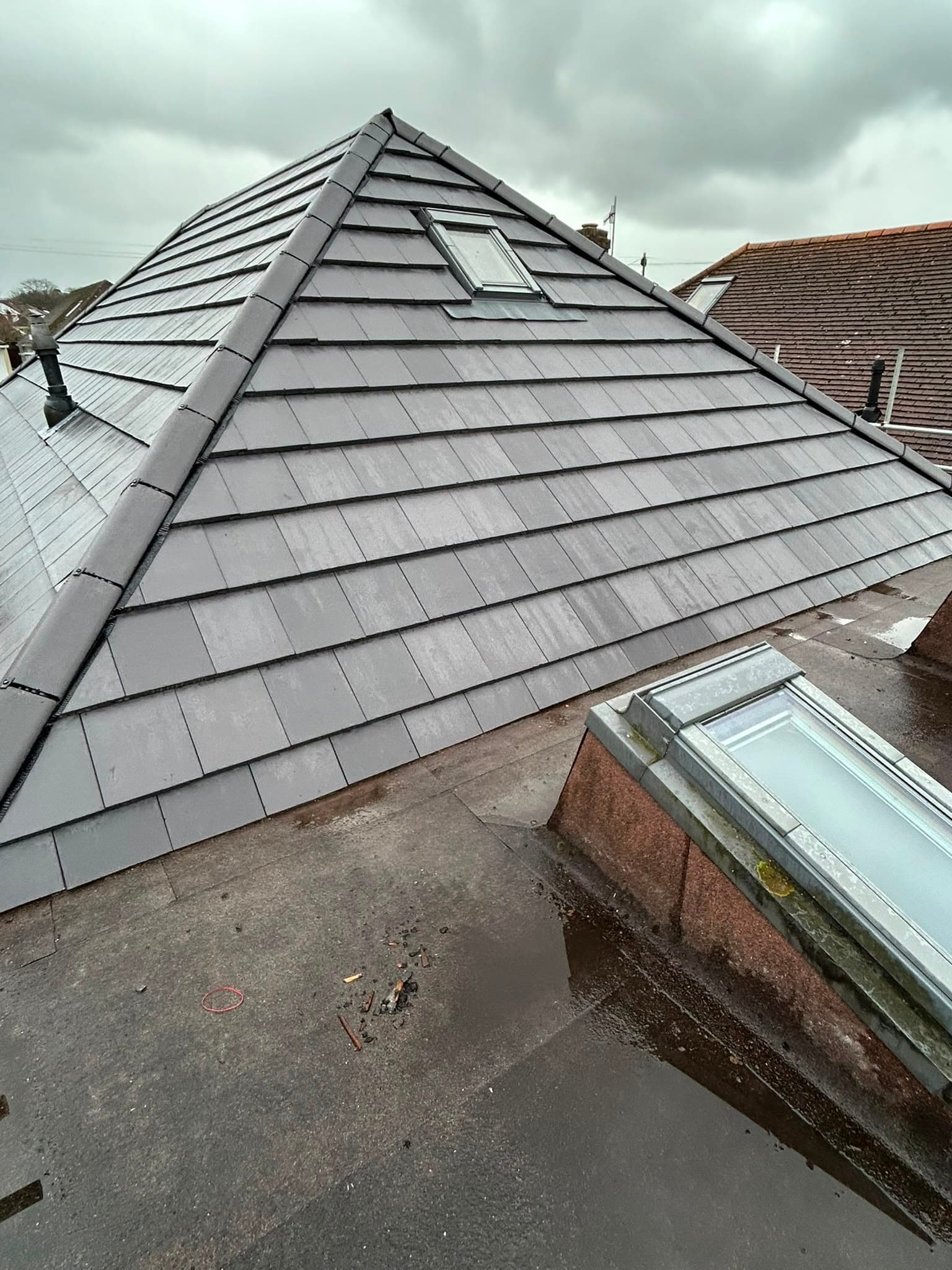
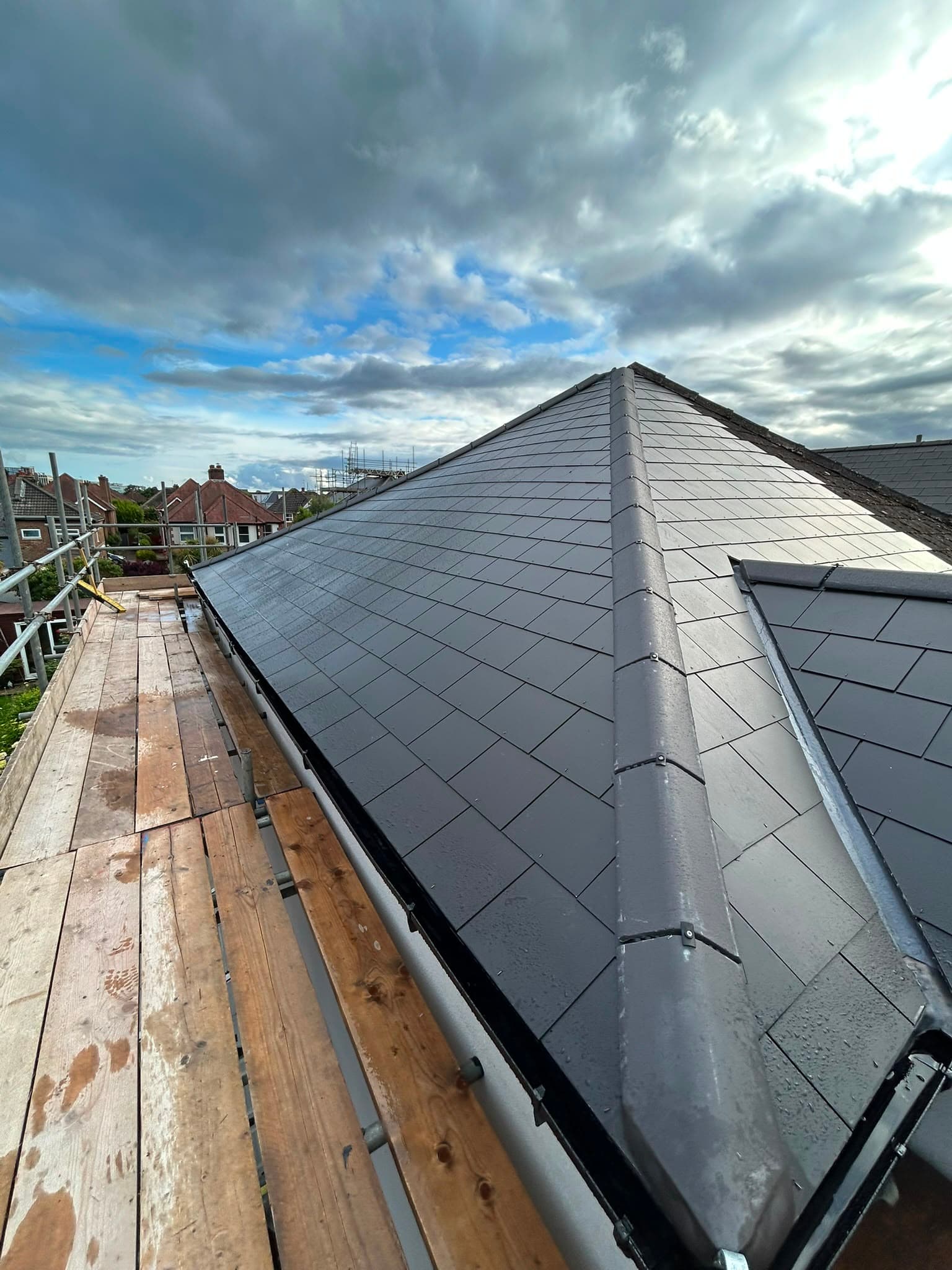
The things people ask on the doorstep
Not about the tiles. About letting a couple of roofers loose on the house.
What if it rains while the roof is off?
We strip and re-cover in sections rather than opening the whole roof at once, so it can always be made watertight at the end of the day. If the weather turns badly we stop and sheet it up.
What state will the garden be in?
Waste goes straight off the roof into a skip or grab lorry rather than onto the lawn. We sweep the ground before we leave, including for nails.
Who is actually going to be here?
The two of us. The person who quotes your roof is the person who does the work, which is why we can tell you honestly what we find.
What you can see from the ground
Four things worth looking for before you call anyone. None of them are proof on their own, but together they build a picture.
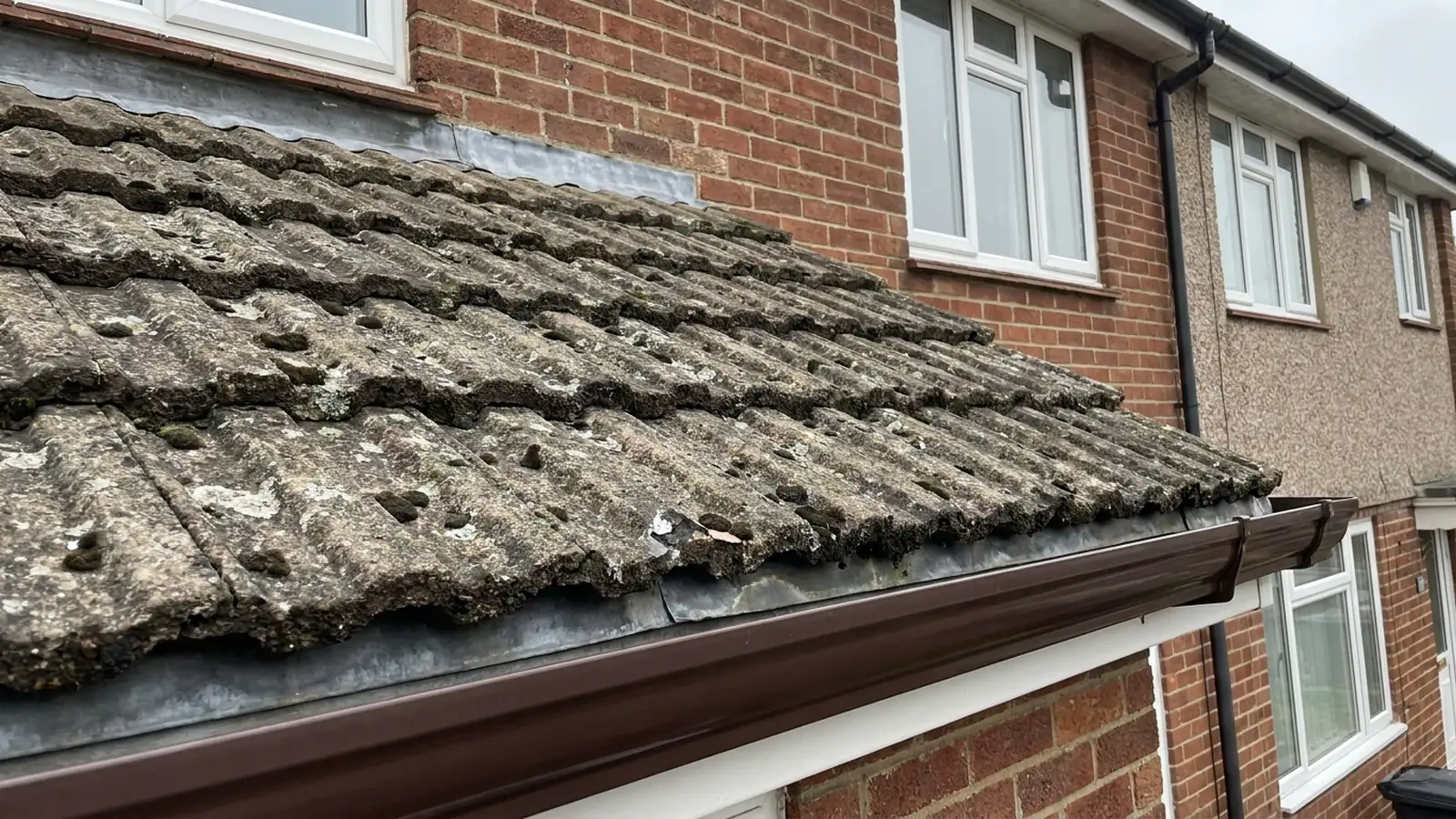
Tiles look rough or chalky, and there is grit in the gutters
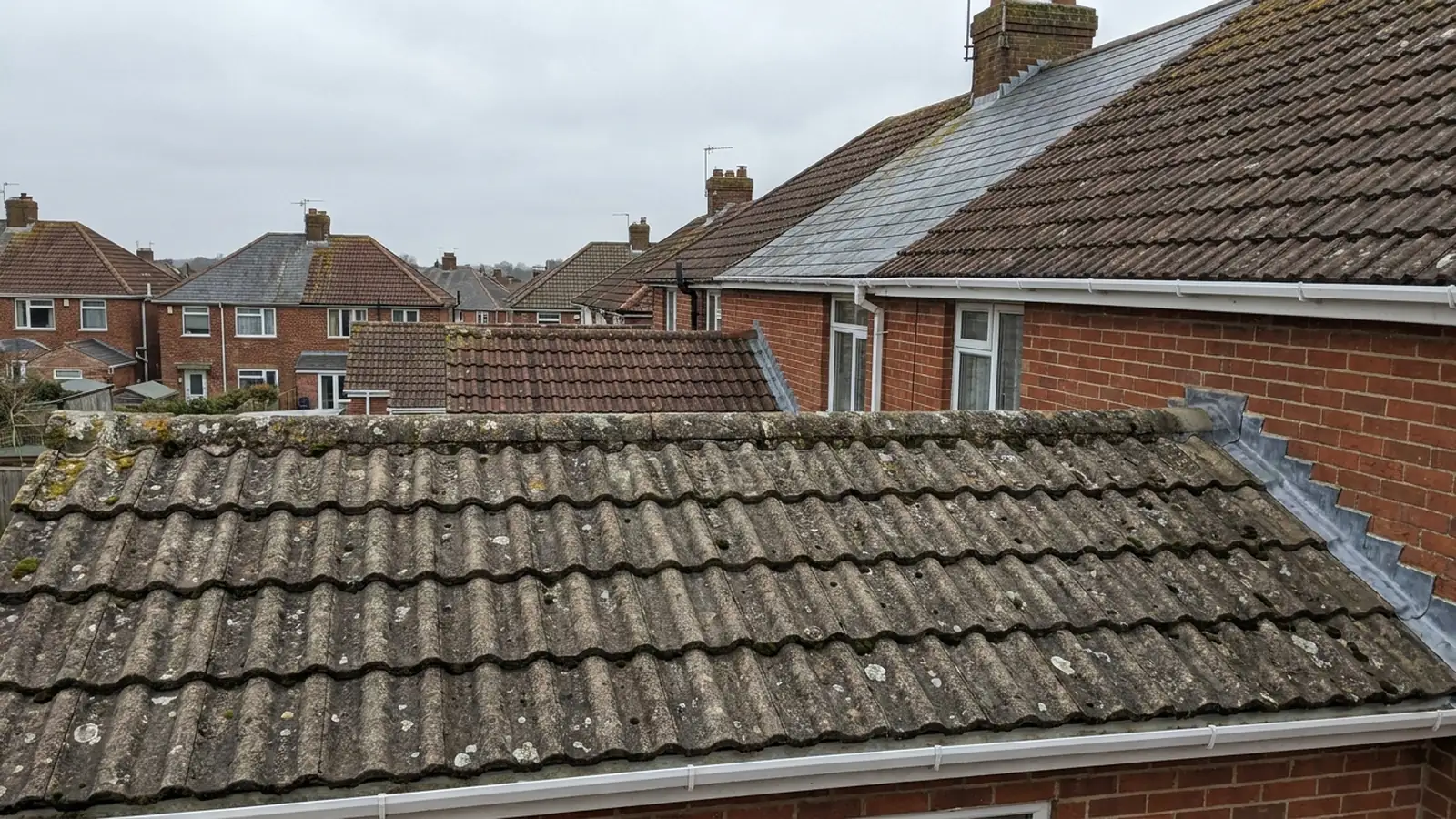
What it actually isConcrete tiles shedding their surface. It happens across the whole roof at once, which usually means the covering is at the end of its life rather than damaged in one spot.
What it needs
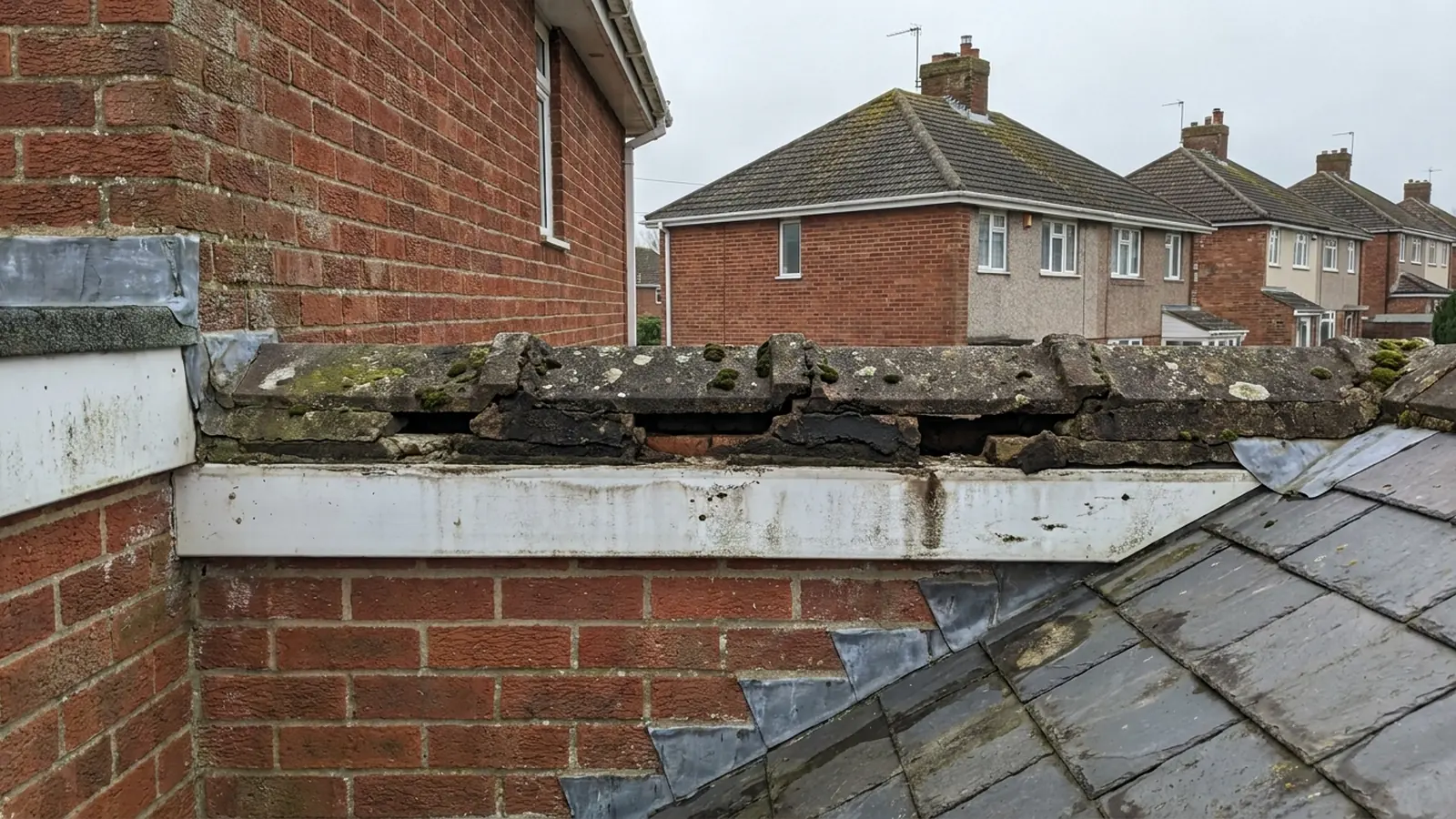
Gaps or crumbling mortar along the ridge line
What it actually isBedding mortar that has cracked and released. On its own this is a re-bedding job, not a replacement, and we will quote it as one.
What it needs
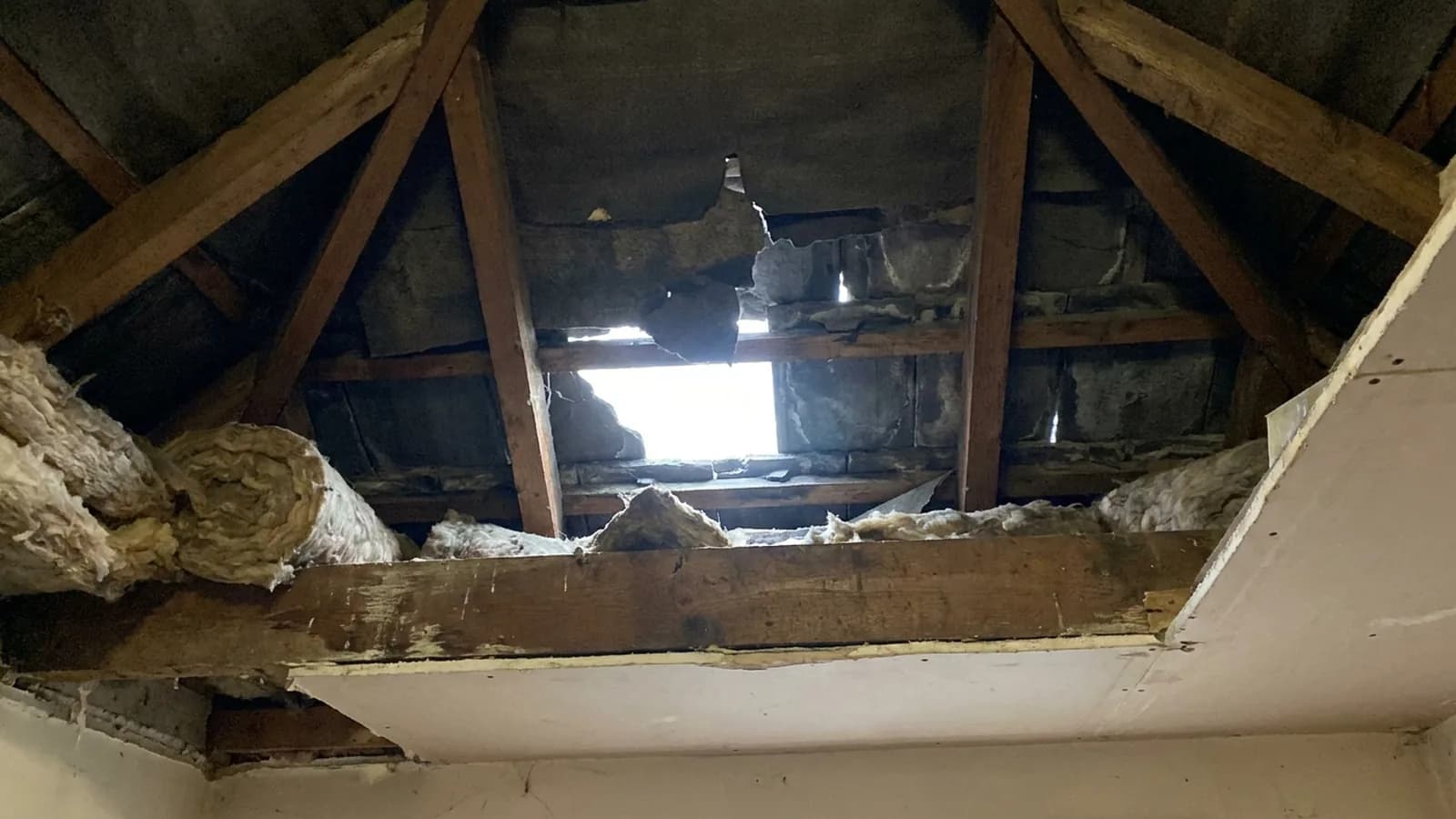
Daylight visible in the loft, or felt hanging in strips
What it actually isThe membrane has perished. This is the one that points hardest at a full replacement, because the felt cannot be replaced without taking the covering off.
What it needs
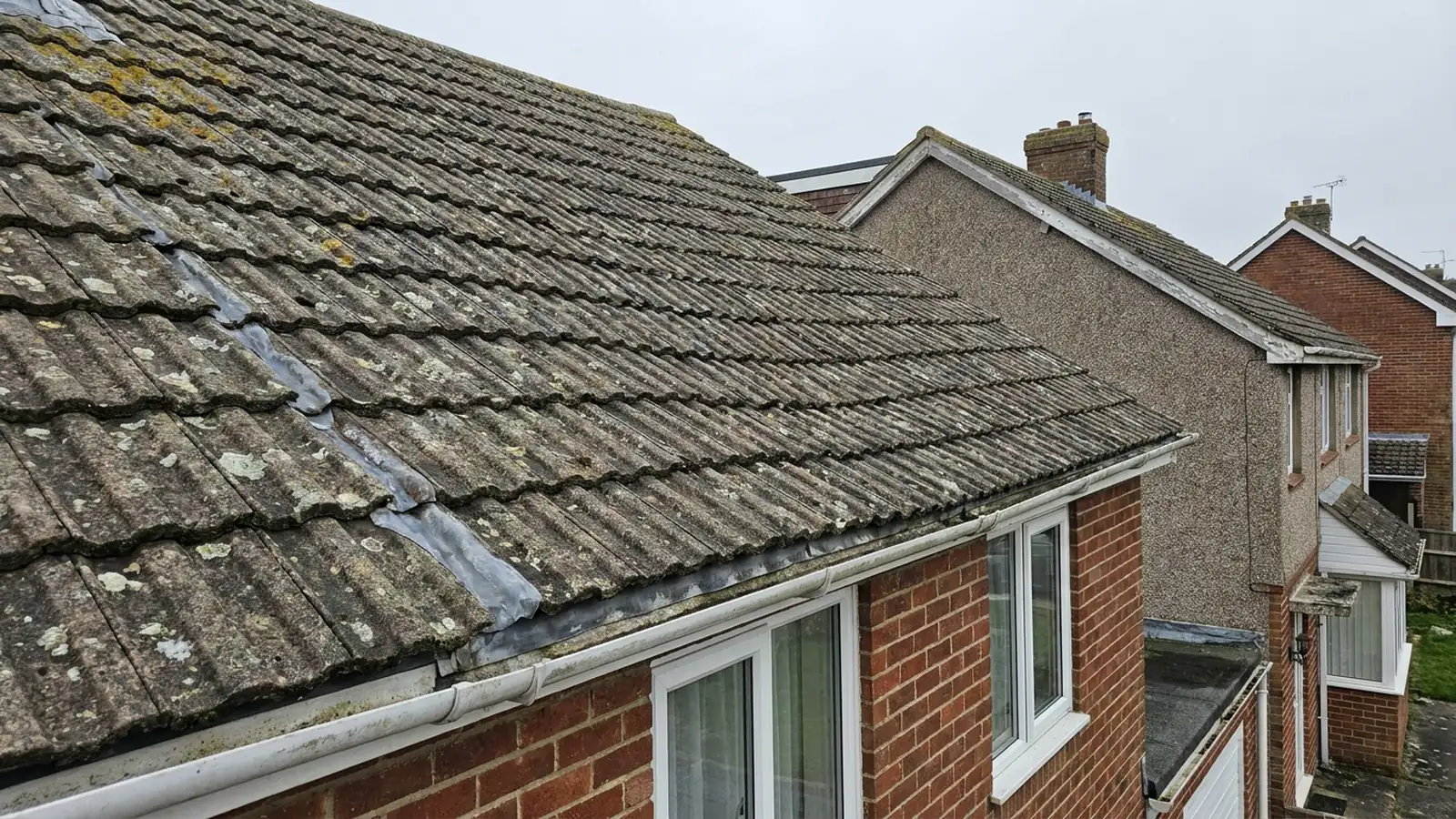
A dip or wave in the roof line
What it actually isUsually the rafters or purlins rather than the covering. Worth getting looked at sooner rather than later, because it is structural and it does not improve on its own.
What it needs
If you can see two or more of these, it is worth having someone up there.
Concrete or clay, and which suits your house
Most tiled roofs around Bournemouth and Poole are concrete. Concrete interlocking tiles went on almost everything built from the fifties onward, they are cheaper than clay, and they lock together so a roof covers faster and costs less to lay.
Clay is the older material and it lasts longer. It holds its colour rather than fading, and it is what looks right on a period property or anywhere the street is already clay. It costs more, both to buy and to lay, because plain clay tiles are smaller and there are far more of them per square metre.
The practical answer on most houses is to replace like with like. The roof structure was designed for the weight of what is on it, so swapping a light concrete tile for a heavier clay one is a decision that needs the timbers looking at first. Where a change makes sense we will say so, and where it does not we will tell you that too.
We use Marley Modern tiles where they suit the property, and Proctor Air breathable felt underneath on every replacement. Whatever goes on your roof, we will tell you what it is and why before we order it.
Questions about tiled roof replacement
How long does a tiled roof last?
A new concrete tiled covering laid properly should give you 40 to 60 years. Clay lasts longer. In practice what fails first is usually the felt underneath or the mortar at the ridge, not the tiles themselves, which is why both get replaced as part of the job.
Can you just put new tiles over the old ones?
No, and you should be wary of anyone who offers to. The felt and battens underneath are the part that has usually failed. Covering them leaves the problem in place and adds weight the roof was not designed to carry.
Do I have to replace the whole roof at once?
Not always. If one elevation has failed and the other is sound, a single slope can be done on its own. We will tell you which situation you are in rather than quoting the whole thing by default.
What is dry ridge, and why does it matter?
Dry ridge fixes the ridge and hip tiles mechanically instead of bedding them on sand and cement. Mortar cracks as the roof moves through the seasons, and once it cracks the ridge tiles work loose and water gets in. Dry systems do not rely on the mortar staying intact.
Will my gutters need doing at the same time?
Often it makes sense. The scaffold is already up and the roofline is exposed, so replacing tired fascias, soffits or guttering costs far less done together than as a separate visit later. We will tell you if yours are fine and do not need touching.
How much mess is there?
A strip is dusty and noisy, and there will be a skip or a grab lorry outside for part of the job. Waste comes off the roof directly rather than being dropped on the garden, and we sweep the ground before we leave.
Do you work in bad weather?
We work through normal wet weather. We do not strip a roof in high wind or heavy rain, because it is not safe and it is not good for the house. If we stop, the roof is sheeted up and made watertight first.
- Service
Slate Roofs
Natural and fibre cement slate, stripped and relaid.
Learn more - Service
New Build Roofs
A roof on a property that has never had one, built to the drawings.
Learn more - Service
Extension Roofs
Tying a new extension roof into the existing one.
Learn more - Service
Roof Repairs
Where a replacement is not the answer and a repair is.
Learn more
Where we replace tiled roofs
Based in Bournemouth, working across the conurbation and the towns just outside it.
Find out whether your tiled roof needs replacing
We will get up and look at it, tell you what we find, and quote the repair instead if that is the honest answer.
Get a free quote
Tell us what you need and we'll come back with a price. No pressure, no hard sell.
Prefer to talk? Call Southern Counties Roofworks Ltd on 07895 305286