
LeadFlashing&ValleysinBournemouth&Poole
Tiles shed water. Lead seals the joints. Every place your roof stops being a plain slope is lead, which is exactly where roofs leak.
- Chased into the mortar joint, never sealed to the face
- The right code of lead for the span, so it does not split
- Often a repair measured in hours, not a new roof
Get a quote
Tell us where the water is showing and when it happens.
- 4 hrsThe Dorchester flashing repair
- DecadesLife of lead done properly
- 5.0 ★From 30 Google reviews
- BothOwners on every job
Why every roof depends on lead
A tiled roof does not seal anything. It sheds. Water lands on it, runs down and off the edge, and as long as the roof is a plain slope that works perfectly well. The trouble starts wherever it stops being a plain slope. A chimney coming through it. A wall it runs up against. A valley where two slopes meet and everything landing on both of them is funnelled into one channel. A parapet, a box gutter, a dormer cheek. At every one of those the roof needs something that actually seals, and on virtually every house in this country that something is lead. Lead is used because it lasts and because it can be dressed by hand to fit an irregular shape. Done properly it will outlive the covering around it. Done in the wrong gauge, in runs that are too long, or stuck to the face of the brickwork with sealant, it fails in a couple of winters. That is the whole story of leadwork, and it is why we spend the time on it.
- Flashing, soakers, valleys, parapet and box gutter linings
- Cut into the mortar joint and wedged, not stuck on with mastic
- Laid in workable lengths so it can move without tearing
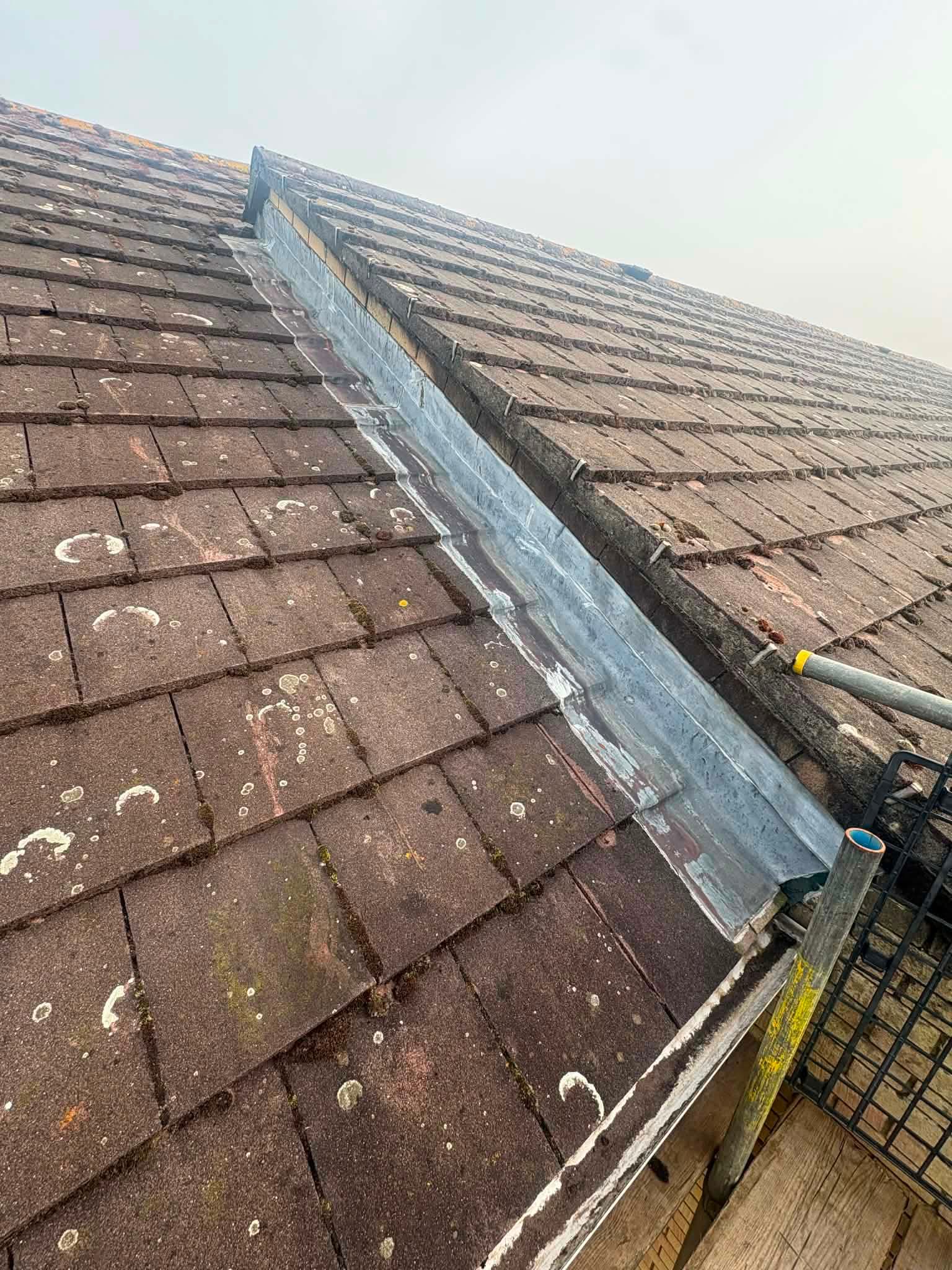
 Chased into the joint, wedged and dressed
 Step 1
We find which detail has gone
Flashing, valley, soaker or box gutter. Water travels, so we trace it back rather than treating whatever sits above the stain.
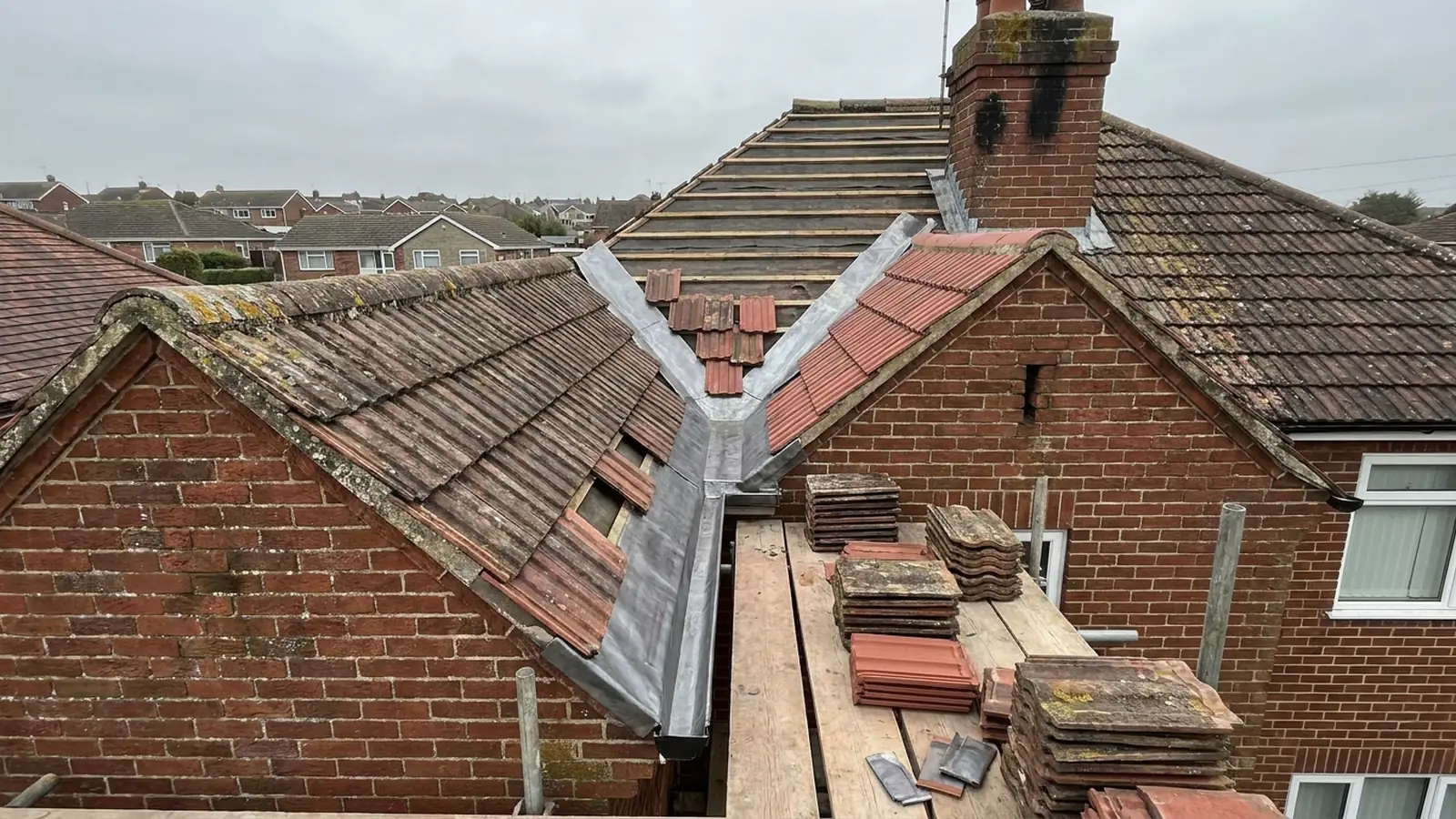 Step 2
We cut the old detail out
Failed lead and any sealant somebody else put over it comes out. Nothing gets covered up, because covering up is what got the roof here.
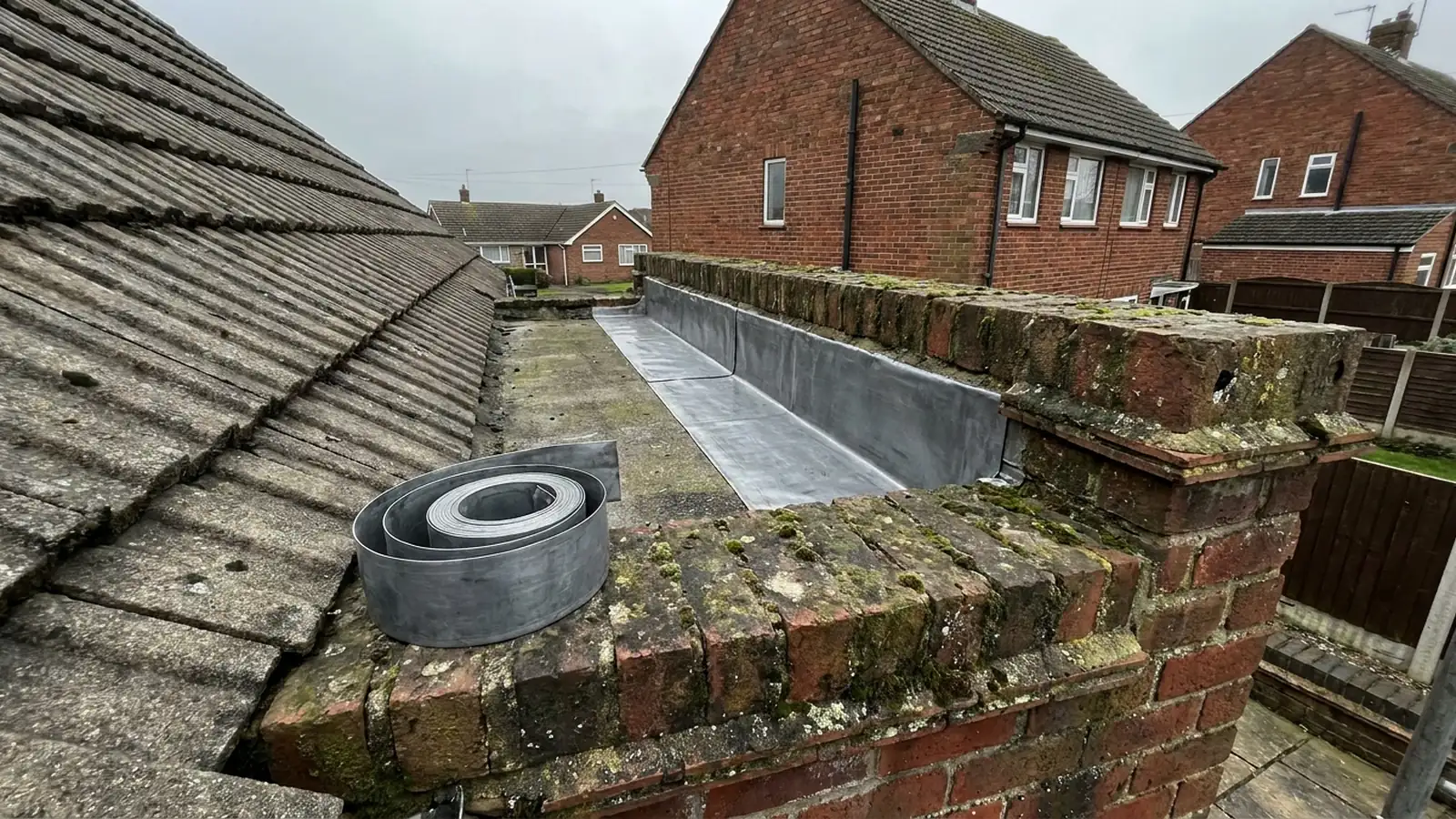 Step 3
We dress in new lead
Right code, chased into the joint, wedged, pointed and oiled so it weathers evenly instead of streaking your tiles white.
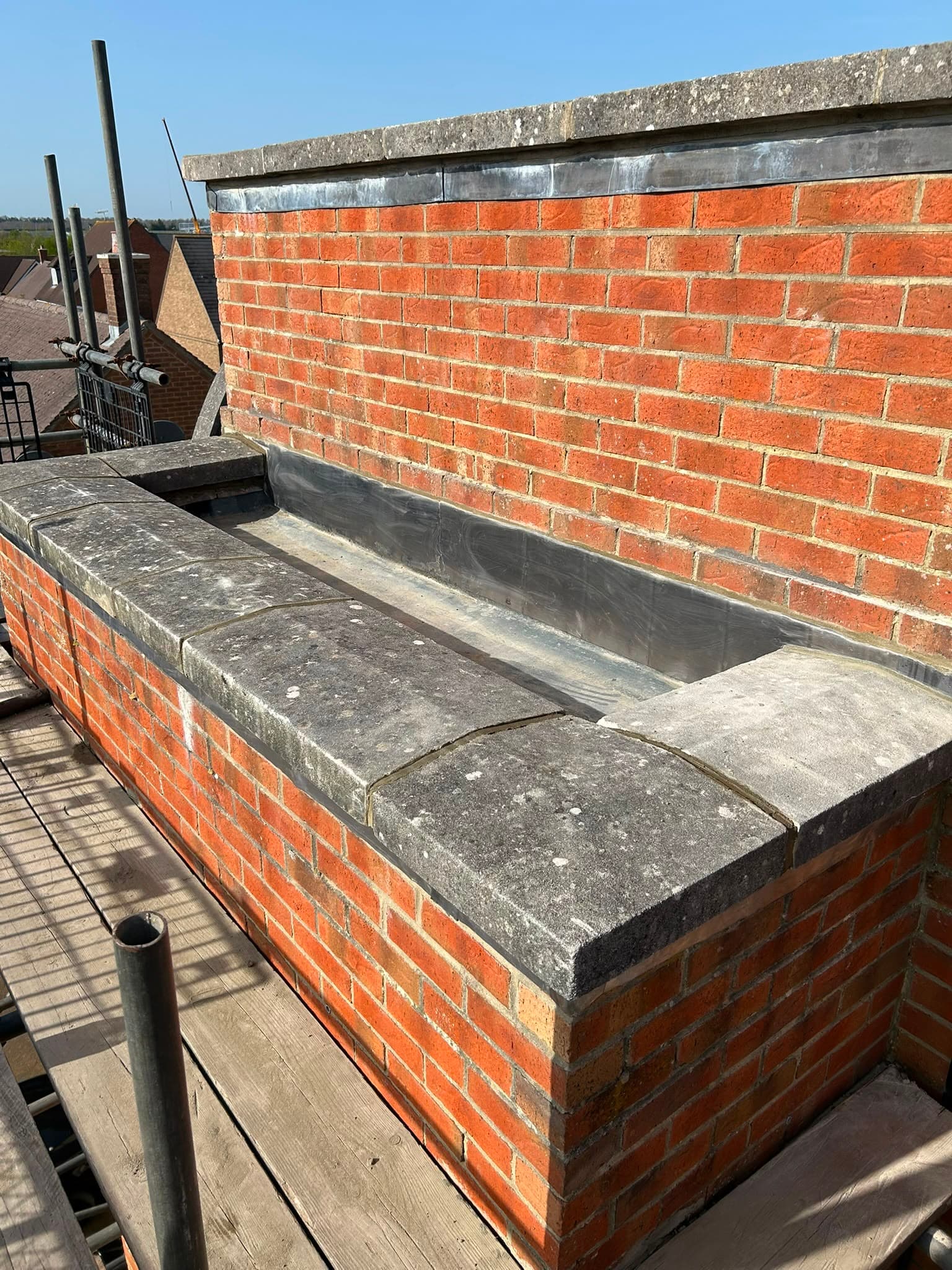
4 hrs
The Dorchester flashing repair
Code 4+
Lead gauge we work in
Decades
Life of lead done properly
5
Towns we cover
Lead done properly, against the shortcuts
Every one of these shortcuts looks finished on the day. Here is what each one actually buys you.
| Done properly | The shortcut | |
|---|---|---|
| How it meets the wall | Chased into the mortar joint and wedged | Stuck to the face of the brick with sealant |
| Life | Decades. Lead does not really wear out | One or two winters before the mastic lets go |
| Gauge | Code 4 or heavier, matched to the span | Thinner lead, cheaper and quicker to dress |
| Run lengths | Kept short with proper laps so it can move | One long unbroken run that splits down the middle |
| Instead of lead | Lead, at every joint | A cement fillet that cracks the first winter |
| What the next repair costs | There is not one for a very long time | More, because the shortcut has to be cleaned off first |
Swipe to see every column
What goes into leadwork
The details that decide whether it lasts twenty years or two.
The right code for the job
Lead is graded by thickness. Too thin for the span and it fatigues where it flexes, usually within a couple of winters. We work in code 4 and above depending on the detail.
Chased and wedged into the joint
Cut into the mortar course, wedged and pointed. Sealant on the face of the brickwork is a repair on somebody else's shortcut, never a detail in its own right.
Room to move
Lead expands and contracts a great deal with temperature. Runs are kept to sensible lengths with proper laps so it can move without tearing itself apart.
Stepped where it needs to be
Where the roof runs up a gable, the flashing steps up with the mortar courses. It takes far longer than a straight run, and it is the part that gets skipped.
Patination oil on new lead
New lead is oiled so it weathers evenly rather than washing white carbonate down the tiles below. A small job at the end that saves a stained roof.
Photographs of the detail
Valleys and flashings are the least visible parts of a roof. You get pictures of what we found and what went back.
Straight answer
What leadwork costs
Priced by the detail, after we have seen it
Leadwork is priced on the length of the detail, the code of lead it needs and how you reach it. A straight abutment flashing is a very different job from a stepped run up a gable or a full valley. The good news is that most of them are repairs measured in hours rather than days.
- Access priced separately and honestly
- Only the detail that has failed, not the whole roof
- Old sealant and cement fillets cleaned off and priced in
- No charge for coming out and no pressure afterwards
The Dorchester job was about four hours on a roof that had been quoted for replacement. That is not unusual, and it is why we look before we price.
How the job runs
Hours for a flashing repair. A day or more for a full valley.
Trace it
On the roof and into the loft, following the water back to the detail that has actually failed rather than the one above the damp patch.
Strip the failed detail
Old lead out, along with any sealant or cement fillet that has been put over it. It all has to go before anything new can be dressed in.
Cut the chase
The mortar joint is raked out to take the upstand of the new flashing, stepped up the courses where the roof runs up a gable.
Dress the lead
New lead in the right code, worked to the shape by hand, wedged into the chase and dressed down over the covering.
Point, oil and clear
Chase pointed, new lead oiled so it weathers evenly, debris cleared out of the gutters and valleys below.
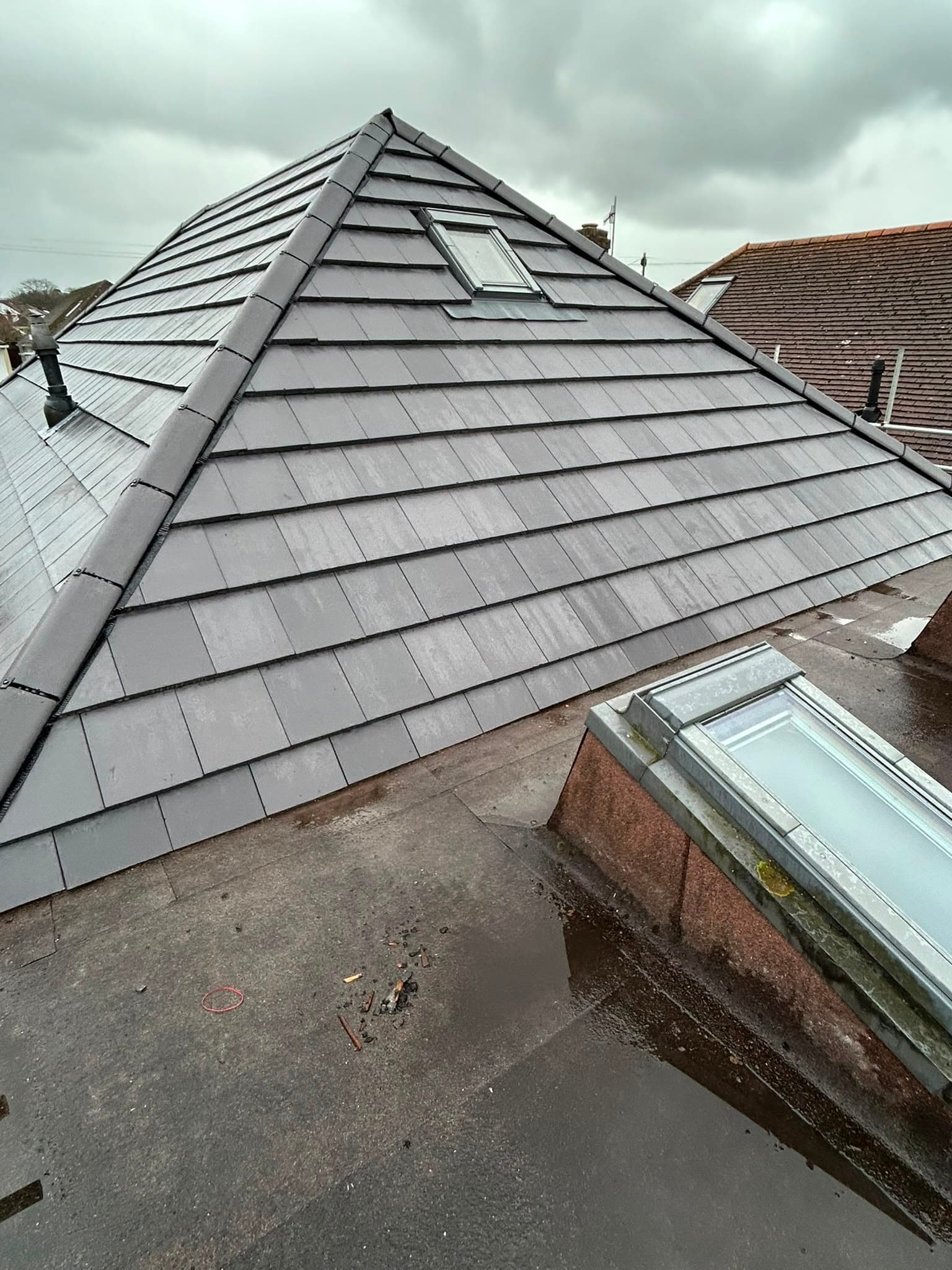
Leadwork we have done
Including the Dorchester repair: code 4 lead, about four hours, on a roof somebody else had quoted to replace.
Captions name the detail and the town.
What customers say
We are a new company and we are building this up honestly. These are the jobs people have been kind enough to comment on.
George Gudge
Can't recommend Southern Counties Roofwork highly enough. I had them out for full re-roof / fascias & guttering - and the whole experience was spot on. Great communication, gave me a clear quote and explained everything properly. The team were punctual, polite, hardworking and obviously know their trade. The finished roof looks brilliant and is built to last. No mess left behind either.
Jacey Arnold
Recently had this company out to have my roof repaired after having problems with leaks during the winter months and something I had been looking to get sorted. The guys came out to take a look at the issues before quoting, once a quote was given work was agreed and I went ahead. Extremely professional, reliable and hard working! Would highly recommend this company and would definitely use again.
Celine Fox
Owen and Sam did a fantastic job with our roof. They were professional, reliable, friendly, and clearly take pride in the work they do. The work was completed to a really high standard, and everything was left clean and tidy afterwards. I’d definitely recommend to anyone looking for a trustworthy roofing company. Great service from start to finish!
Our projects
Jobs written up properly. What we found, what we did and how long it took.
The things people ask
Mostly whether it can be done cheaply, and whether it really needs lead.
Can you not just seal it?
We would rather not. Sealant over a failed flashing hides the joint, fails inside a winter or two, and makes the proper repair messier and dearer when it comes. If somebody has already done it to your roof, that comes off first.
Does the whole roof need doing?
Usually not. A failed flashing or valley is a repair in its own right and the covering either side of it is often perfectly sound. The Dorchester job was four hours on a roof that had been quoted for replacement.
Will I need scaffold?
For a low level abutment, often not. For a valley or anything at height, yes. You will know which before you accept the price.
What failing lead looks like
Most of it is visible from the ground with a decent pair of eyes.
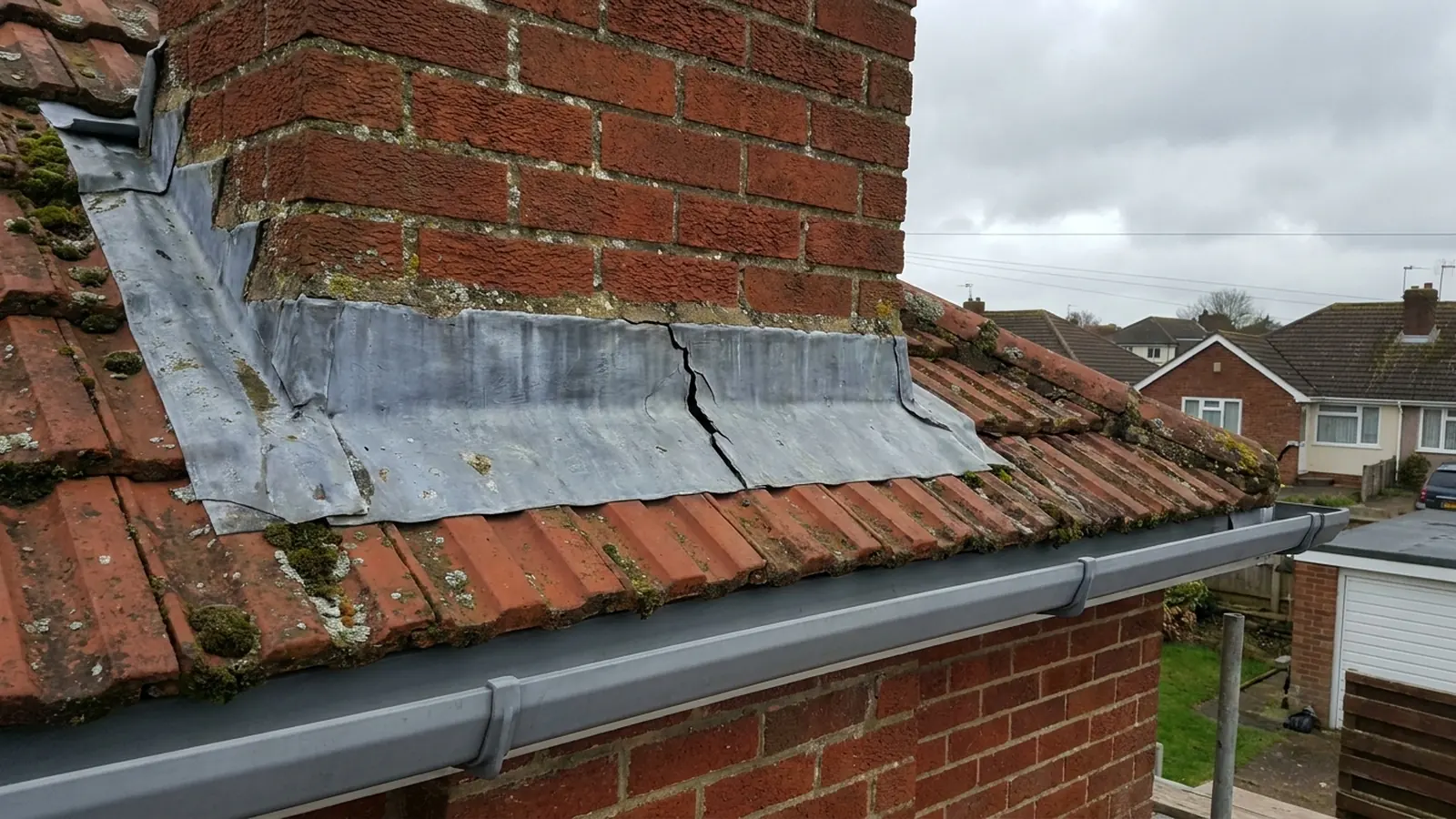
A split running along the middle of a lead run
What it actually isFatigue. The run was laid too long or in too thin a code, so it tore itself apart expanding and contracting. It needs replacing in shorter lengths, not patching.
What it needs
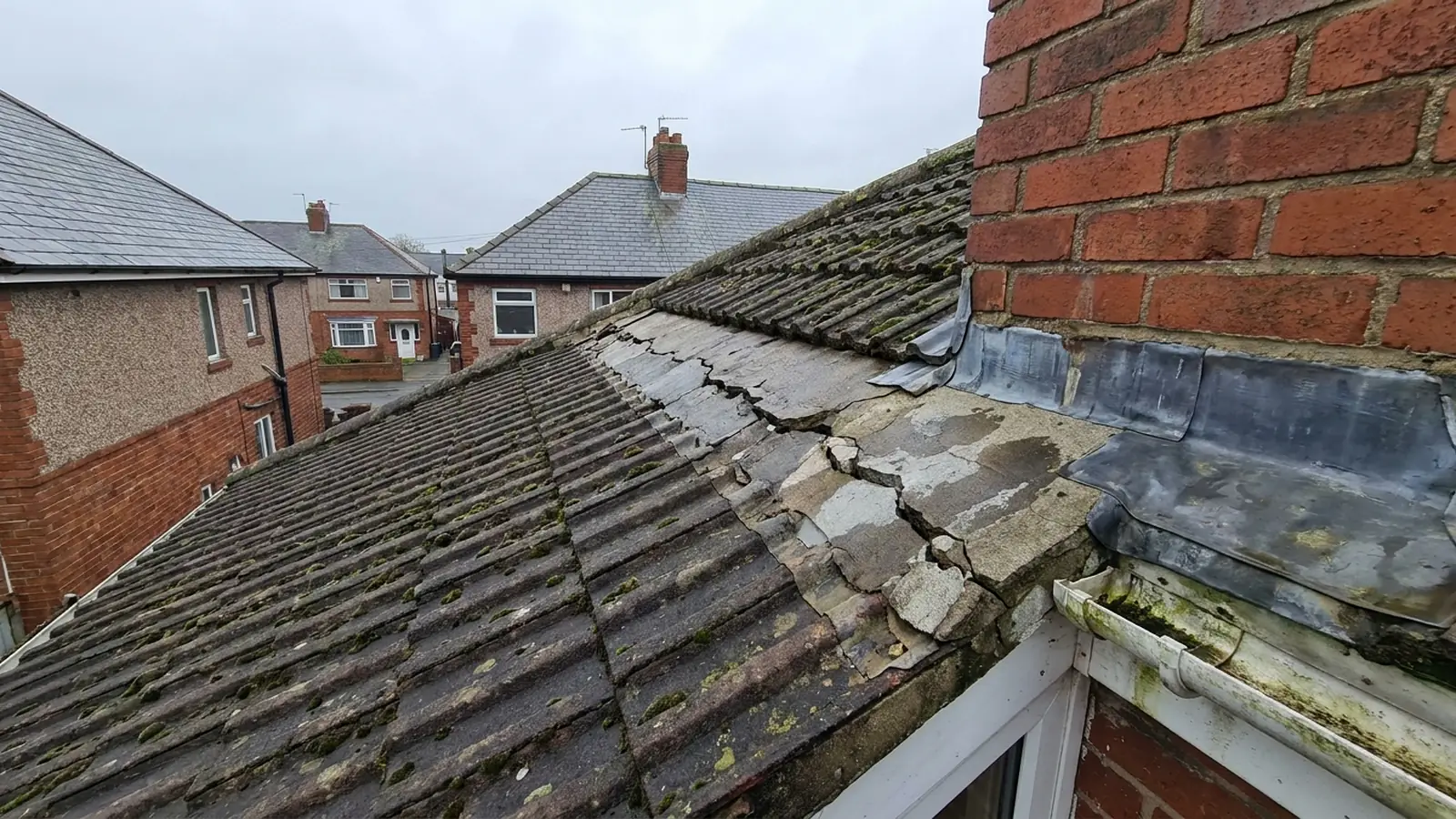
A cement fillet where the roof meets the wall, cracked along its length
What it actually isMortar used instead of lead. Two materials that move differently, bonded together, always crack. It is a flashing job rather than a re-pointing job.
What it needs
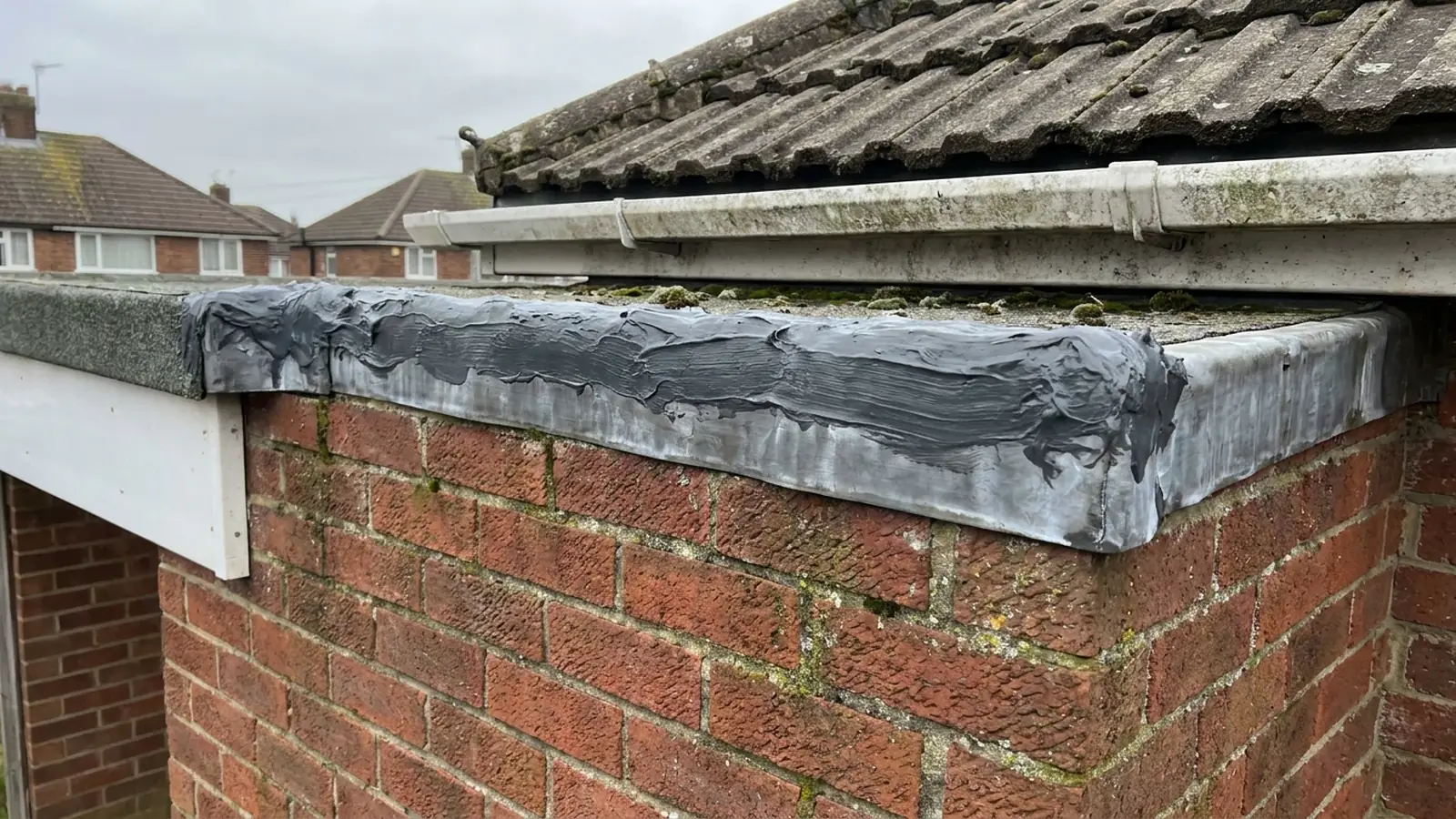
A bead of silicone along the top edge of the flashing
What it actually isSomebody has already been here and taken the short route. It is buying time rather than fixing anything, and the joint underneath is still open.
What it needs
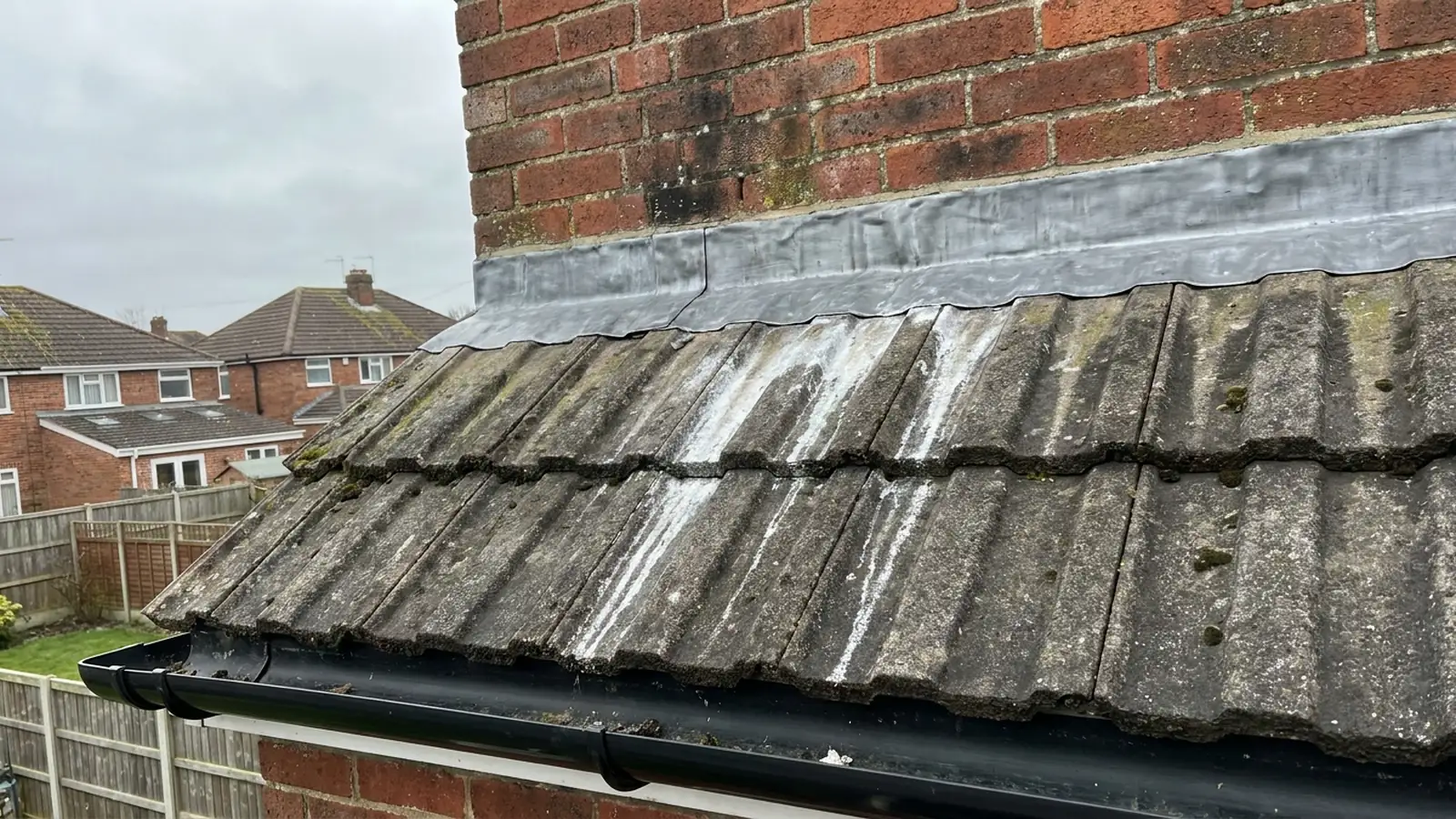
White streaks running down the tiles below the lead
What it actually isNew lead that was never oiled. Cosmetic rather than structural, but it stains the roof and it was entirely avoidable.
What it needs
The first three are letting water in now. The fourth is just untidy.
Four hours, on a roof that had been quoted for replacement
A customer in Dorchester had water coming in and had already been told the roof needed replacing. We went out, got up there, and found the lead flashing had failed. We replaced it in code 4 lead. The job took about four hours and the roof did not need replacing at all.
We mention it not because it was clever, because it was not. It was ordinary leadwork done properly. We mention it because it is the difference between two quotes that a homeowner has no way of judging from the ground, and because the gap between those two quotes was several thousand pounds.
That situation is more common than it should be. A leak near a chimney or a wall gets diagnosed as a failing roof, partly because it genuinely can be, and partly because a re-roof is worth a great deal more than four hours of flashing work. The honest answer is that on a roof whose covering is still sound, a failed detail is a failed detail, and replacing the whole thing is treating the symptom at enormous expense.
The way to tell the difference is to look. Not from the ground, and not from the ceiling stain, but on the roof and in the loft, following the water back to where it actually gets in. If the covering is shedding its surface across the whole roof and the felt has perished, that is a re-roof and we will say so. If the tiles are sound and the lead has split, that is a morning.
This is also why we take photographs. You cannot see your own valleys or the flashing behind your chimney, so you are being asked to accept a diagnosis about a part of your house you have never laid eyes on. Pictures of the actual defect turn that into something you can judge.
If a roofer tells you the roof needs replacing and cannot show you why, get a second opinion. It might not be us, and that is fine. But get one.
Questions about lead flashing and valleys
How long does lead flashing last?
Properly specified and dressed, decades. Lead does not really wear out. What fails is lead that was too thin for the span, laid in runs too long to move freely, or fixed to the face of the brickwork instead of into it.
What is code 4 lead?
A thickness grade. The higher the code the thicker the lead. Code 4 is a common weight for flashings on a house, and heavier codes are used where the span or the exposure demands it. Too thin and it splits where it flexes.
Can you just seal my flashing?
We would rather not. Mastic over a failed flashing hides the joint and fails within a winter or two, and it makes the proper repair messier. If your roof already has sealant on it, that comes off as part of the job.
Do I need the whole roof done if the valley has gone?
Usually not. A valley is a detail and it can be replaced without touching the covering either side of it. Valleys wear out faster than the rest of the roof because they carry the water off two slopes at once.
Why has my new lead gone white?
Because it was not oiled. New lead forms a white carbonate as it weathers and the rain washes it down the roof. A coat of patination oil at the end prevents it. It is cosmetic, but it is avoidable.
Do you do box gutters and parapets?
Yes. Box gutter and parapet linings are lead work and they are common leak points, because every drop of water on the roof above is being funnelled through them.
Is lead being replaced by anything else?
There are substitute materials and they have their place, particularly where theft is a concern. For most domestic work lead is still what we would fit, because it lasts and because it can be dressed to fit an irregular shape by hand.
Where we do leadwork
Based in Bournemouth, working across the conurbation and the towns just outside it.
Get the flashing looked at before it costs you a ceiling
Most leaks near a chimney or a wall are a detail, not a roof. We will find out which yours is and show you.
Get a free quote
Tell us what you need and we'll come back with a price. No pressure, no hard sell.
Prefer to talk? Call Southern Counties Roofworks Ltd on 07895 305286