
EPDMRubberRoofinginBournemouth&Poole
One sheet of rubber, cut to your roof and bonded down. No seams across the middle, and almost nothing left that can fail.
- A single sheet on most garage and extension roofs
- It stretches with the building instead of splitting
- Guaranteed, and laid on a deck we have checked
Get a quote
Tell us what the roof is doing and we will come and look at it.
- 1–2 daysTypical garage roof
- 25–30 yrExpected life of the rubber
- 5.0 ★From 31 Google reviews
- BothOwners on every job
What EPDM actually is
EPDM is a synthetic rubber membrane. It arrives as one large sheet, gets cut to your roof on site, and is bonded down onto the deck with adhesive. On most garages, porches and single storey extensions the whole roof is covered by one piece with no joins in it at all. That matters more than it sounds. Every flat roof that leaks, leaks somewhere. On a lapped system that somewhere is usually a seam or an upstand. Take the seams out of the middle of the roof and you have removed most of the places it could go wrong, which is the entire argument for rubber. The second thing it does well is move. Buildings shift, decks flex, timber expands and contracts through the year. EPDM stretches and goes back. A rigid covering on a deck that moves eventually cracks, and that is the failure we get called out to most often on flat roofs.
- One sheet on most domestic roofs, so no seams across the field
- Stretches with the building rather than cracking
- Cold applied, so no naked flame anywhere near your house
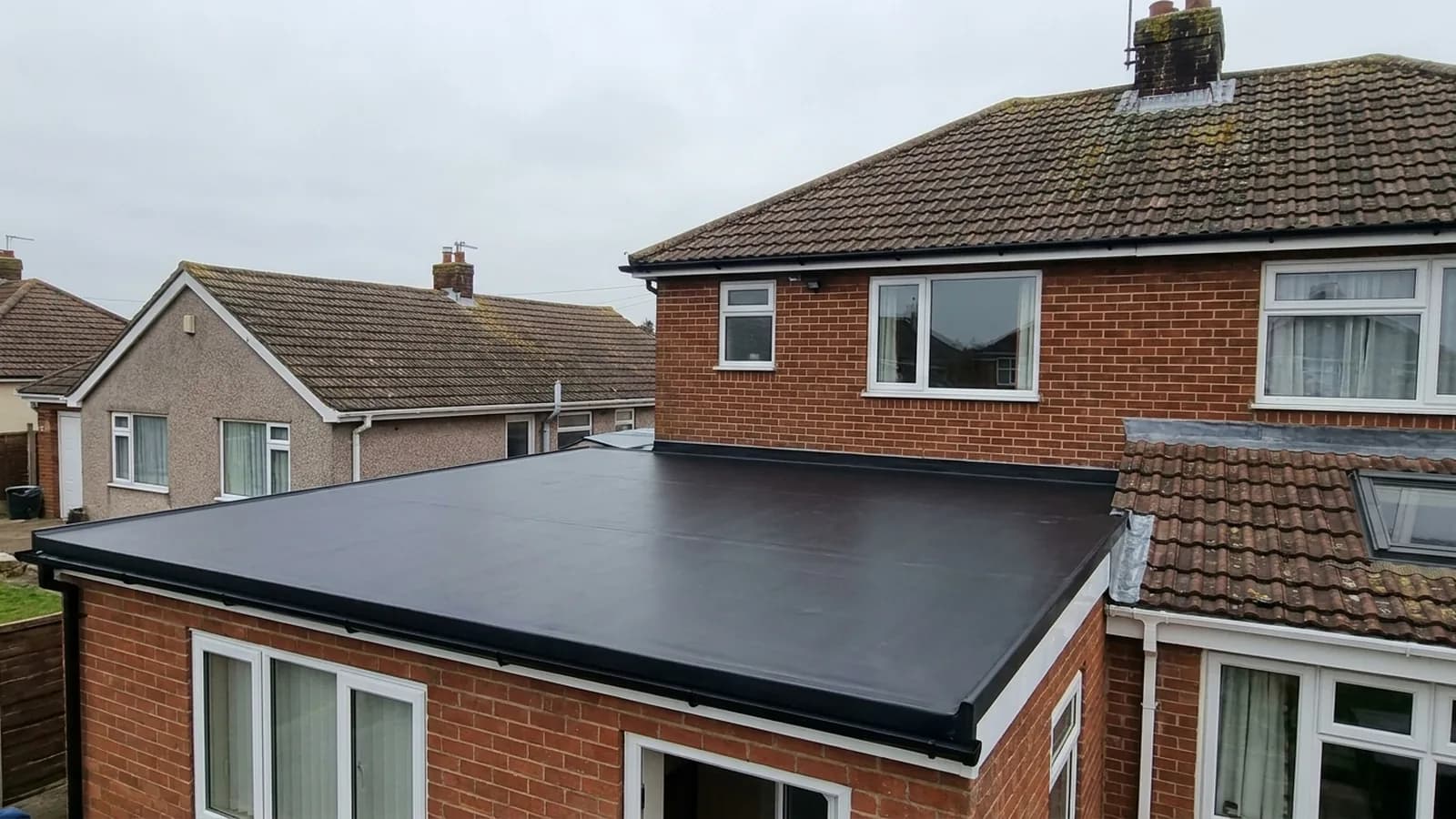
 EPDM on a single storey extension
 Step 1
We find out what is actually wrong
Water travels, so where it drips inside is rarely where it gets in. If a repair will do instead of a new roof, you hear that first.
 Step 2
We strip back and sort the deck
Old covering off, boards checked, soft deck replaced and the falls corrected. Rubber over a rotten deck fails from underneath.
 Step 3
We lay it and guarantee it
One sheet bonded down, upstands and outlets detailed, then the site cleared and your guarantee issued.
25–30 yr
Expected life
1–2 days
Typical garage roof
0
Seams across most domestic roofs
5
Towns we cover
EPDM against the other two systems
All three are good laid properly. Here is where rubber wins and where it does not, including the case for spending more on GRP.
| EPDM rubber | GRP fibreglass | Torch-on felt | |
|---|---|---|---|
| Typical life | 25 to 30 years | 20 to 30 years | 15 to 25 years |
| Seams on a small roof | None, it is one sheet | None, it cures as one piece | Lapped and bonded |
| Movement in the deck | Handles it best, it stretches | Rigid, can crack if the deck flexes | Copes reasonably |
| Foot traffic | Occasional only | The best of the three | Occasional only |
| Laying it | Cold applied, no flame | Needs dry weather and warmth to cure | Needs a naked flame on site |
| Awkward shapes | Cuts and dresses easily | Good, it is formed in place | Harder around detail |
| Our honest take | The default answer on garages and extensions | Worth the extra where it gets walked on | For larger roofs, and where the manufacturer backed guarantee matters |
Swipe to see every column
What goes into the finished roof
The same on every EPDM roof we lay.
The deck checked and made good
Old covering off and the boards inspected. Soft or delaminated deck is cut out and replaced, because a perfect membrane over a rotten deck still fails.
Falls corrected where they are wrong
A flat roof needs enough fall to clear water within a day. Where it ponds we put firrings in rather than laying a new covering over the same puddle.
Upstands taken high enough
Where the roof meets a wall the membrane is dressed up and terminated properly. An upstand that stops too low is the commonest leak on any flat roof.
Trims, outlets and drips
Edge trims and drip details so water leaves the roof rather than running back under it, and an outlet sized for the area feeding it.
Insulation if the build-up calls for it
On a warm roof the insulation sits above the deck, keeping the structure warm and stopping condensation forming underneath. Far cheaper done while the roof is open.
A guarantee on the finished roof
Issued when the job is signed off. If something goes wrong inside that period you call us and we come back out.
Straight answer
What an EPDM roof costs
Priced after we have seen it
The membrane itself is a small part of the figure. What moves the price is the state of the deck underneath, whether the falls need correcting, how many upstands and outlets there are, and whether you want insulation putting in while it is open. We look, then price the actual job.
- Strip, deck repairs, membrane, detailing and waste removal in one figure
- Deck replacement priced separately and only where we find it
- Insulation quoted as an option, not slipped in
- No charge for coming out and no pressure afterwards
If you want a rough idea before we visit, tell us the rough size and what the roof covers and we will give you an honest range.
How the job runs
One to two days on a typical garage or extension roof.
Survey
We get on the roof, find where the water is actually getting in, and check whether the deck has taken any of it.
Strip
Old covering off and the deck exposed, so we can see what we are laying onto.
Deck and falls
Soft boards cut out and replaced, falls corrected with firrings where water has been standing, insulation laid if it is a warm roof build-up.
The sheet goes down
The membrane is cut to the roof, relaxed, then bonded down onto the deck and dressed up the upstands.
Trims and outlets
Edge trims, drip details and the outlet connected, so water leaves the roof where it is supposed to.
Clear up and guarantee
Waste away, ground swept, guarantee issued.
What an EPDM rubber roof looks like
Illustrations of a finished rubber roof and the detailing that goes with it. These are not photographs of our own jobs — we have not photographed an EPDM roof yet.
Ask us on a visit and we will take you through a real one.
What customers say
We are a new company and we are building this up honestly. These are the jobs people have been kind enough to comment on.
George Gudge
Can't recommend Southern Counties Roofwork highly enough. I had them out for full re-roof / fascias & guttering - and the whole experience was spot on. Great communication, gave me a clear quote and explained everything properly. The team were punctual, polite, hardworking and obviously know their trade. The finished roof looks brilliant and is built to last. No mess left behind either.
Jacey Arnold
Recently had this company out to have my roof repaired after having problems with leaks during the winter months and something I had been looking to get sorted. The guys came out to take a look at the issues before quoting, once a quote was given work was agreed and I went ahead. Extremely professional, reliable and hard working! Would highly recommend this company and would definitely use again.
Celine Fox
Owen and Sam did a fantastic job with our roof. They were professional, reliable, friendly, and clearly take pride in the work they do. The work was completed to a really high standard, and everything was left clean and tidy afterwards. I’d definitely recommend to anyone looking for a trustworthy roofing company. Great service from start to finish!
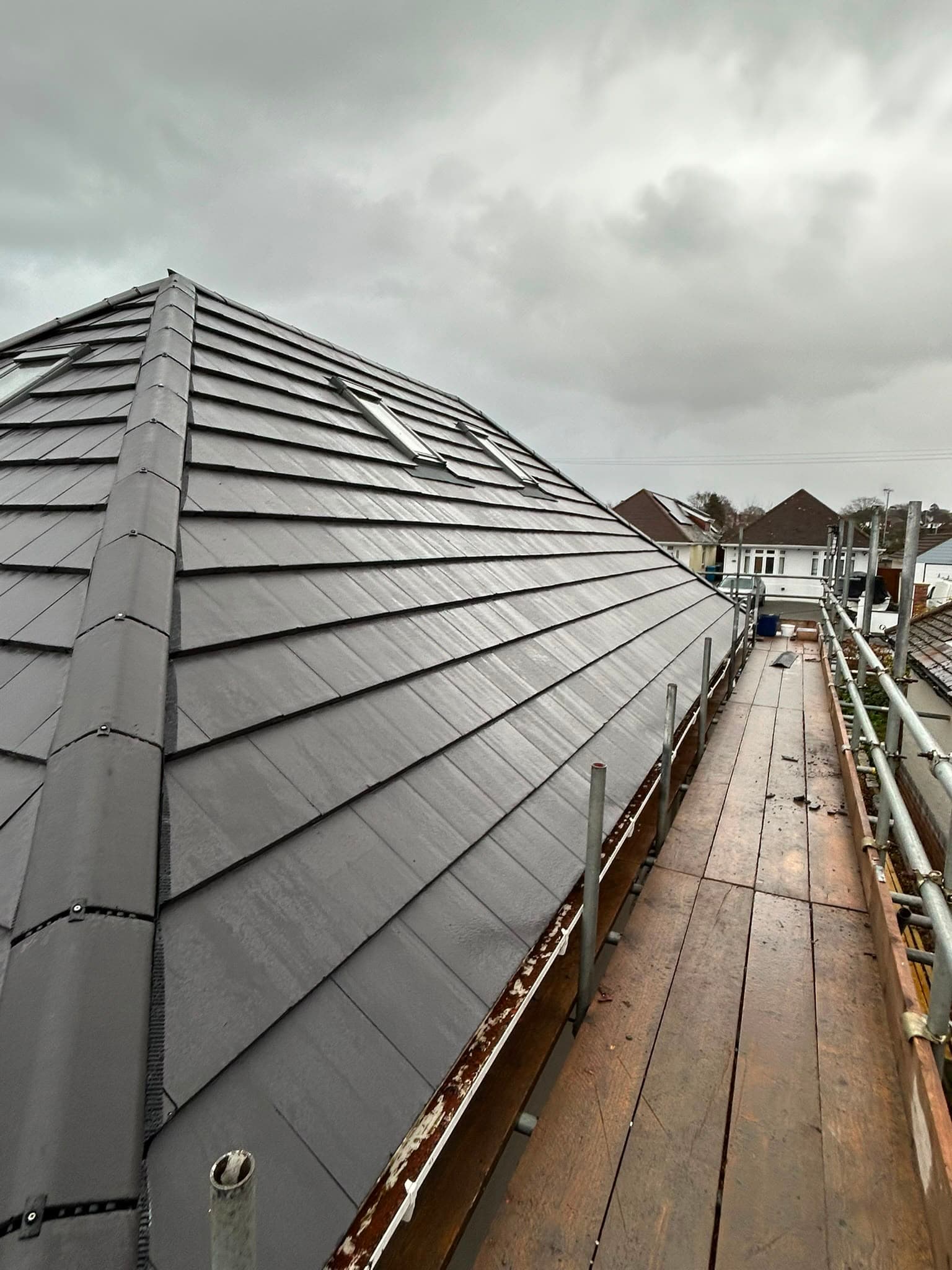
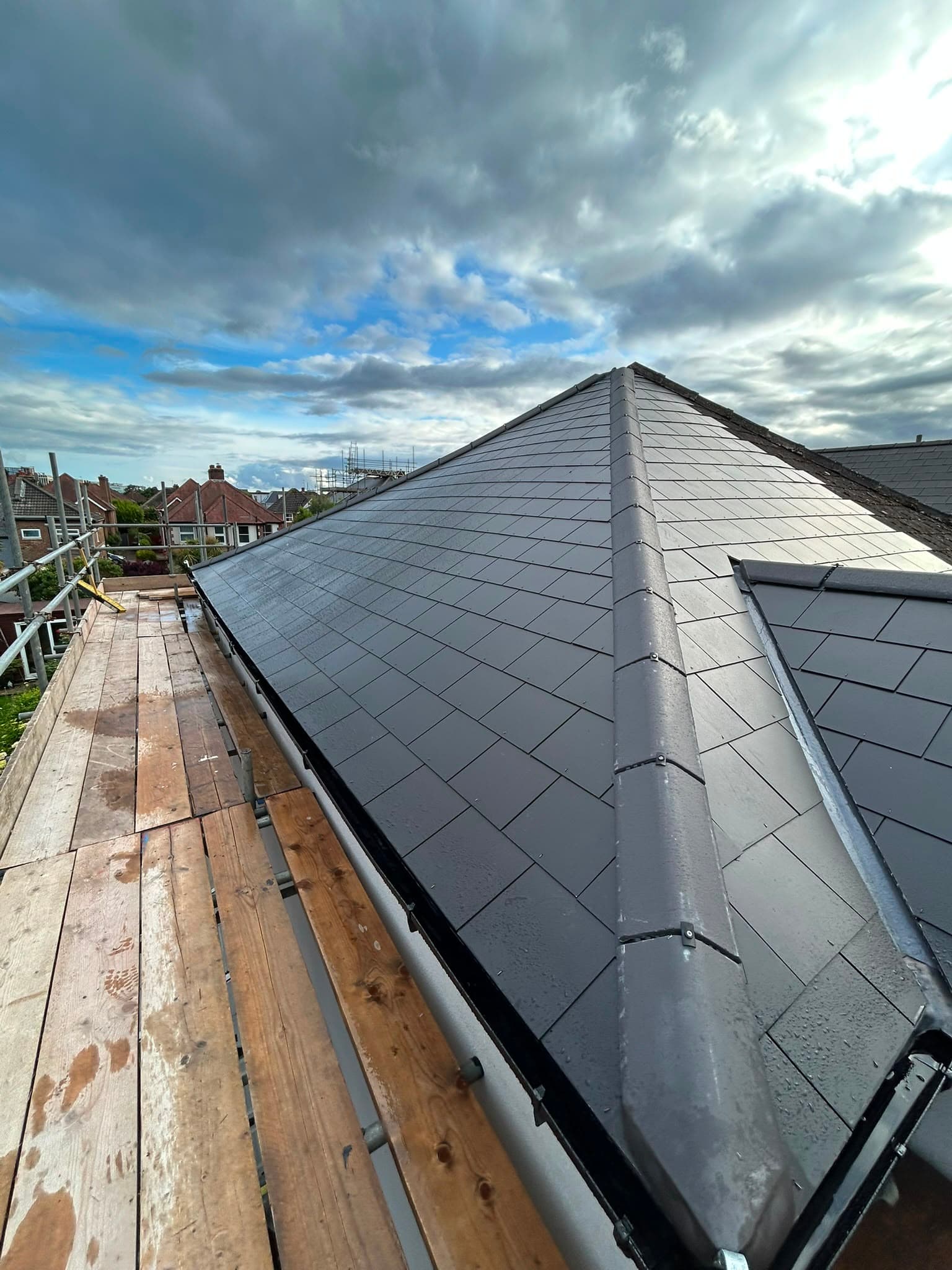
Our projects
Jobs written up properly. What we found, what we did and how long it took.
The things people ask before booking
Mostly about the garage full of things and the flame that is not there.
Is there any naked flame involved?
No. EPDM is cold applied with adhesive, so there is no torch anywhere near your building. That is one of the reasons we favour it on roofs attached to the house.
Do I need to empty the garage?
Not usually, but move anything you would rather not have dust on. Stripping a flat roof drops debris through any gaps in the deck.
What if it rains halfway through?
We do not strip more than we can cover the same day. If the forecast turns we either hold off or sheet it up, and the building stays dry either way.
What you can see from the ground
Four things worth checking on an existing flat roof before you call anyone.
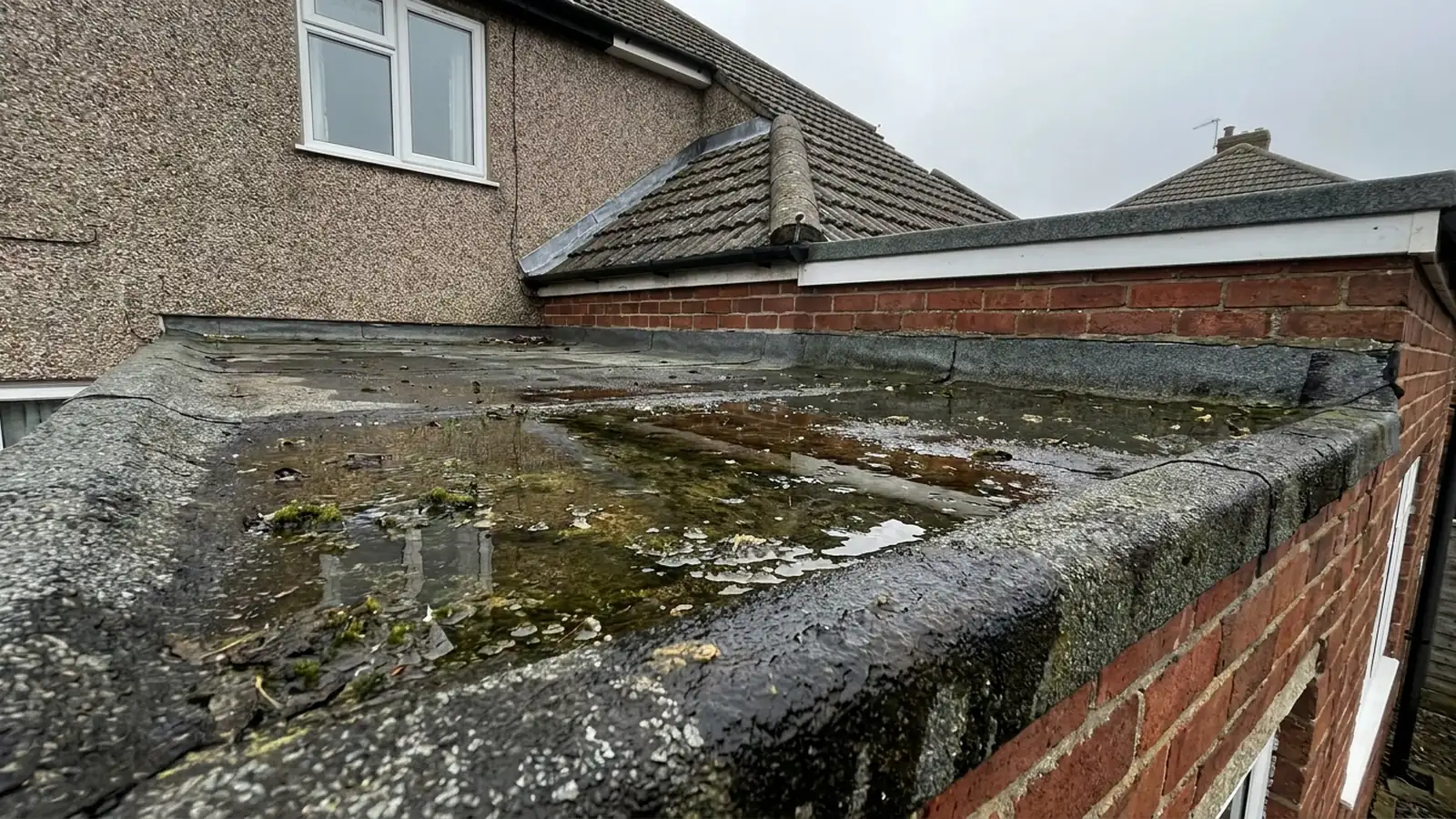
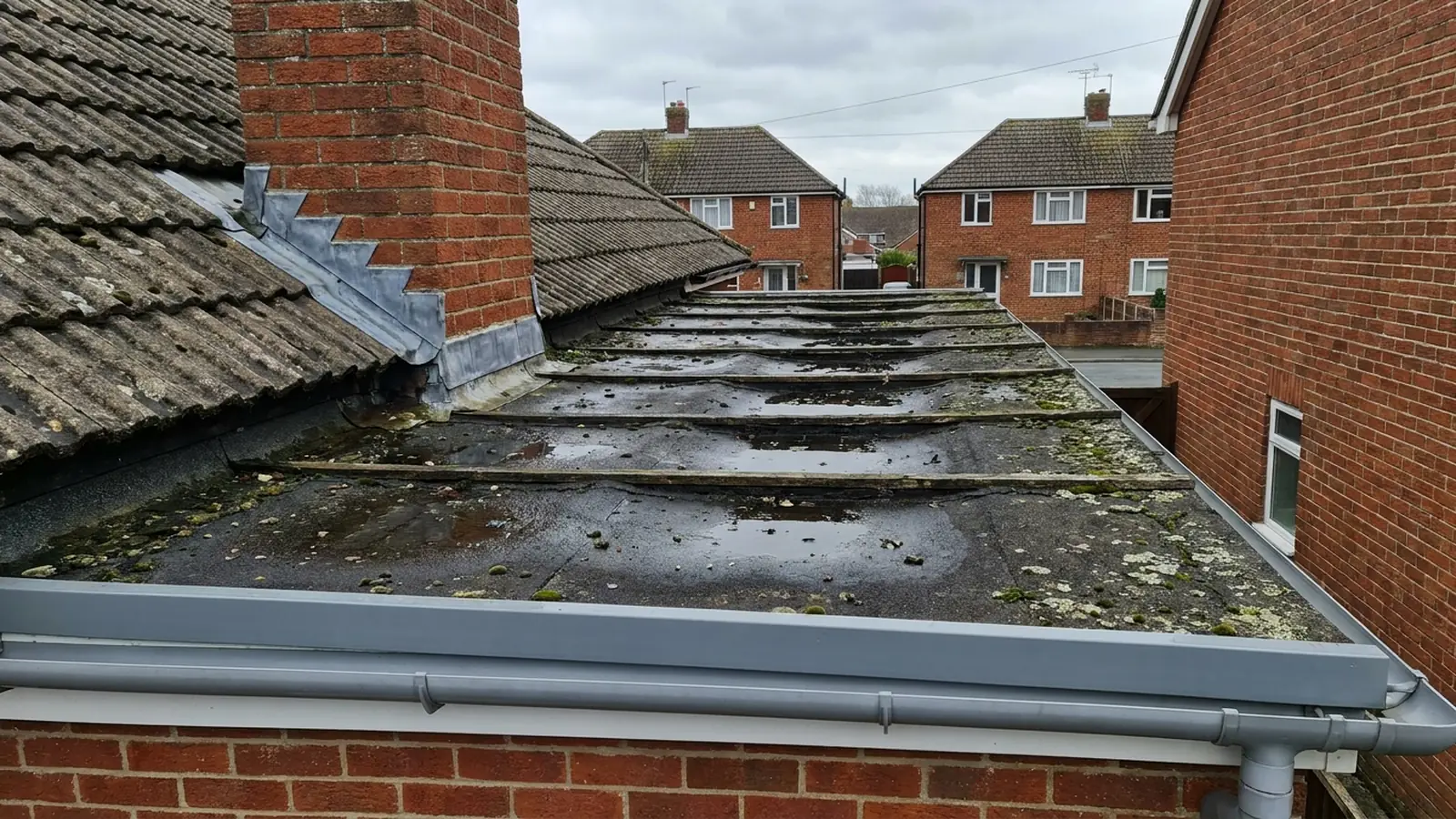
Water still sitting there days after rain
What it actually isThe falls, not the covering. A flat roof should clear within a day or so, and standing water shortens the life of every system. Correctable with firrings without replacing the whole roof.
What it needs
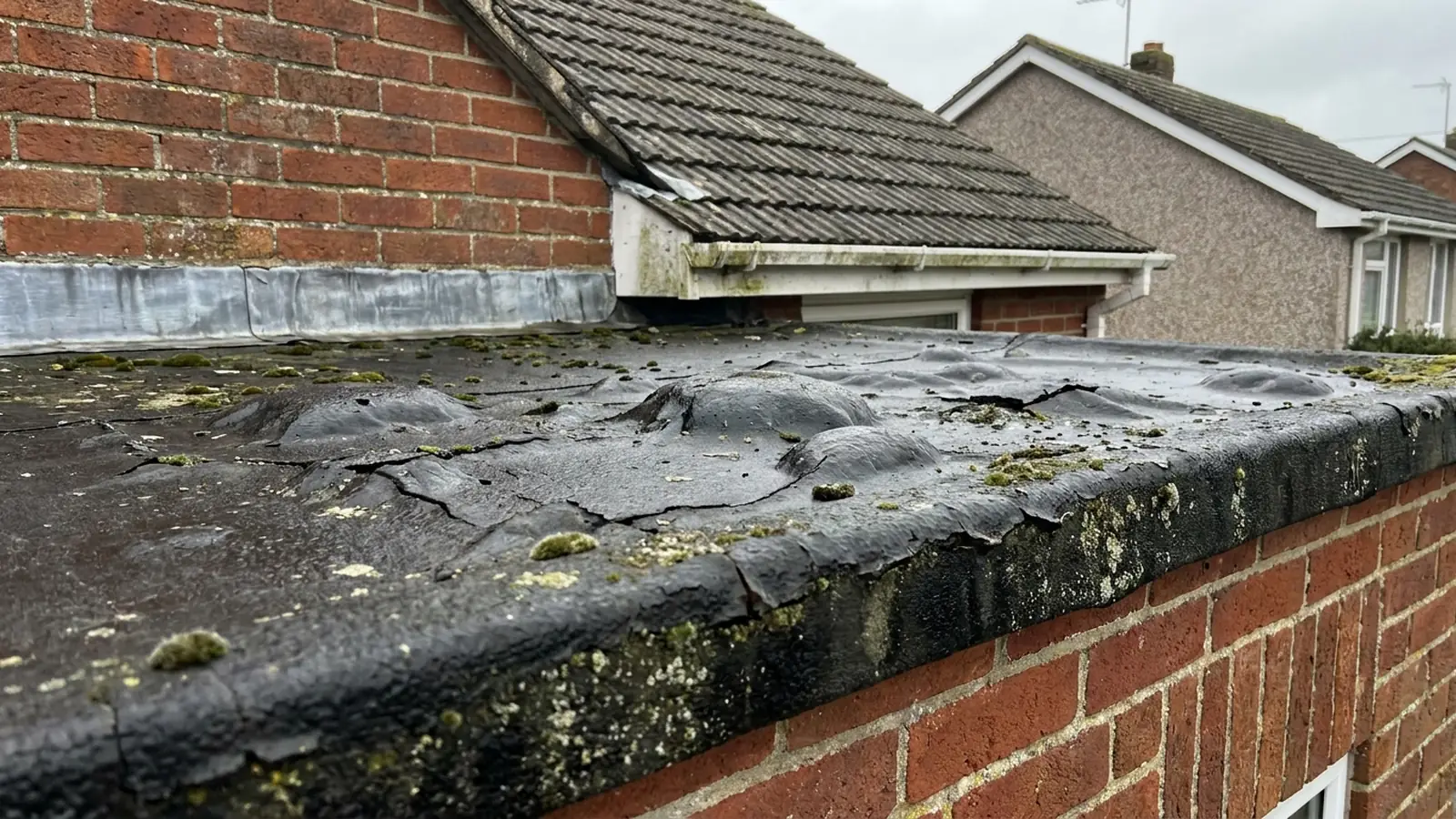
Blisters or bubbles across the surface
What it actually isMoisture trapped under the covering, usually on an older felt roof. Once it is widespread the covering has had it, and patching blisters just moves the problem along.
What it needs
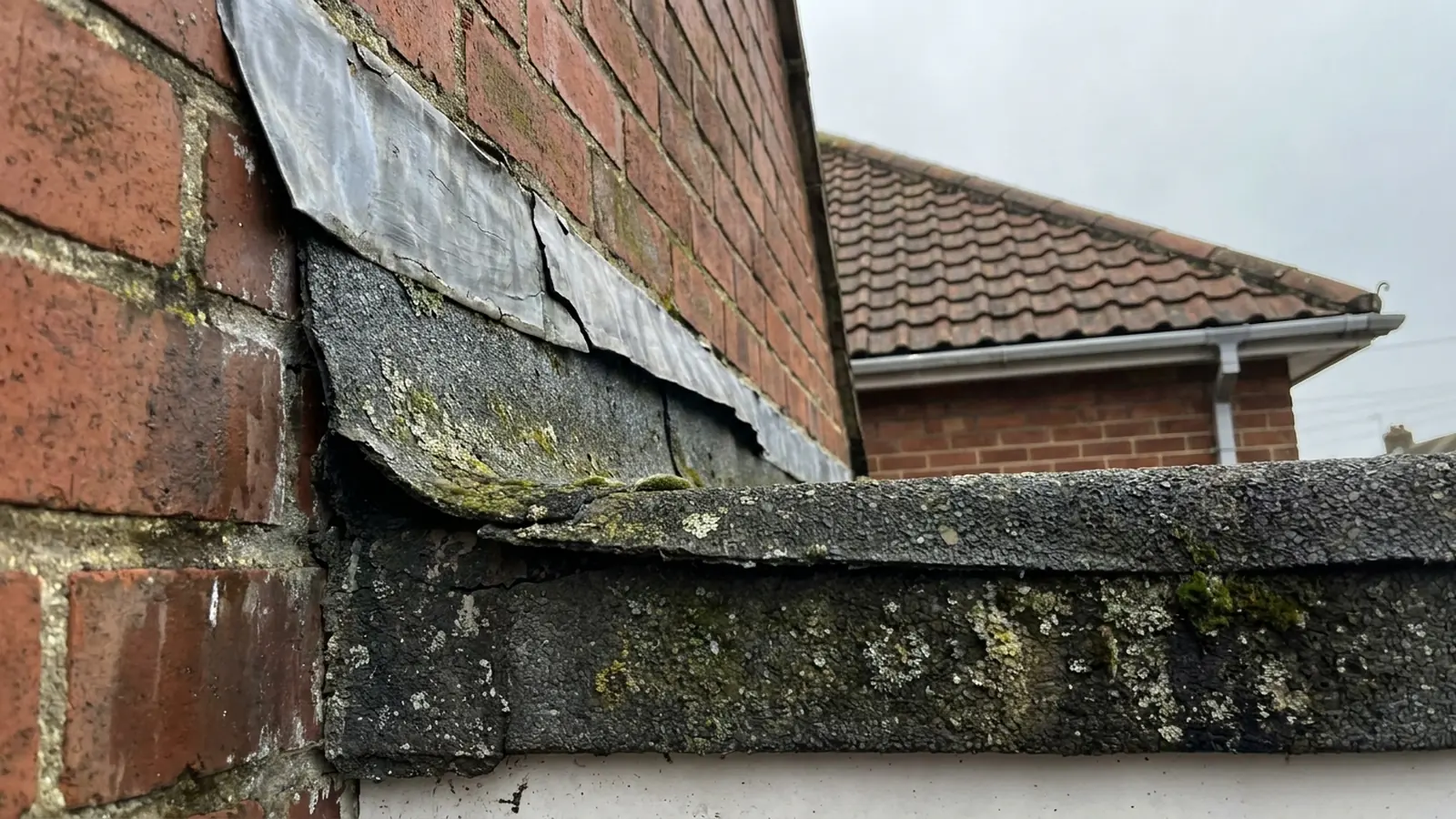
The covering lifting away where it meets the wall
What it actually isA failed upstand. This is a repair rather than a re-roof, and it is where most flat roofs actually let water in.
What it needs
The roof gives underfoot, or dips between the joists
What it actually isThe deck has taken water and the boards are going. At that point the covering is not the problem, and any new membrane needs a sound deck under it first.
What it needs
The first three are repairs. Only the last one usually means starting again.
Why we fit a lot of rubber roofs
The honest reason is that most domestic flat roofs are small, awkward and attached to a house, and EPDM is the system that copes with all three at once.
Small matters because it means one sheet covers the whole thing. A garage, a porch, a dormer cheek, most single storey rear extensions: all of them come in under the width the membrane is made in, so the finished roof has no seams across it. On a lapped system every one of those laps is a joint that has to hold for thirty years, and on a felt roof laid in a hurry they are exactly what does not.
Awkward matters because rubber cuts and dresses easily around a pipe, a corner, an upstand or a change of level. GRP forms well too, but it cures rigid, and a small roof with a lot of detail in it is a roof with a lot of places to crack.
Attached to the house matters because EPDM goes down cold. There is no torch and no flame near your building, which we would rather not have going on against a timber wall plate if there is a sensible alternative.
What it is not is a surface to walk on. It will take the occasional trip up to clear the gutter, but if you want a balcony, a walkway or a roof terrace, GRP is tougher and worth the extra. We will tell you that rather than sell you the one we prefer to lay.
And if the roof you have now is only leaking at one upstand, we will quote the repair. Most of the flat roofs we get called to do not need replacing at all.
Questions about EPDM rubber roofing
How long does an EPDM roof last?
Laid on a sound deck with the right falls, 25 to 30 years is a reasonable expectation and plenty go longer. What shortens any flat roof is standing water, which is why we correct the falls rather than covering over them.
Can you walk on it?
Occasionally, yes, to clear a gutter or reach something. It is not a walkway or a balcony surface. If the roof needs to take regular foot traffic then GRP is the right system and we will tell you so.
Is it really one piece?
On most domestic roofs, yes. The membrane comes in sheets wide enough to cover a typical garage, porch or single storey extension in one, so there are no seams across the field of the roof. Larger roofs need a joint, which is bonded and detailed properly.
Can it be laid over my existing roof?
We would rather not, and usually we will not. The point of stripping back is to see the deck. Laying a new membrane over an old covering hides whatever state the boards are in and you end up paying twice.
Does it need any maintenance?
Very little. Keep the outlet clear and the gutters running, and have a look at the upstands every couple of years. There is no coating to redo and nothing to reseal.
Can you insulate at the same time?
Yes, and on a full replacement it usually makes sense. A warm roof puts the insulation above the deck, which keeps the structure warm and stops condensation forming underneath. It costs far less done while the roof is already open.
What about repairs to an existing rubber roof?
Perfectly doable. EPDM patches and bonds to itself, so a split or a failed upstand can be repaired properly rather than replaced. We will tell you honestly if the roof has more life in it.
- Service
GRP Fibreglass Roofing
Tougher underfoot, cures as one piece.
Learn more - Service
Felt & Torch-On Roofing
For larger roofs, with a manufacturer backed system.
Learn more - Service
Roof Repairs
Where a repair will do instead of a new roof.
Learn more - Service
Roofline & Guttering
The outlets and downpipes a flat roof drains into.
Learn more
Where we lay rubber roofs
Based in Bournemouth, working across the conurbation and the towns just outside it.
Find out whether your flat roof needs replacing
We will get up and find where the water is actually getting in, then tell you whether it is a repair or a new roof.
Get a free quote
Tell us what you need and we'll come back with a price. No pressure, no hard sell.
Prefer to talk? Call Southern Counties Roofworks Ltd on 07895 305286