
GRPFibreglassRoofinginBournemouth&Poole
Laid wet and cured in place, so the finished roof is one solid shell with no joins in it. The toughest flat roof underfoot, by some distance.
- Cures as one piece, so there are no seams to fail
- The right answer where the roof gets walked on
- Laid on a deck we have checked, never over the old one
Get a quote
Tell us what the roof is doing and we will come and look at it.
- 2–3 daysTypical roof, weather allowing
- 20–30 yrExpected life of the fibreglass
- 5.0 ★From 31 Google reviews
- BothOwners on every job
What GRP fibreglass actually is
GRP stands for glass reinforced plastic, and it is the same material boat hulls are made from. It goes on as a liquid resin with a glass fibre mat laid into it, and it cures on your roof into one rigid shell. There is no sheet, no lap and no join anywhere in it, because the whole thing was formed in place. That is what makes it the toughest of the three flat roof systems. You can walk on it properly. It takes a balcony, a walkway, a flat roof somebody actually uses, and it will not scuff or puncture the way a membrane can. The trade-off is that it cures rigid. A rigid covering needs a deck that does not move underneath it, so the boards matter more here than on any other system. Get that right and it is excellent. Lay it over a springy old deck to save a day and it will crack, and no amount of good resin fixes that.
- Cures into one seamless shell with nothing to lap
- The only one of the three we would call properly walkable
- Needs a sound, rigid deck, which is why we always strip back
 GRP laid and cured in place
 Step 1
We check the deck can take it
GRP is rigid, so the boards under it have to be sound and stiff. That is the first thing we look at, because it decides whether GRP is even the right answer.
 Step 2
We rebuild the deck and the falls
New deck where the old one has gone, falls corrected with firrings, and trims fitted before a drop of resin goes down.
 Step 3
We lay it and guarantee it
Resin and matting laid, cured, then topcoated. Site cleared and your guarantee issued.
20–30 yr
Expected life
2–3 days
Typical roof
0
Joins in the finished shell
5
Towns we cover
GRP against the other two systems
Where fibreglass earns the extra, and where we would honestly point you at rubber instead.
| GRP fibreglass | EPDM rubber | Torch-on felt | |
|---|---|---|---|
| Typical life | 20 to 30 years | 25 to 30 years | 15 to 25 years |
| Foot traffic | The best by a distance | Occasional only | Occasional only |
| Seams | None, it cures as one shell | None on a small roof | Lapped and bonded |
| Deck it needs | Sound and rigid, no flex | More forgiving | Forgiving |
| Weather to lay | Dry, and above about five degrees | The least fussy | Dry, plus a naked flame |
| Finish | Solid colour topcoat, can be non-slip | Matt black rubber | Mineral or plain felt |
| Our honest take | Worth it on balconies, walkways and anything used | The better buy on a plain garage roof nobody walks on | For larger roofs and manufacturer backed guarantees |
Swipe to see every column
What goes into the finished roof
The same on every GRP roof we lay.
A deck fit to take it
Stripped back and inspected. Soft or springy boards are replaced, because GRP is rigid and a deck that flexes under it will crack the shell.
Falls corrected first
Firrings in where water has been standing. Ponding is what shortens the life of any flat roof, and it is far cheaper to fix while the deck is open.
GRP trims, not just resin
Purpose made edge and drip trims bonded in before the laminate, so the roof terminates properly at every edge rather than being feathered off.
Upstands formed in one
The laminate carries straight up the upstand and terminates under a flashing. Because it is formed in place there is no join at the very point flat roofs usually leak.
Insulation if the build-up calls for it
Warm roof build-ups put the insulation above the deck, keeping the structure warm and stopping condensation underneath. Much cheaper done while it is open.
A guarantee on the finished roof
Issued when the job is signed off. If something goes wrong inside that period you call us and we come back out.
Straight answer
What a GRP roof costs
Priced after we have seen it
GRP costs more than rubber, mostly in labour and in the deck work it demands. The figure follows the size, the state of the boards, whether the falls need correcting and how much upstand and trim detail there is. We look at all of it before quoting.
- Strip, deck, falls, laminate, trims and waste removal in one figure
- Deck replacement priced separately and only where we find it
- Non-slip topcoat quoted as an option where it will get walked on
- No charge for coming out and no pressure afterwards
If a plain rubber roof would serve you just as well for less, we will say so rather than quote the dearer system.
How the job runs
Two to three days on a typical roof, and it is genuinely weather dependent.
Survey
On the roof, finding the leak and checking whether the deck is sound and stiff enough for a rigid system.
Strip
Old covering off and the deck fully exposed.
Deck, falls and insulation
Boards replaced where needed, firrings in to correct the falls, insulation laid if it is a warm roof build-up.
Trims fitted
Edge and drip trims bonded down first, so the laminate ties into them rather than stopping short at the edge.
Laminate and cure
Resin and glass fibre matting laid across the roof and up the upstands, then left to cure. This is the part the weather dictates.
Topcoat, clear up and guarantee
Topcoat rolled on, waste taken away, ground swept and your guarantee issued.
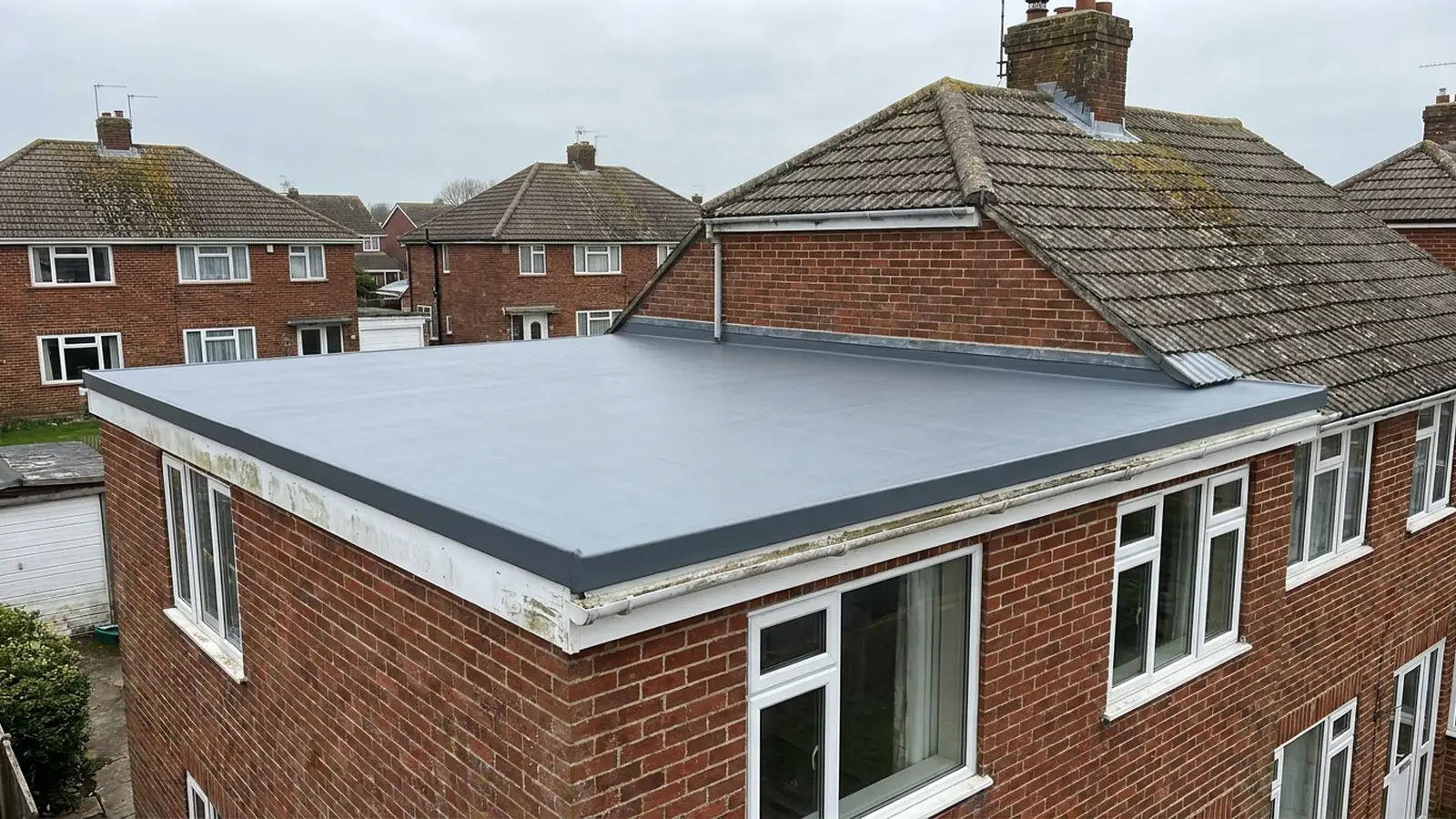
What a fibreglass roof looks like
Illustrations of a finished GRP roof and its edge detailing. These are not photographs of our own jobs — we have not photographed a fibreglass roof yet.
Ask us on a visit and we will take you through a real one.
What customers say
We are a new company and we are building this up honestly. These are the jobs people have been kind enough to comment on.
George Gudge
Can't recommend Southern Counties Roofwork highly enough. I had them out for full re-roof / fascias & guttering - and the whole experience was spot on. Great communication, gave me a clear quote and explained everything properly. The team were punctual, polite, hardworking and obviously know their trade. The finished roof looks brilliant and is built to last. No mess left behind either.
Jacey Arnold
Recently had this company out to have my roof repaired after having problems with leaks during the winter months and something I had been looking to get sorted. The guys came out to take a look at the issues before quoting, once a quote was given work was agreed and I went ahead. Extremely professional, reliable and hard working! Would highly recommend this company and would definitely use again.
Celine Fox
Owen and Sam did a fantastic job with our roof. They were professional, reliable, friendly, and clearly take pride in the work they do. The work was completed to a really high standard, and everything was left clean and tidy afterwards. I’d definitely recommend to anyone looking for a trustworthy roofing company. Great service from start to finish!
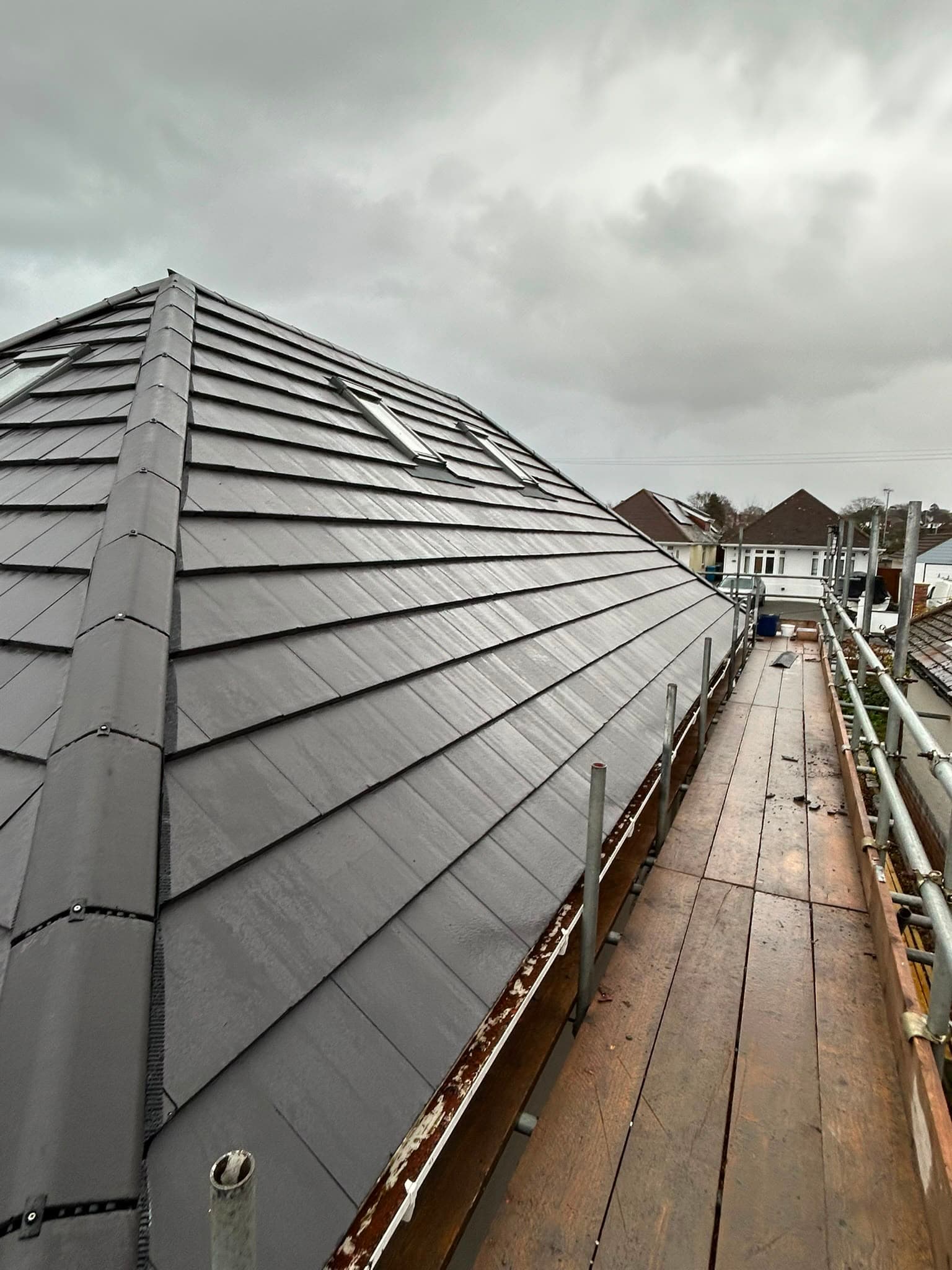
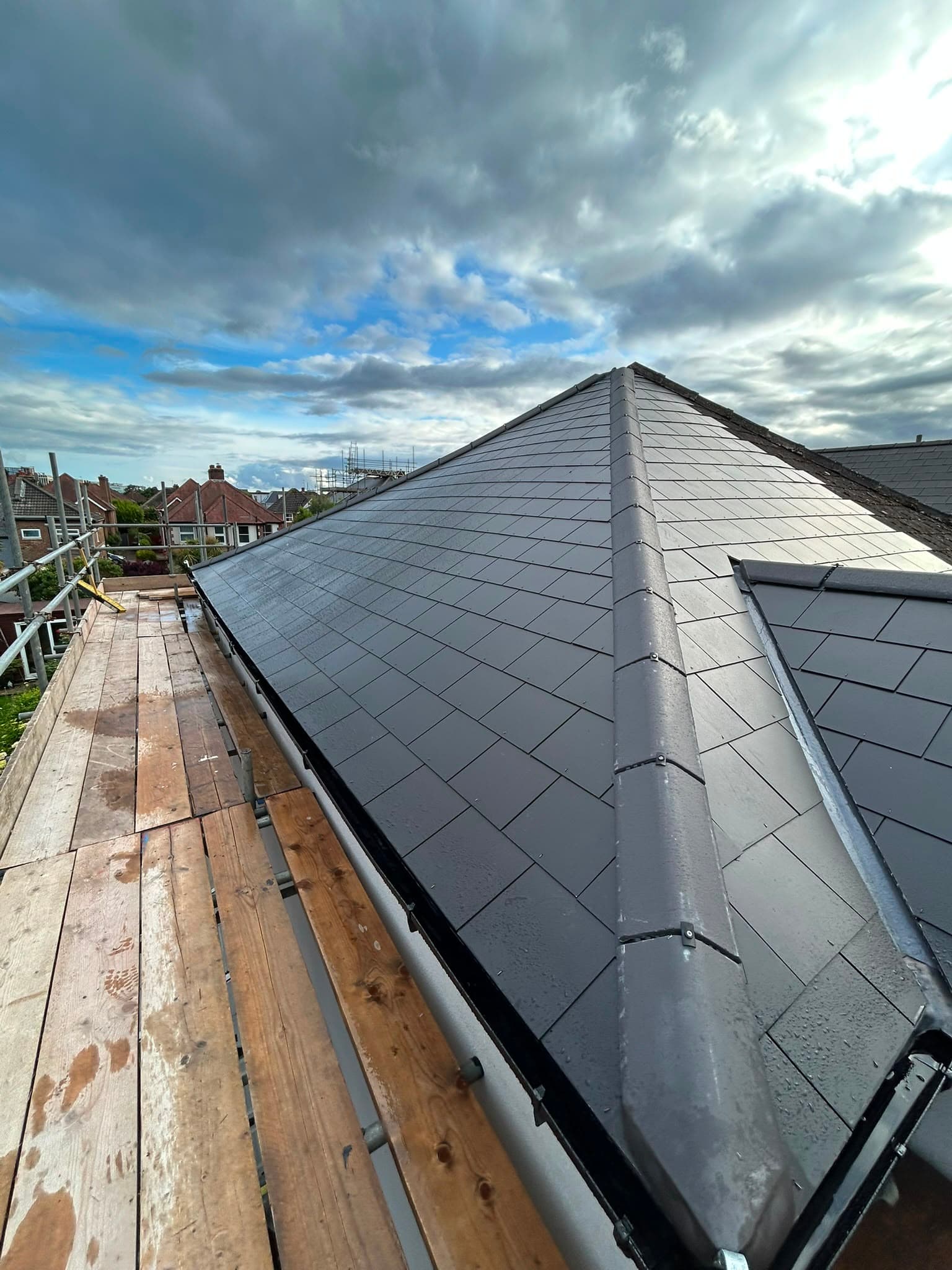
Our projects
Jobs written up properly. What we found, what we did and how long it took.
The things people ask before booking
Mostly about the weather, because with GRP it genuinely matters.
What if the weather turns?
GRP needs dry conditions and a bit of warmth to cure. We will not start a laminate we cannot finish and cure, so if the forecast is wrong we hold off rather than lay it and hope. That is why we give a window rather than a single day in winter.
Is there a smell?
Yes, while it cures. Resin has a strong smell for a day or so and then it goes. If the roof is right outside a bedroom window it is worth knowing in advance.
Can I walk on it afterwards?
Properly, yes, which is the main reason to choose it. If it is a balcony or a walkway we will put a non-slip topcoat on rather than leaving it smooth.
What goes wrong on GRP roofs
Fibreglass fails in a small number of very specific ways, and almost all of them start under the laminate rather than in it.
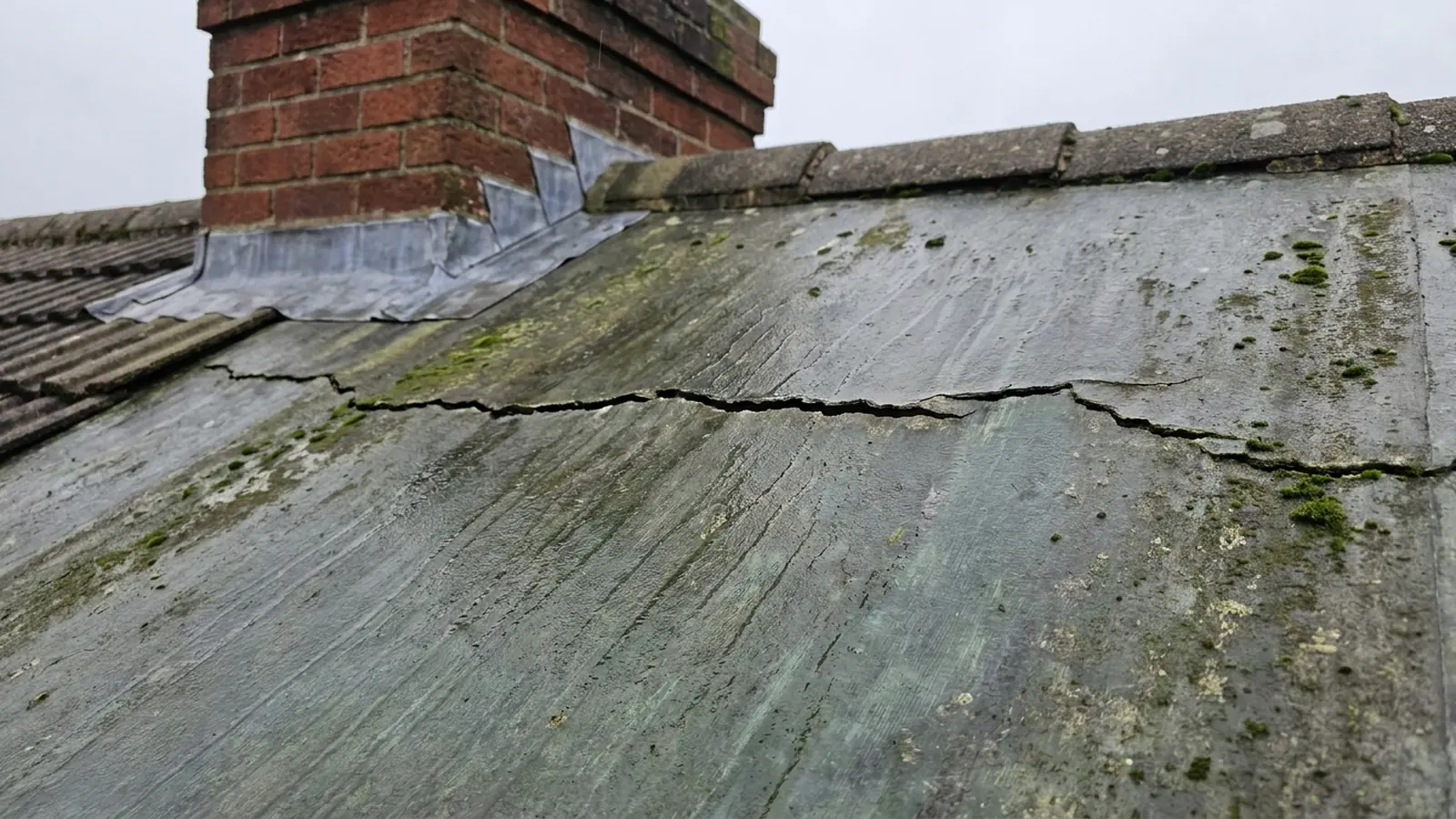
A straight crack, often over a joint in the boards
What it actually isDeck movement. The laminate is rigid and the boards under it are not, so the shell cracks along the line where they meet. It is a deck problem showing up in the covering.
What it needs
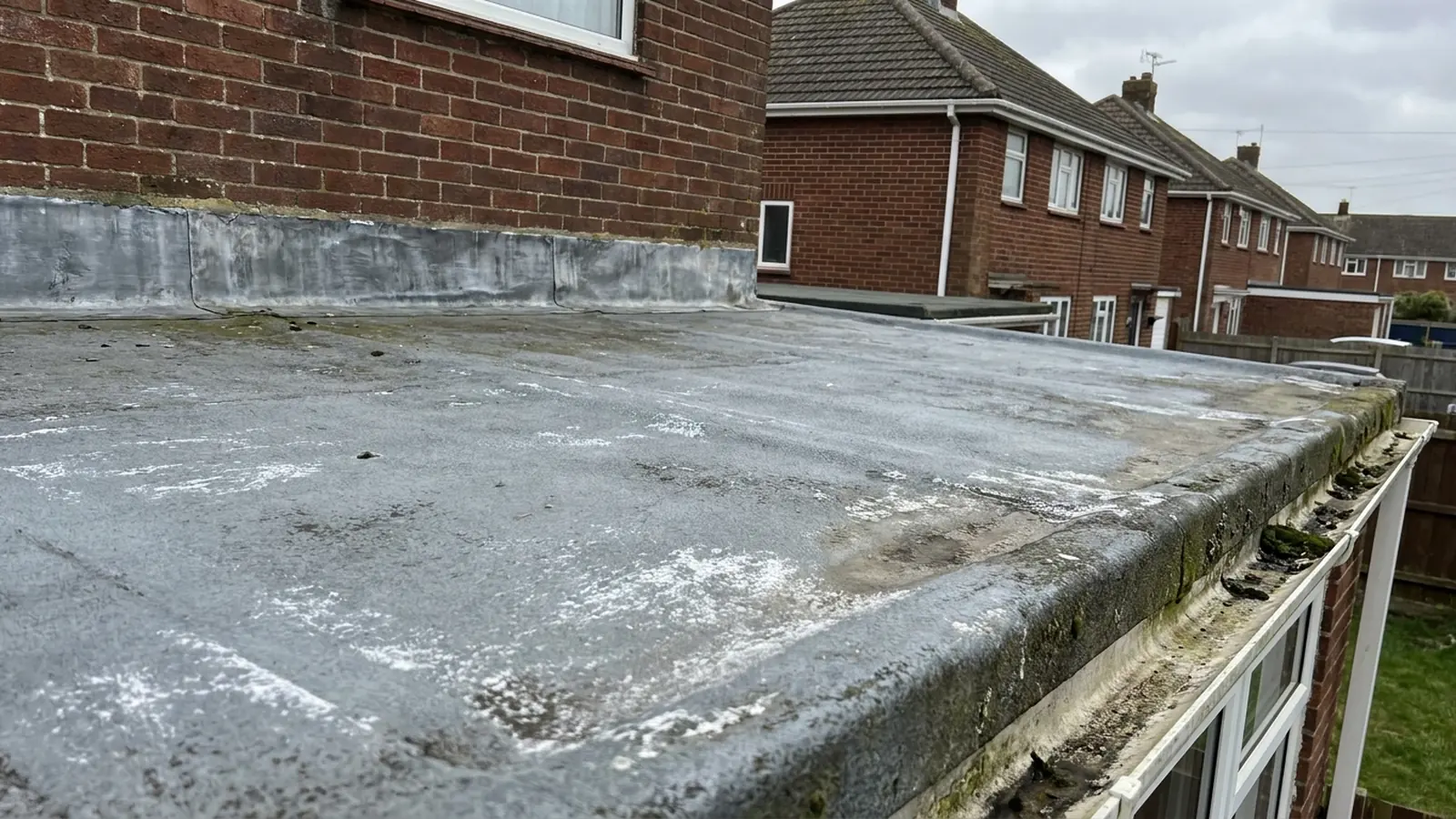
The topcoat looking dull, chalky or faded
What it actually isNormal weathering of the topcoat rather than failure of the laminate underneath. It can be recoated without touching the structure of the roof.
What it needs
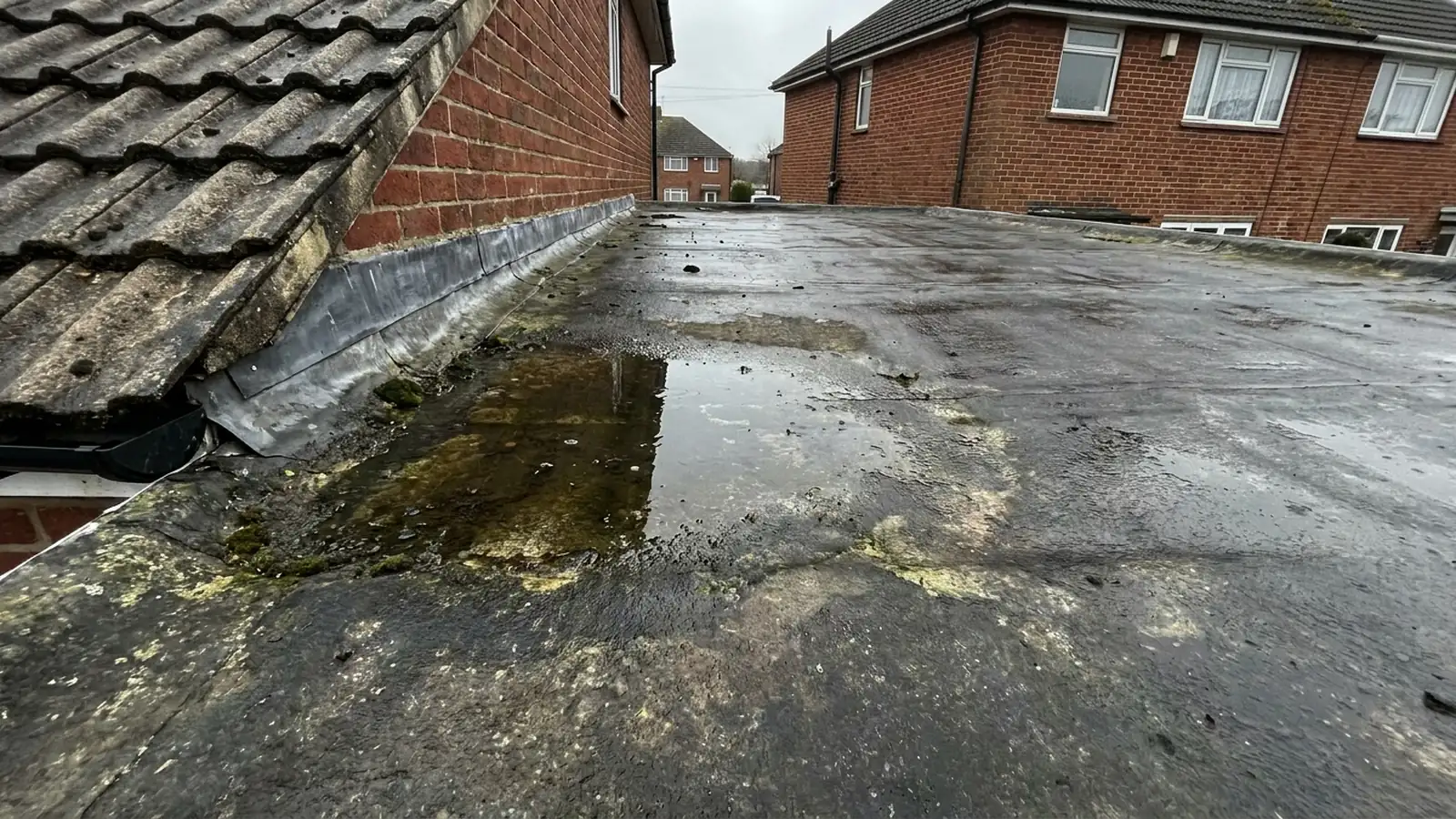
Water standing in the same spot after every shower
What it actually isThe falls were never corrected. GRP tolerates ponding better than most, but it still holds dirt, grows algae and shortens the life of the roof.
What it needs
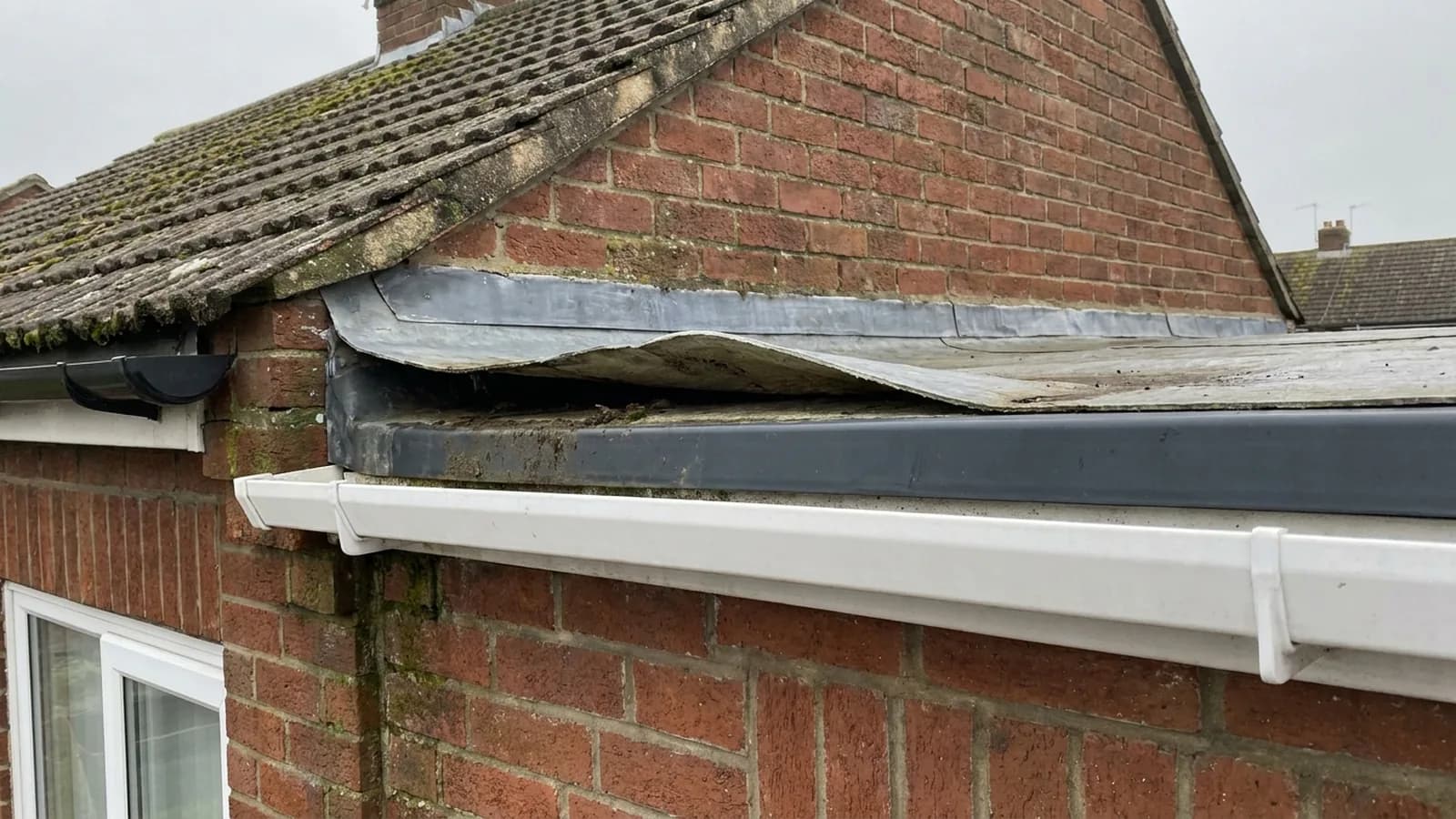
Lifting or splitting right at the edge
What it actually isThe trim. If the laminate was feathered over the edge instead of bonded into a proper GRP trim, the edge is the weak point and it goes first.
What it needs
A cracked GRP roof can usually be cut out and re-laminated locally, once the deck under it is sorted.
When fibreglass is worth the extra, and when it is not
GRP costs more than rubber and takes longer to lay. There are roofs where that is money well spent and roofs where it is money spent for nothing, and it is worth knowing which yours is before anyone quotes you.
It is worth it wherever the roof gets used. A balcony, a roof terrace, a walkway between two parts of a building, a flat roof with a door onto it. GRP takes foot traffic properly and can be finished with a non-slip topcoat, and neither of the other two systems will do that for long.
It is also worth it where the shape is complicated. Because it is formed in place, the laminate runs up an upstand, around a pipe and into a corner as one continuous piece. On a roof with a lot of detail that removes a lot of potential failure points at once.
It is not worth it on a plain garage roof that nobody walks on. Rubber will last as long, cost less, cope better with a deck that moves, and go down in a day without waiting for dry weather. If that is your roof, we will tell you so, even though the GRP job is worth more to us.
The one thing we will not do is lay GRP over a deck that is not up to it. Fibreglass is only as good as what it is bonded to, and the commonest fault we see on failed GRP roofs is a crack running along a joint in tired boards underneath. That is not a resin problem and it cannot be fixed with more resin.
So the survey is mostly about the deck. If the boards are sound, GRP is an excellent roof. If they are not, they get replaced first, or we quote you something more forgiving.
Questions about GRP fibreglass roofing
How long does a fibreglass roof last?
Laid on a sound deck, 20 to 30 years is a fair expectation. The topcoat weathers and can be refreshed long before the laminate underneath needs anything, so a tired looking GRP roof is not necessarily a failed one.
Can you really walk on it?
Yes, and that is the main reason to choose it. It is the only one of the three flat roof systems we would put on a balcony or a walkway. Where it will be used regularly we finish it with a non-slip topcoat.
Can it go over my existing flat roof?
No, and be wary of anyone who offers. GRP is rigid and bonds to what it is laid on, so it needs a sound, stiff deck. Laying it over an old covering means bonding a rigid shell to something soft, and it cracks.
Why does the weather matter so much?
Because it cures rather than just being stuck down. It needs dry conditions and enough warmth to go off properly, so we will not start a laminate we cannot finish and cure the same day. In winter that means giving you a window rather than a fixed date.
What colour can I have?
The topcoat comes in a range of solid colours, dark grey being the usual choice. If the roof is overlooked from a window upstairs it is worth thinking about, because unlike rubber you are looking at a coloured finish rather than black.
Can a cracked fibreglass roof be repaired?
Yes. The damaged section is cut out, the deck under it sorted, and a new laminate bonded in and topcoated. The repair is only worth doing once the reason it cracked has been dealt with.
Is it noisy in rain?
No more than any other flat roof. What people usually notice is a hollow sound from an uninsulated garage roof, and that is the empty space underneath rather than the covering.
- Service
EPDM Rubber Roofing
The better buy on a plain garage roof.
Learn more - Service
Felt & Torch-On Roofing
For larger roofs, with a manufacturer backed system.
Learn more - Service
Roof Repairs
Where a repair will do instead of a new roof.
Learn more - Service
Extension Roofs
Where the flat roof is part of a new extension.
Learn more
Where we lay fibreglass roofs
Based in Bournemouth, working across the conurbation and the towns just outside it.
Find out whether GRP is the right system for your roof
We will look at the deck and tell you honestly whether fibreglass is worth it, or whether rubber would serve you just as well for less.
Get a free quote
Tell us what you need and we'll come back with a price. No pressure, no hard sell.
Prefer to talk? Call Southern Counties Roofworks Ltd on 07895 305286