
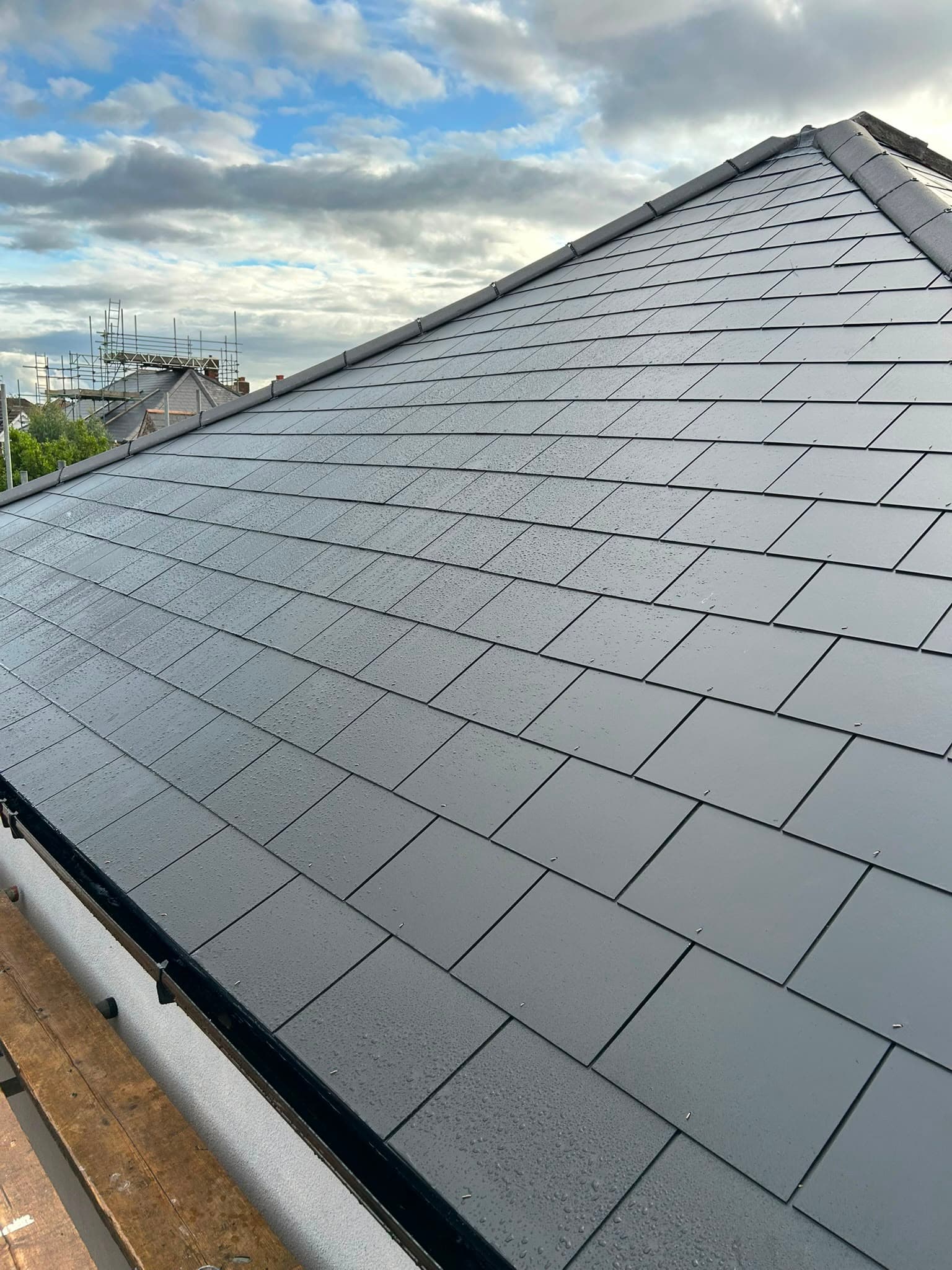
SlateRoofReplacementinBournemouth&Poole
Natural and fibre cement slate, stripped back and relaid properly. Slate is less forgiving than tile, so the detailing is where the job is won.
- Rafters checked for the weight before we relay
- Lead valleys and flashings in the right code
- 15 to 20 year guarantee on the finished roof
Get a quote
Tell us what the roof is doing and we will come and look at it.
- 1–2 wksTypical run on a house
- 60–100 yrLife of natural slate
- 5.0 ★From 31 Google reviews
- BothOwners on every job
What a slate roof replacement involves
A slate replacement means stripping the roof back to the rafters, laying new membrane and battens, and re-slating from the eaves up. What makes it different from a tiled roof is not the process, it is the tolerance. Slate is laid to a set gauge and head lap, and a slate laid slightly wrong does not seat like a tile does. It shows, and eventually it leaks. There are two materials people mean by a slate roof. Natural slate is quarried stone, and it will comfortably outlast the nails holding it up. Fibre cement slate is manufactured, lighter and cheaper, with a shorter working life. Both look right on the properties around here, and they are not interchangeable structurally. Weight is the thing to check before anything else. If a roof was tiled and you want slate, or the other way round, the timbers underneath were designed for one and not the other. We look at that before quoting rather than after.
- Stripped to the rafters, not overlaid
- Rafters and purlins checked for the weight of the new covering
- Head lap and gauge set to the slate, not to habit
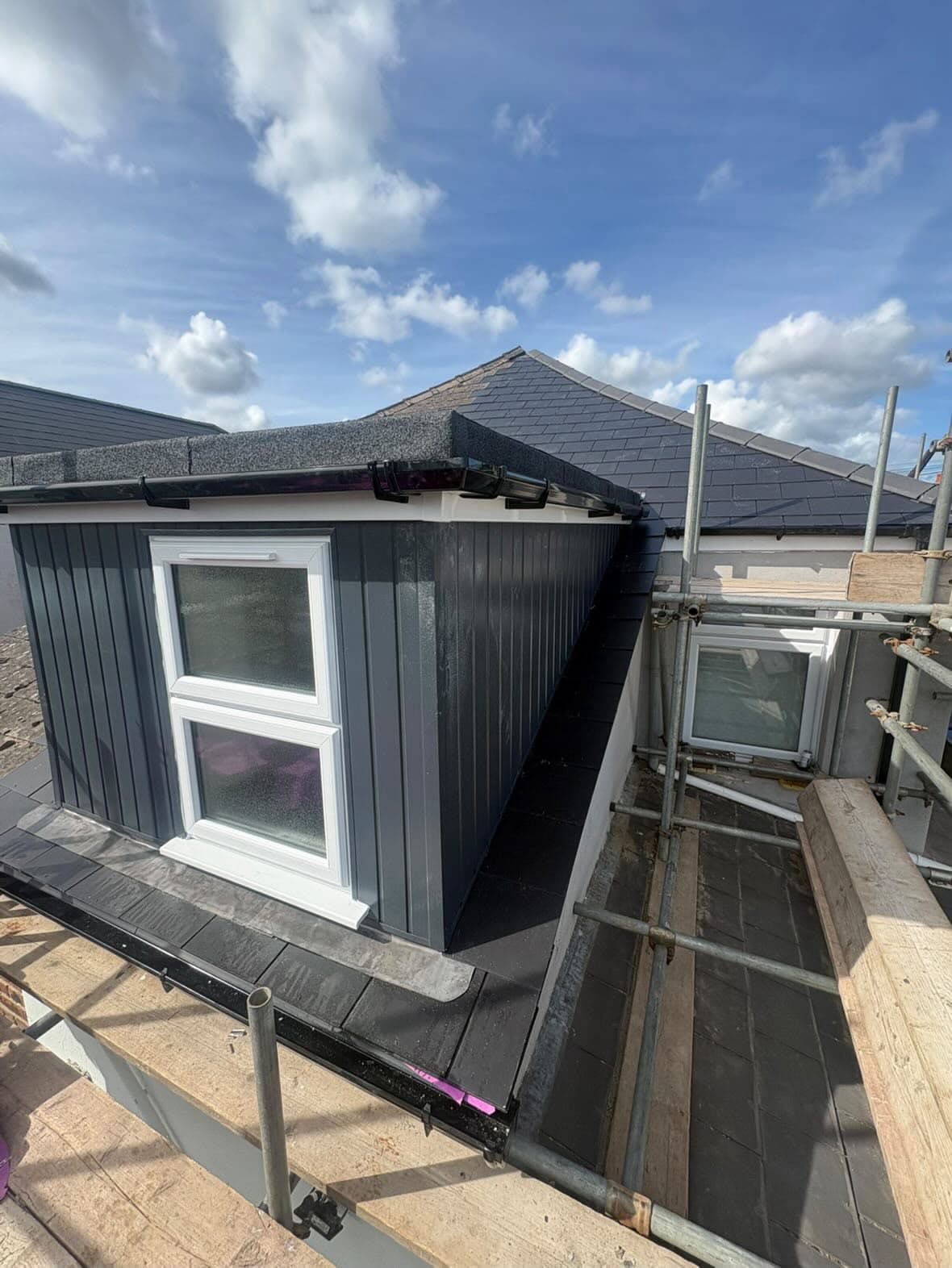
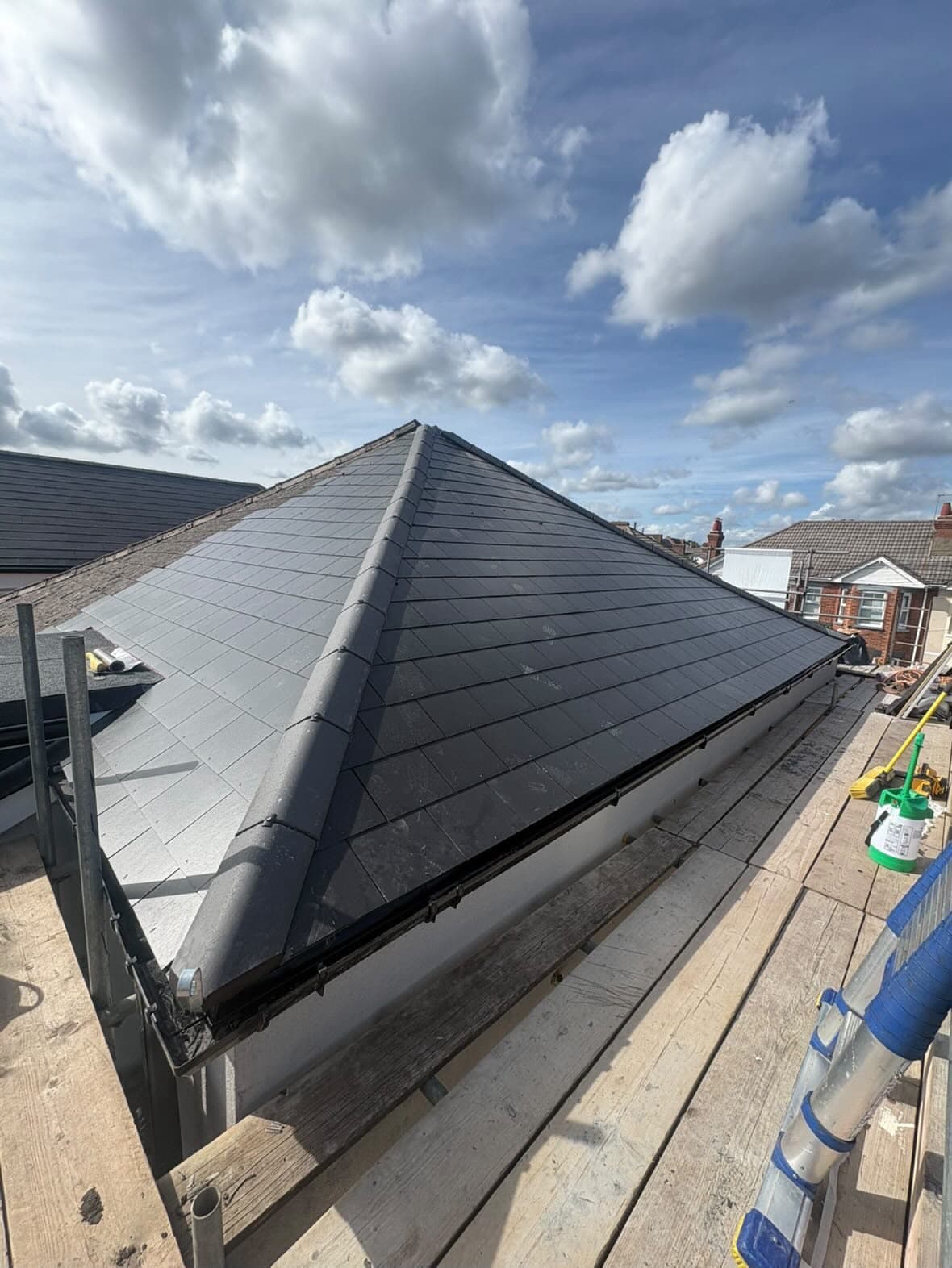
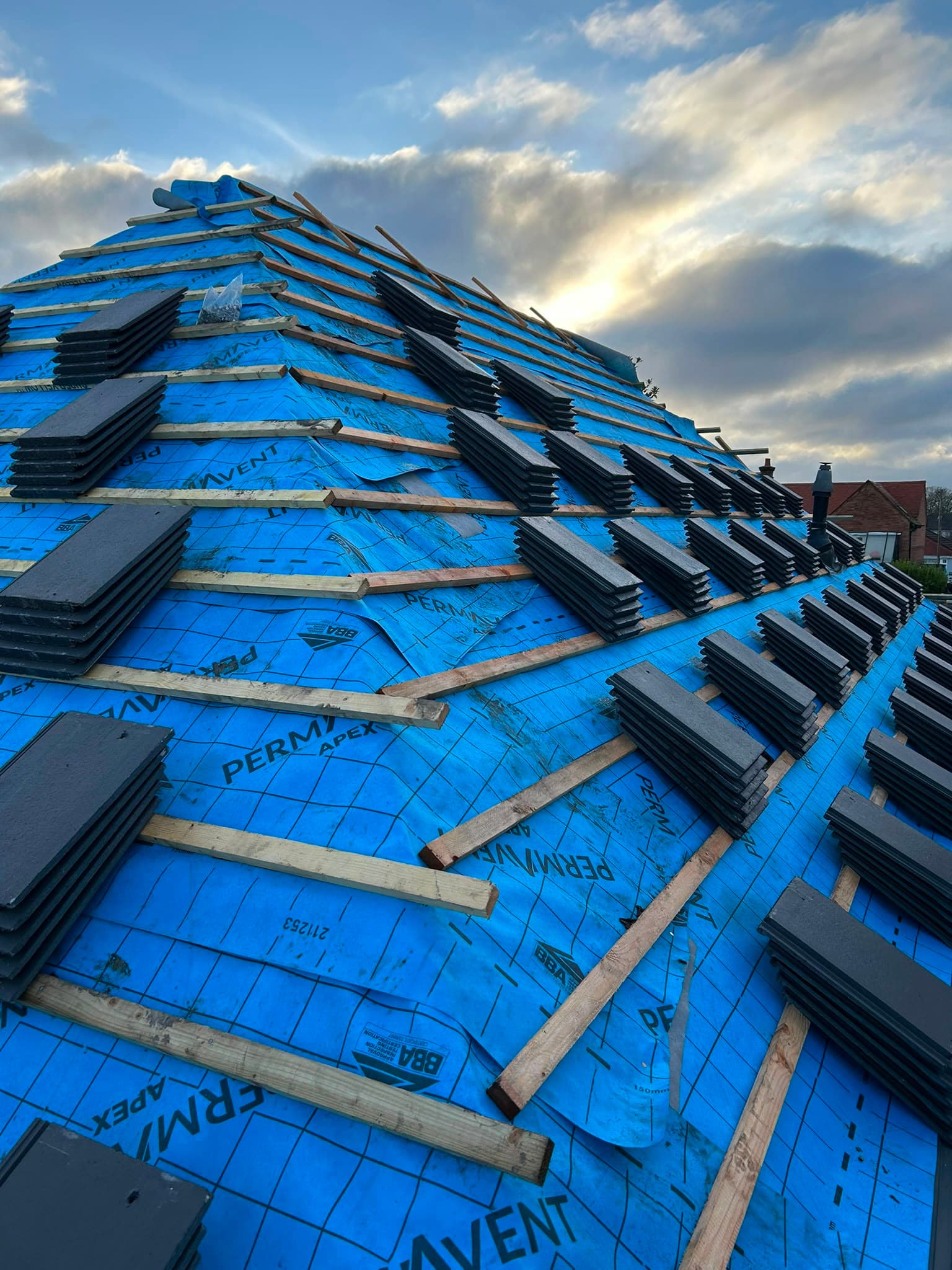 Slate re-roof in progress
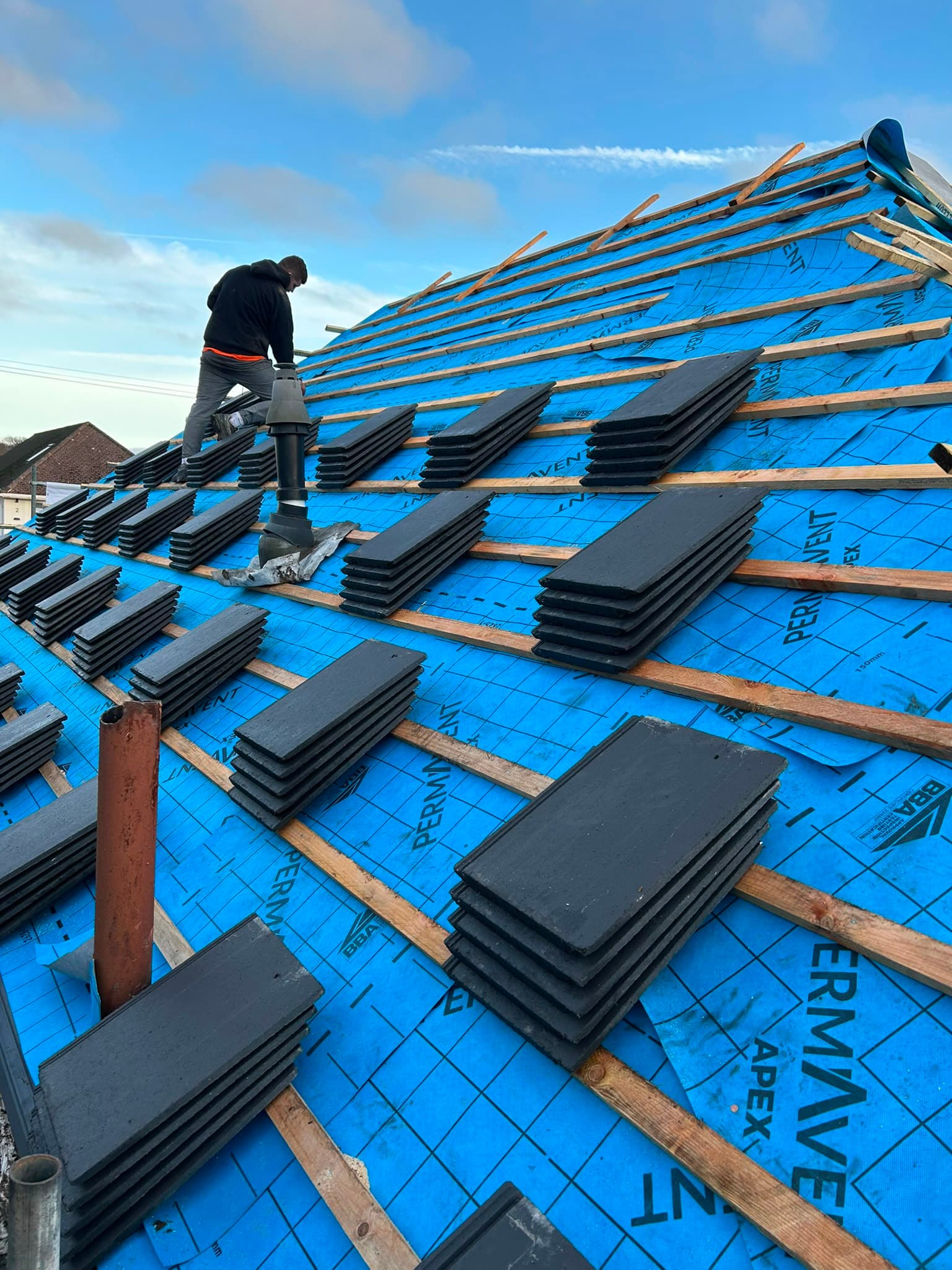 Step 1
We check the roof will carry it
Slate is heavy. Before we quote we look at the rafters and purlins, because the answer changes if the roof was never built for it.
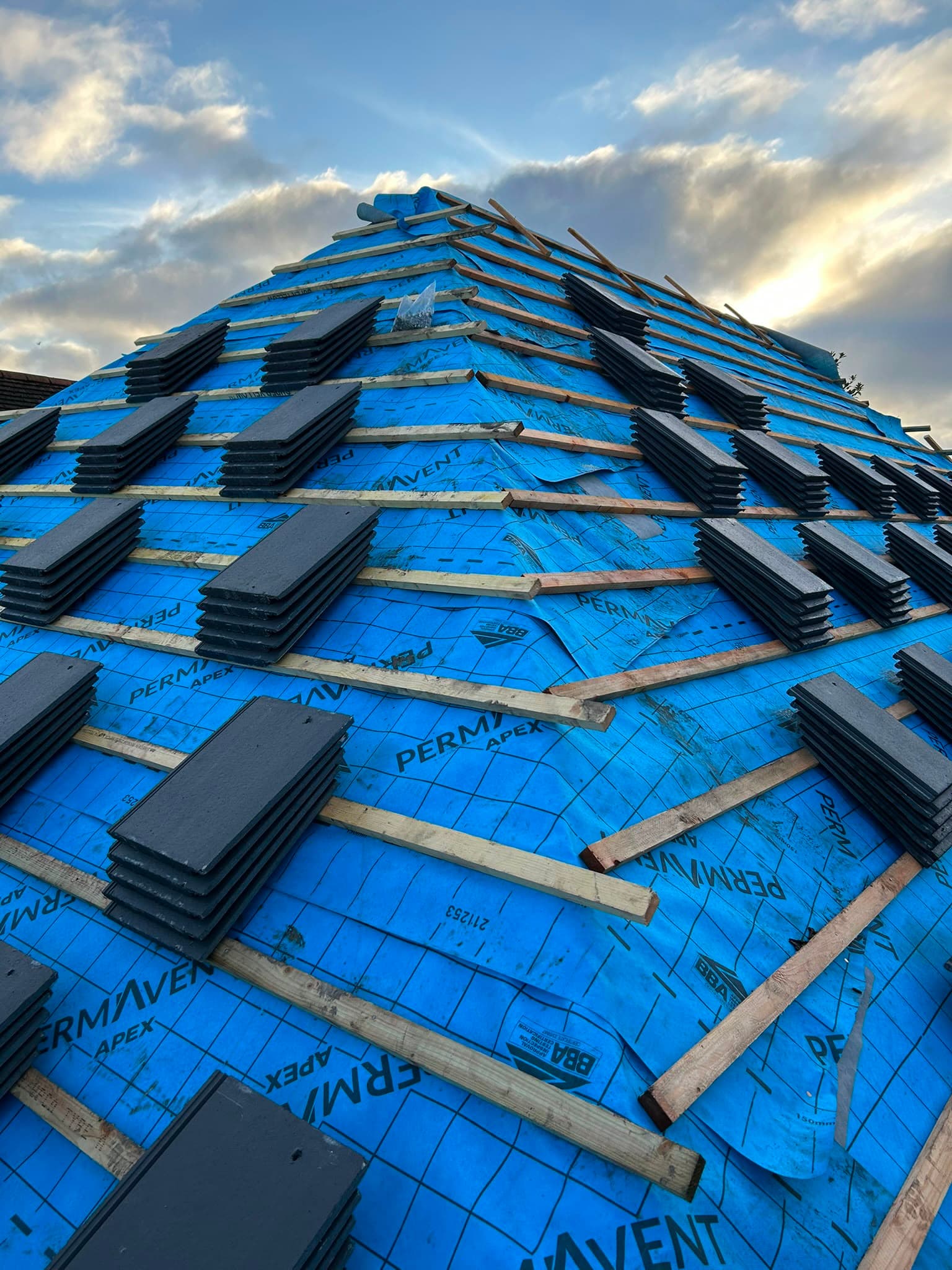 Step 2
We strip and relay it properly
New Proctor Air membrane, new battens gauged to the slate, then slated from the eaves up with the lead details done in the right code.
 Step 3
We guarantee it and clear up
A 15 to 20 year guarantee on the finished roof, the waste taken away and the site swept before we leave.
60–100 yr
Life of natural slate
1–2 wks
Typical run
15–20 yr
Our guarantee
5
Towns we cover
Natural slate or fibre cement
Both are called slate and they behave very differently. Here is the honest version, including where the cheaper one is the better buy.
| Natural slate | Fibre cement slate | |
|---|---|---|
| What it is | Quarried stone, split and dressed | Manufactured board, cement and fibre |
| Typical life | 60 to 100 years | 30 to 50 years |
| Weight | Heavy, and the roof must be built for it | Noticeably lighter |
| Cost | Higher, on material and labour | The more affordable of the two |
| Consistency | Varies piece to piece, which is part of the look | Uniform, every piece identical |
| Matching a repair later | Can be difficult on an older roof | Straightforward while the range is made |
| Our honest take | Worth it on a period property, or where you want it to outlast you | A sensible answer where budget or roof weight rules natural slate out |
Swipe to see every column
What goes into the finished roof
The same specification on every slate replacement we do.
Proctor Air breathable membrane
Over the rafters before the battens. It sheds anything that gets past the slate and lets the roof space breathe instead of trapping moisture against the timber.
Battens gauged to the slate
Batten spacing is set by the slate size and the head lap it needs. It is a calculation, not an estimate, and getting it wrong is what makes a slate roof leak in driving rain.
Fixed the right way for the pitch
Nailed or hook fixed depending on the pitch and the exposure. On a low pitch or a windy elevation the fixing method matters more than the slate does.
Lead valleys and flashings
Slate roofs live or die on their valleys. Lead in the correct code, dressed properly and laid in workable lengths so it can move without splitting.
Dry ridge and dry verge
Ridge and hip fixed mechanically rather than bedded in mortar, so it does not crack and work loose the way sand and cement does.
A 15 to 20 year guarantee
Issued when the job is signed off. If something goes wrong inside that period you call us and we come back out.
Straight answer
What a slate roof replacement costs
Priced after we have seen it
Slate costs more than tile, on both the material and the labour, because there are more pieces and each one is laid to a set gauge. Which slate you choose changes the figure considerably, and so does whether the timbers need strengthening. We look at all of it, then give you a written price.
- Scaffold, materials, labour and waste removal in one figure
- Timber repairs priced separately and only if we find them
- We will tell you if fibre cement makes better sense than natural
- No charge for coming out and no pressure afterwards
If you want a rough idea before we visit, say so on the phone and we will give you the honest range for a roof like yours.
How the job runs
One to two weeks on most houses, from scaffold going up to the site being cleared.
Survey
Up on the roof and into the loft. We look at the slate, the valleys, the fixings and the timbers, because the timbers decide what we can put back.
Scaffold and delivery
Scaffold erected first, then the slate, membrane and battens delivered to site.
Strip
Old slate, membrane and battens off in sections. Salvageable natural slate is set aside where you want it reused.
Membrane and batten
Proctor Air over the rafters, then battens set out to the gauge the slate needs.
Slate
Laid from the eaves up, course by course, fixed to suit the pitch and the exposure.
Valleys, ridge and flashing
Lead valleys and abutment flashings dressed in, dry ridge on the ridge and hips. This is the part that decides whether it leaks.
Clear up and guarantee
Scaffold down, waste away, ground swept, guarantee issued.
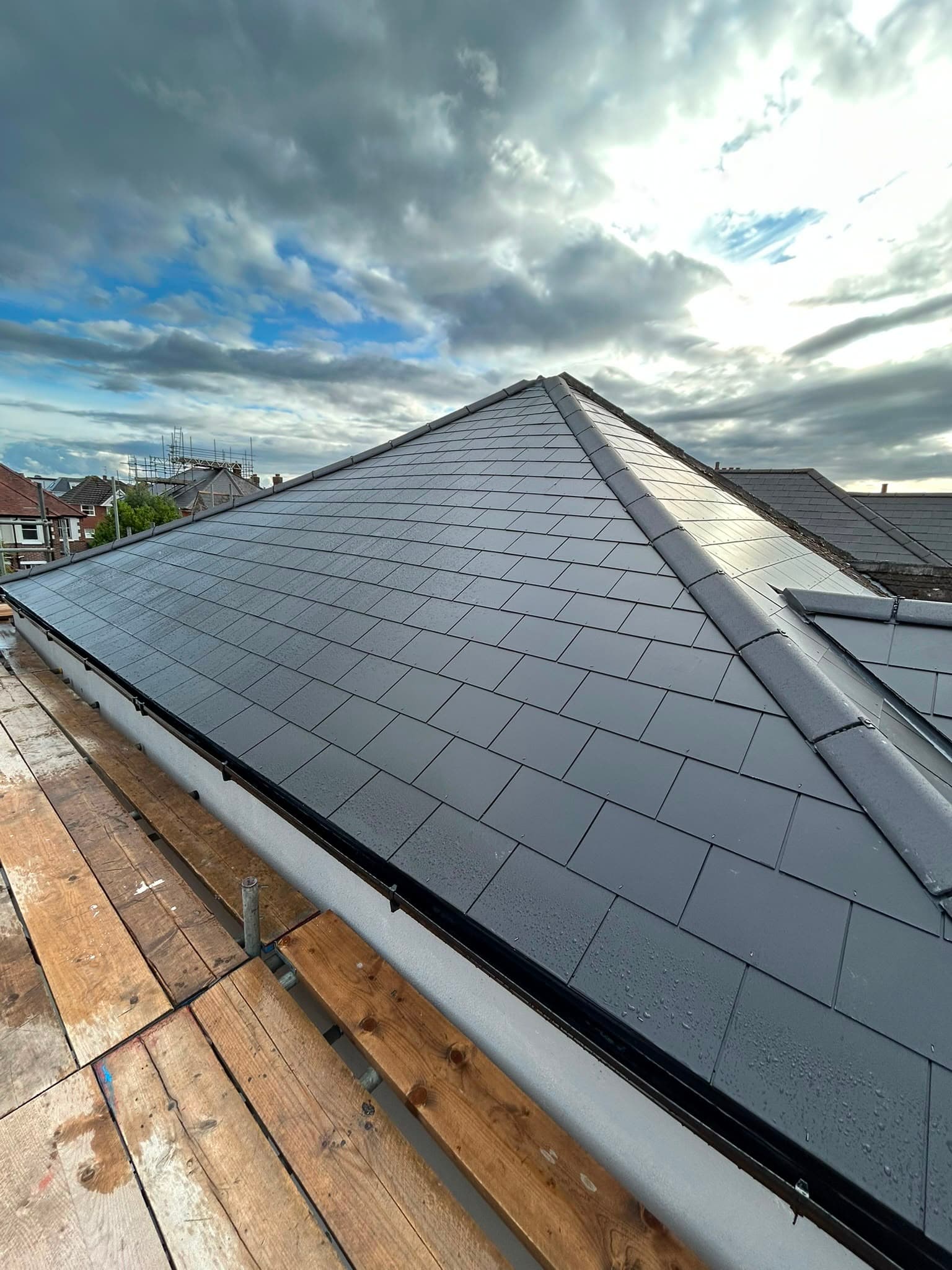
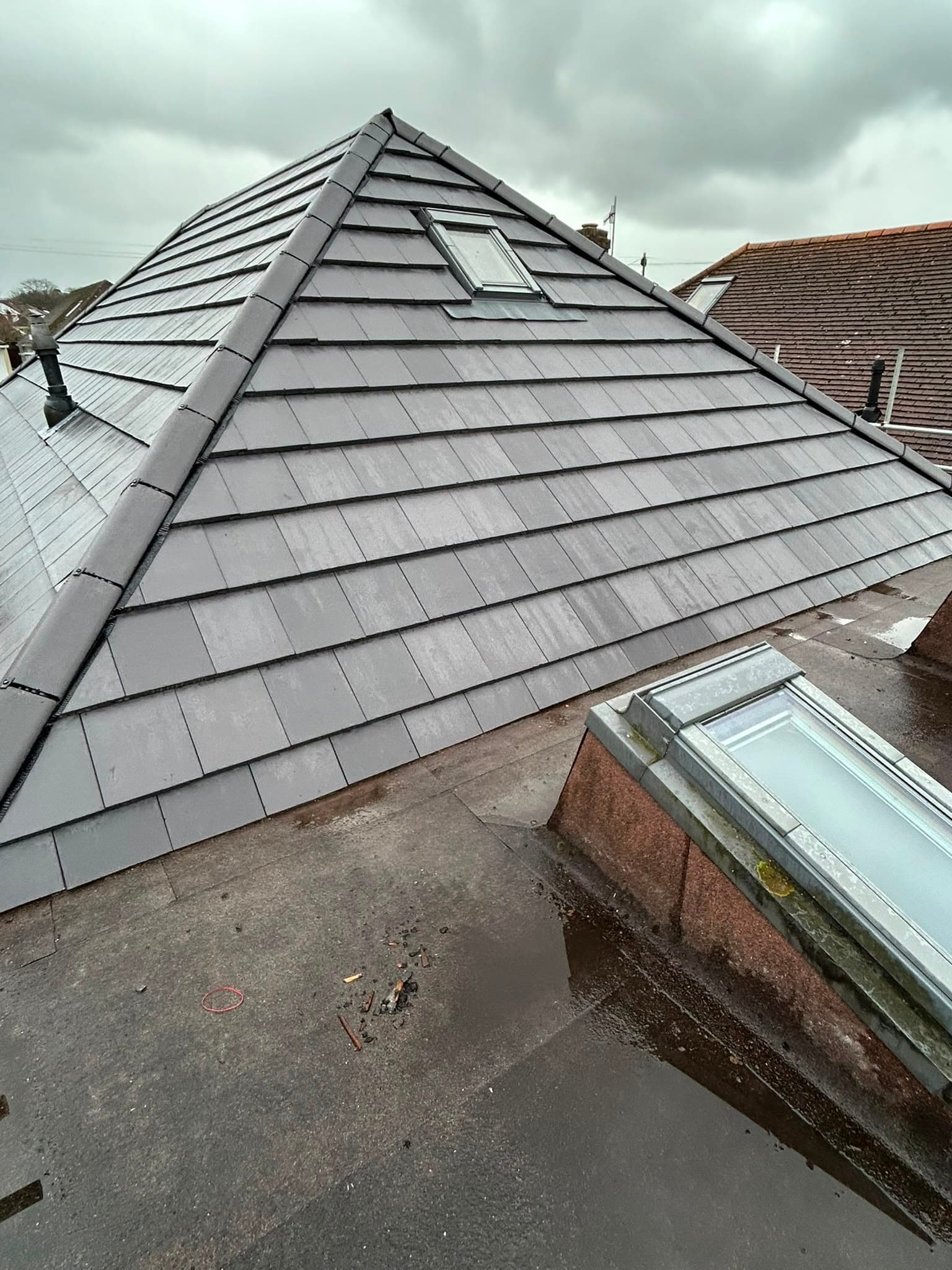
Slate roofs we have relaid
Our own work. No stock photography.
Captions name the slate used and the town.
What customers say
We are a new company and we are building this up honestly. These are the jobs people have been kind enough to comment on.
George Gudge
Can't recommend Southern Counties Roofwork highly enough. I had them out for full re-roof / fascias & guttering - and the whole experience was spot on. Great communication, gave me a clear quote and explained everything properly. The team were punctual, polite, hardworking and obviously know their trade. The finished roof looks brilliant and is built to last. No mess left behind either.
Jacey Arnold
Recently had this company out to have my roof repaired after having problems with leaks during the winter months and something I had been looking to get sorted. The guys came out to take a look at the issues before quoting, once a quote was given work was agreed and I went ahead. Extremely professional, reliable and hard working! Would highly recommend this company and would definitely use again.
Celine Fox
Owen and Sam did a fantastic job with our roof. They were professional, reliable, friendly, and clearly take pride in the work they do. The work was completed to a really high standard, and everything was left clean and tidy afterwards. I’d definitely recommend to anyone looking for a trustworthy roofing company. Great service from start to finish!
Our projects
Slate work written up properly. What we found, what we did and how long it took.
The things people ask on the doorstep
Not about the slate. About letting a couple of roofers loose on the house.
What if it rains while the roof is off?
We strip and re-cover in sections rather than opening the whole roof, so it can always be made watertight at the end of the day. If the weather turns badly we stop and sheet it up.
Can I keep the old slate?
If it is natural slate and it is sound, yes. Plenty of it can be reused, and where you want that we set it aside as we strip rather than skipping the lot.
Who will actually be here?
The two of us. The person who quotes your roof is the person who lays it, which is why we can tell you honestly what we find.
What you can see from the ground
Four things worth looking for on a slate roof before you call anyone.
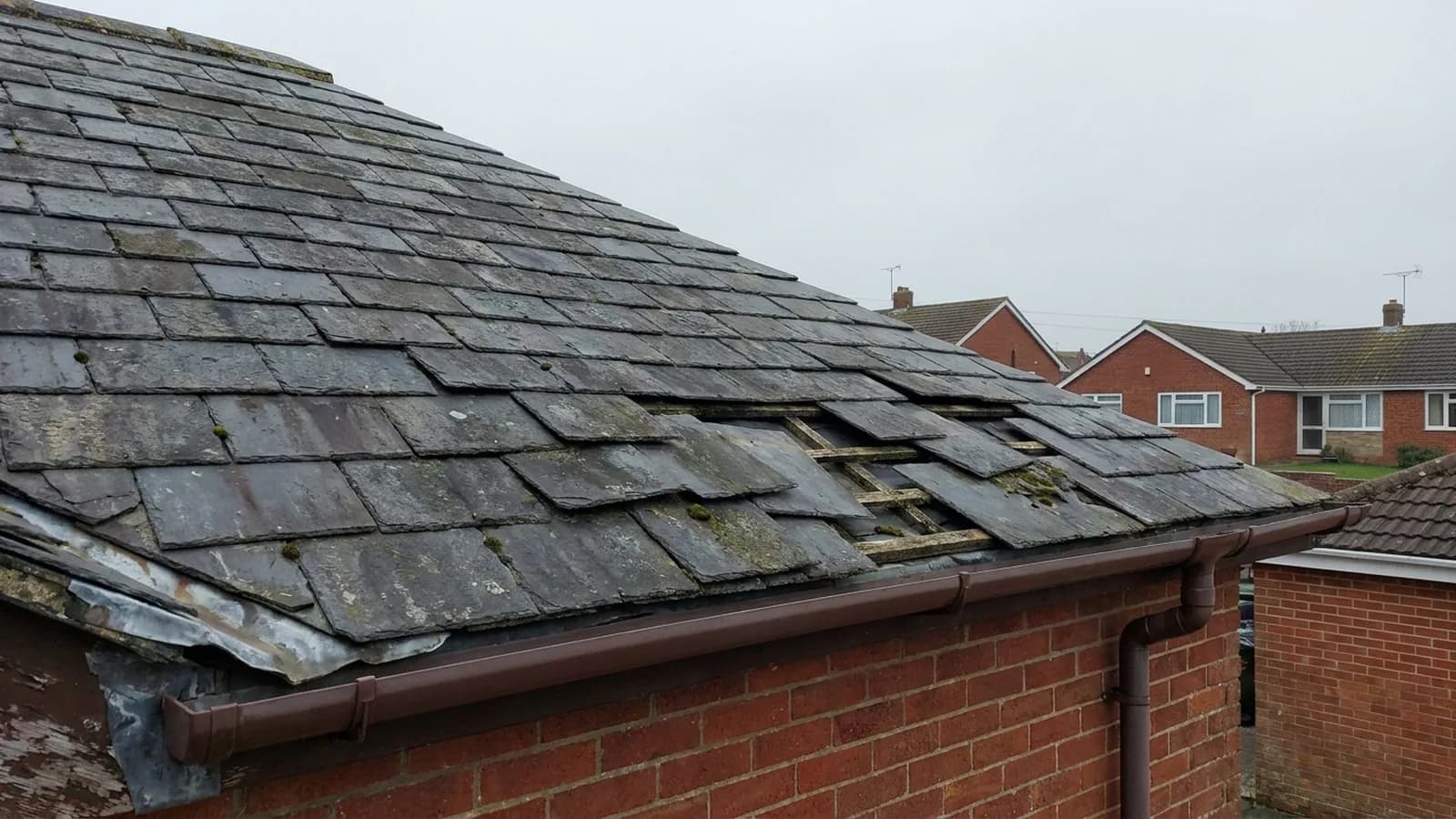
Slates slipped out of line, or missing in ones and twos
What it actually isAlmost always nail fatigue rather than failed slate. The nails corrode and let go while the slate itself is still perfectly good. On an otherwise sound roof this is a repair, and we will say so.
What it needs
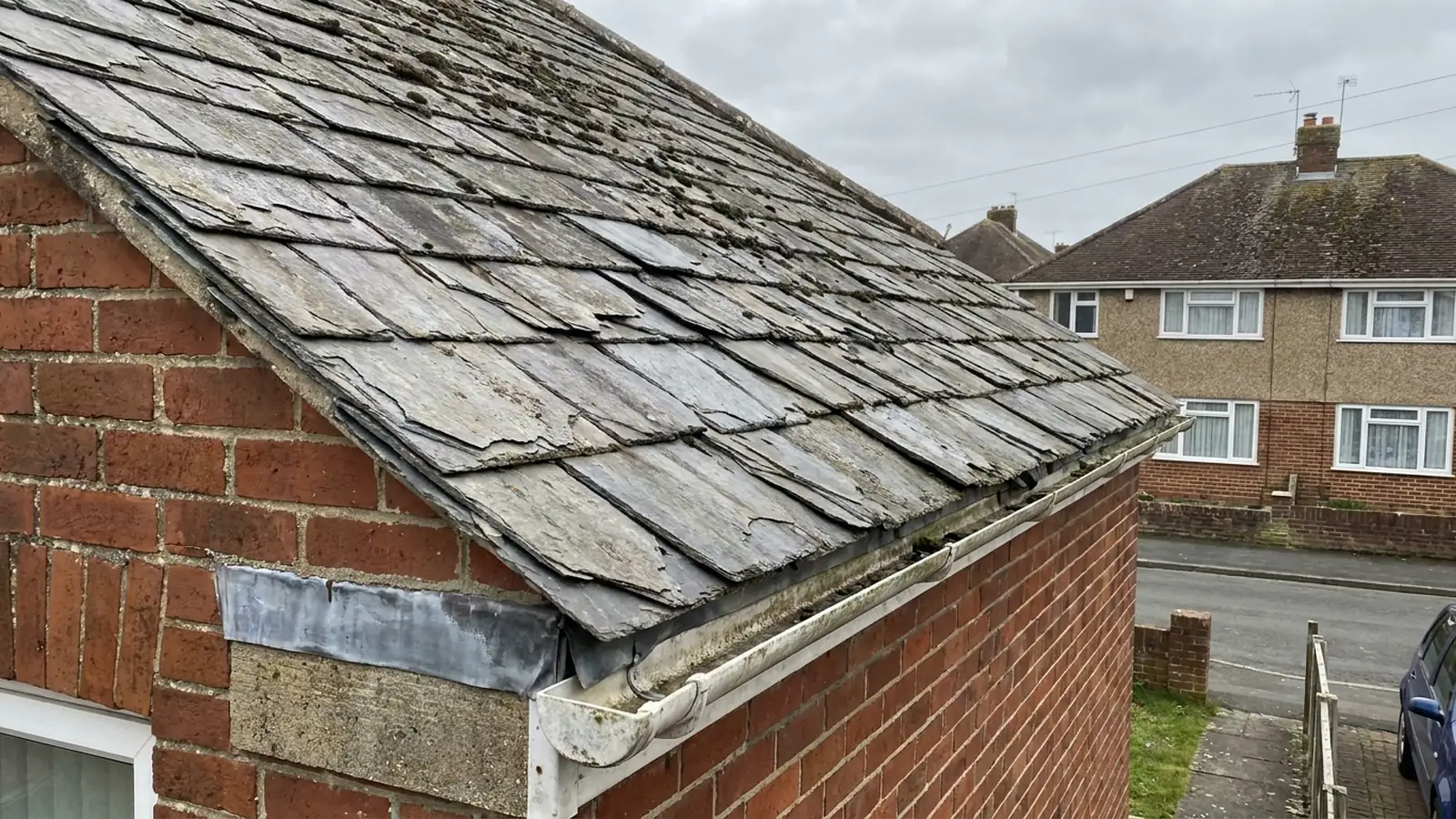
Slates flaking or splitting into layers
What it actually isDelamination. Natural slate splits along its bedding planes as it ages, and once it starts across the roof rather than in one patch, the covering is at the end of its life.
What it needs
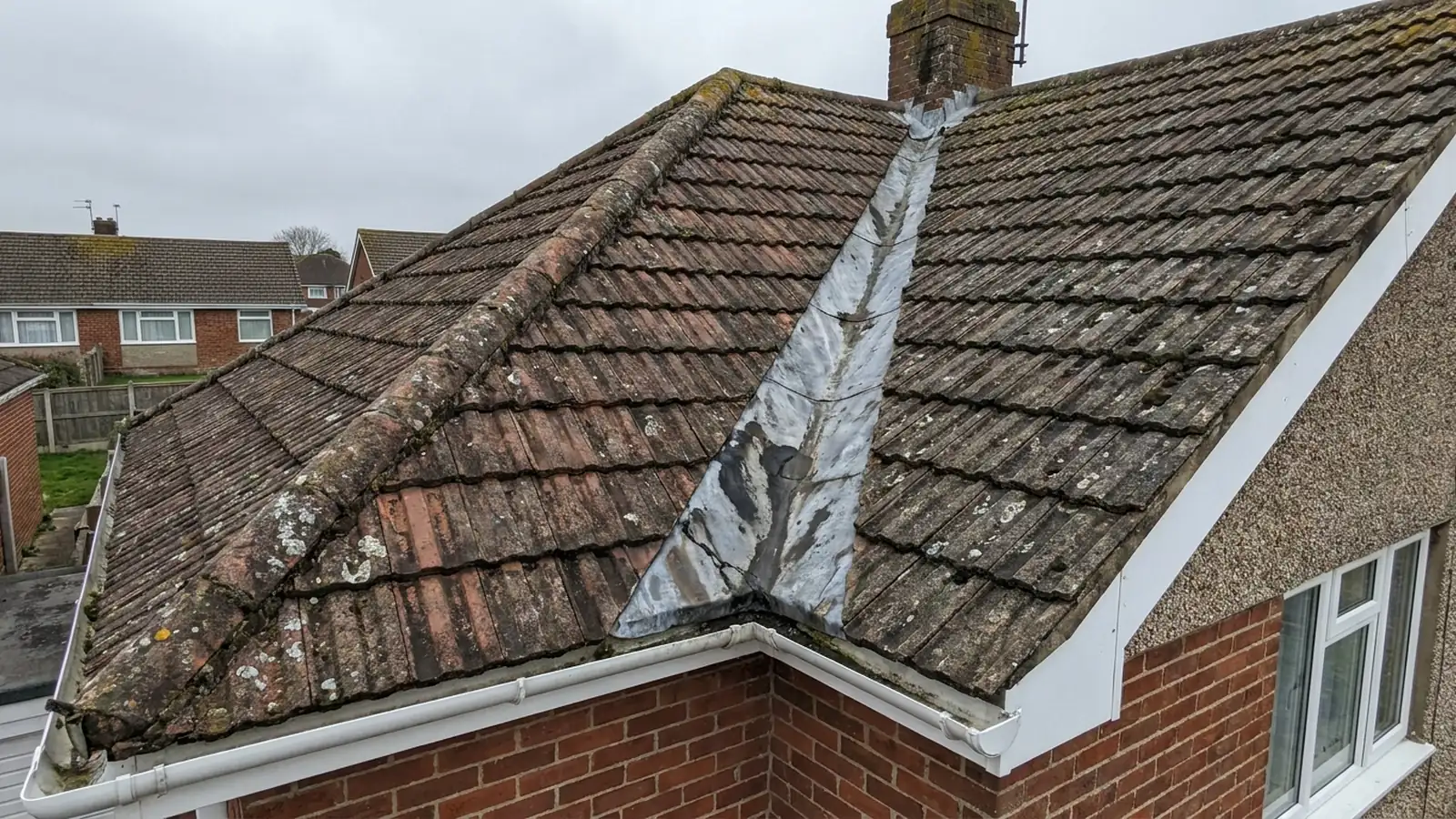
Staining or damp on the ceiling below a valley
What it actually isThe lead valley rather than the slate. Valleys carry the water off two slopes at once, so they fail first and they are a repair in their own right.
What it needs
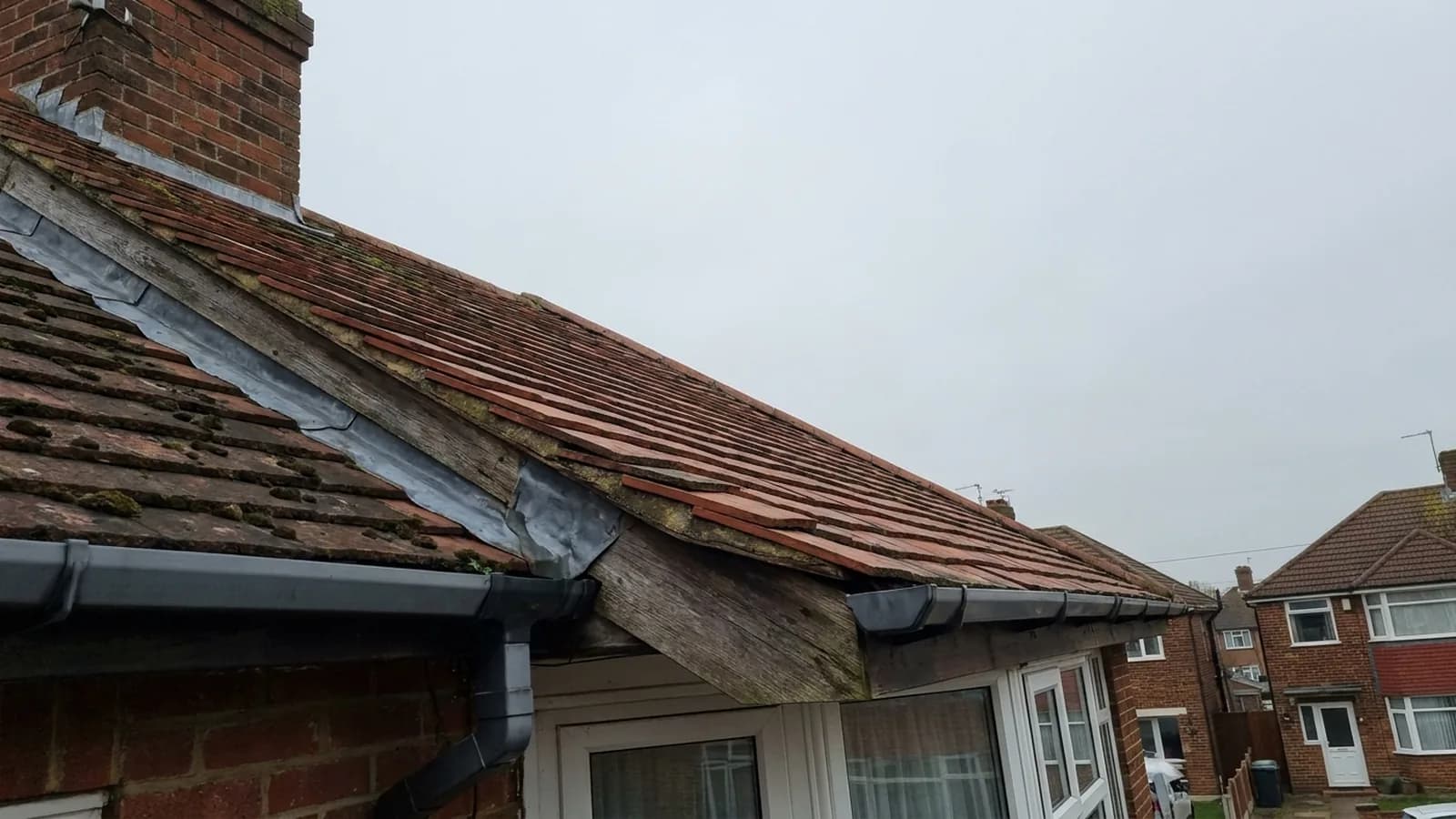
A dip or sag along the roof line
What it actually isThe structure, not the covering. Slate is heavy, and a roof that was reslated with something heavier than it was built for will tell you eventually. Worth looking at sooner rather than later.
What it needs
If you can see two or more of these, it is worth having someone up there.
Why a slate roof often needs a repair, not a replacement
Slate outlives its fixings. That single fact explains most of what goes wrong on slate roofs, and it is the reason we quote more repairs on slate than on anything else.
A natural slate will happily last a century. The nails holding it will not. They corrode, they lose their grip, and slates begin to slip, usually a few at a time and usually on the most weathered elevation first. The roof looks like it is failing. What is actually failing is a few pence worth of nail, and the slate lying in the gutter is often perfectly reusable.
The trade calls the end state nail sickness, and once it is widespread across a roof, relaying is the honest answer, because you are otherwise refixing slates every winter forever. But widespread is the operative word. A dozen slipped slates on a hundred year old roof is a morning of work, not a re-roof.
The other common misdiagnosis is the valley. Every drop of water landing on two slopes gets funnelled into one lead channel, so valleys wear out long before the slate around them. A stain on the ceiling under a valley says the lead has gone, and lead can be replaced without touching the covering either side of it.
So when we look at a slate roof we are answering two questions: how much of the slate is genuinely spent, and is the leak actually coming from the slate at all. We will show you what we find and quote what it needs. If that is a repair, that is what you will get.
Questions about slate roofs
How long does a slate roof last?
Natural slate will do 60 to 100 years and often more. Fibre cement is more like 30 to 50. In both cases the fixings and the lead valleys usually need attention long before the slate itself does.
Can I put slate on a roof that currently has tiles?
Sometimes, but it needs checking first. Natural slate is heavy and the roof structure was designed for whatever is on it now. We look at the rafters and purlins before quoting, and we will tell you if it needs strengthening or if fibre cement is the sensible answer.
My slates keep slipping. Do I need a new roof?
Not necessarily. Slipped slates on an otherwise sound roof usually mean the nails have corroded rather than the slate failing. If it is a handful, that is a repair. If it is happening across the whole roof every winter, relaying is the honest answer.
Can you match my existing slates?
Often, for a repair. Natural slate varies by quarry and by age, so an exact match on an old roof can be difficult, and we would rather show you the closest we can get than promise something invisible.
Is fibre cement slate any good?
Yes, laid properly. It is lighter, more affordable and completely uniform. It will not last as long as natural slate and it does not weather in the same way, but on the right property and the right budget it is a sensible choice rather than a compromise.
How long does the work take?
One to two weeks on most houses. Slate takes longer to lay than tile because there are more pieces and each one is set to a gauge, so allow a little more than you would for a tiled roof of the same size.
Do you reuse the old slate?
Where it is sound and you want us to, yes. Natural slate is worth keeping and we set it aside as we strip rather than skipping the lot. We will be honest about how much of it is actually reusable.
- Service
Tiled Roofs
Concrete and clay tile, stripped and relaid.
Learn more - Service
New Build Roofs
A roof on a property that has never had one.
Learn more - Service
Extension Roofs
Tying a new extension roof into the existing one.
Learn more - Service
Chimneys & Leadwork
Valleys and flashings, where slate roofs usually leak.
Learn more
Where we relay slate roofs
Based in Bournemouth, working across the conurbation and the towns just outside it.
Find out whether your slate roof needs relaying
Slipped slates are often a repair, not a re-roof. We will get up and tell you which yours is.
Get a free quote
Tell us what you need and we'll come back with a price. No pressure, no hard sell.
Prefer to talk? Call Southern Counties Roofworks Ltd on 07895 305286